Best Of
Re: How The F*#% Do I Model This? - Reply for help with specific shapes - (Post attempt before asking)
@SkinnyM Both topology layouts are generally acceptable for most hard surface models.
While the quad grid corner is a more conventional choice, the triangular quad corner tends to produce more appealing results for this type of shape transition. Something that can be verified by previewing the subdivision and looking at the mesh from multiple angles.
Comparing and validating different topology layouts also provides an opportunity to learn which loop routing strategies produce the desired results and when it makes sense to use them.

Although most flat surfaces are relatively tolerant of less than ideal topology layouts, as @sprunghunt mentioned, carrying some of these loops across the mesh does tend to produce more consistent smoothing behavior.
Which is why segment matching and controlling shape deformation, that's often caused by abrupt changes in the loop routing, is an important part of preventing smoothing artifacts on high quality surfaces and curved shapes.
So, although it isn't always essential for certain types of hard surface shapes, it is generally considered best practice to have relatively consistent loop paths. Even on flat surfaces.

It is possible to simplify the quad grid layout by reducing some of the edge loops into n-gons or triangles but since the triangular quad layout tends to be more efficient this type of topology strategy is often limited to specific edge cases.
Context is also important. Something that's passable in one situation may not make sense in another. Topology requirements for game art tends to be slightly more relaxed when compared to other fields like visualization, VFX, etc.

Recap: Test different topology layouts and compare the results. If the mesh subdivides cleanly and fits the technical requirements for the project then it's generally going to be passable. When it comes to hard surface subdivision modeling, focus on developing the proportions and shapes first then move on to work through the base topology flow before adding the support loops. This will make it much easier to solve loop flow issues and optimize the mesh.
 FrankPolygon



Wingfoxworkshop - 3D Game Tutorials


 Wingfoxworkshop
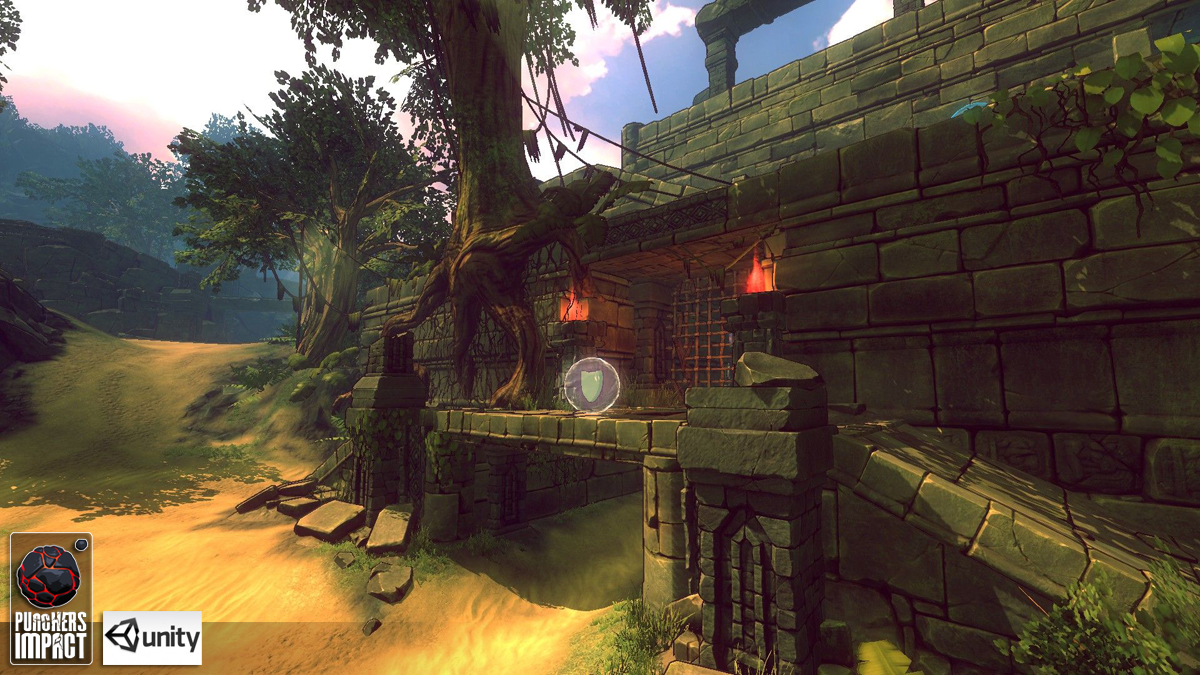
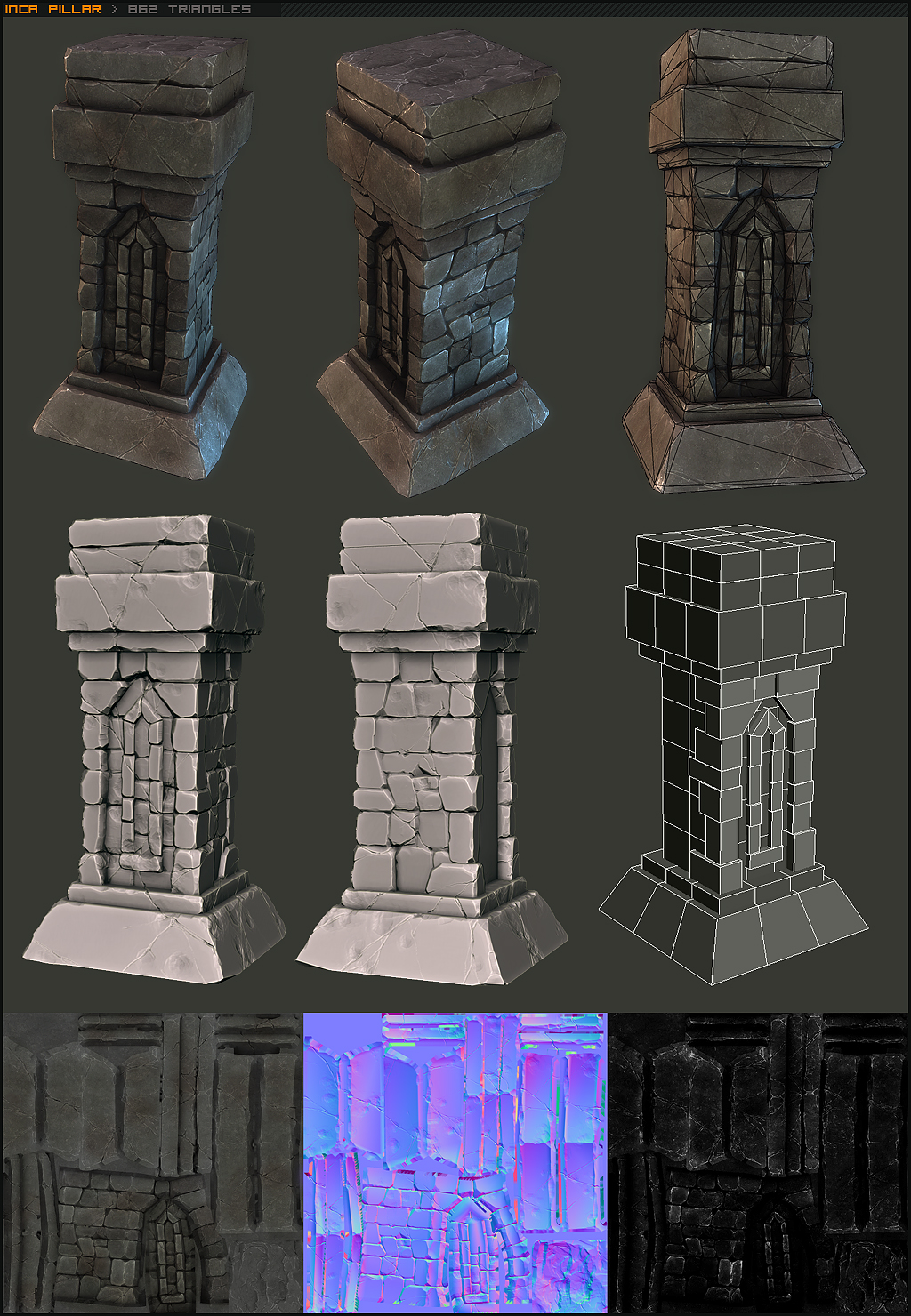
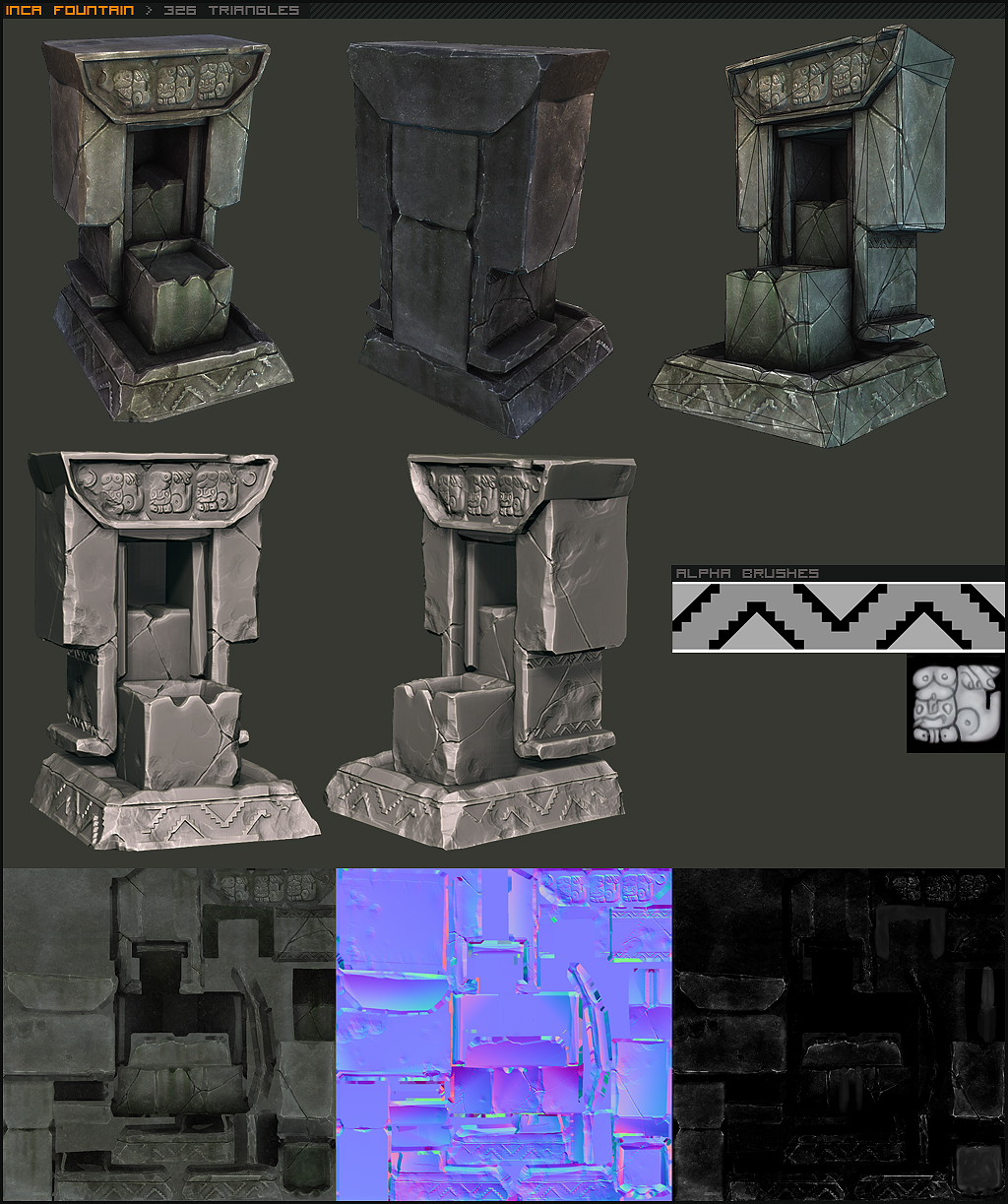
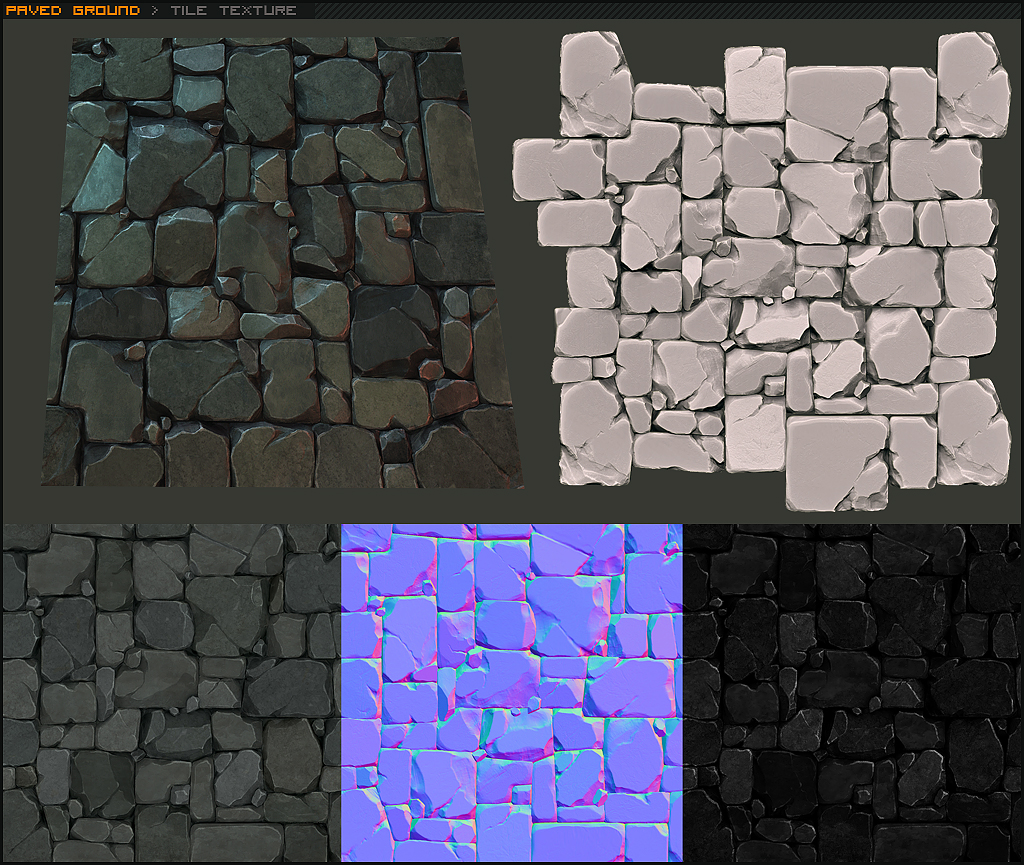
my work at PI
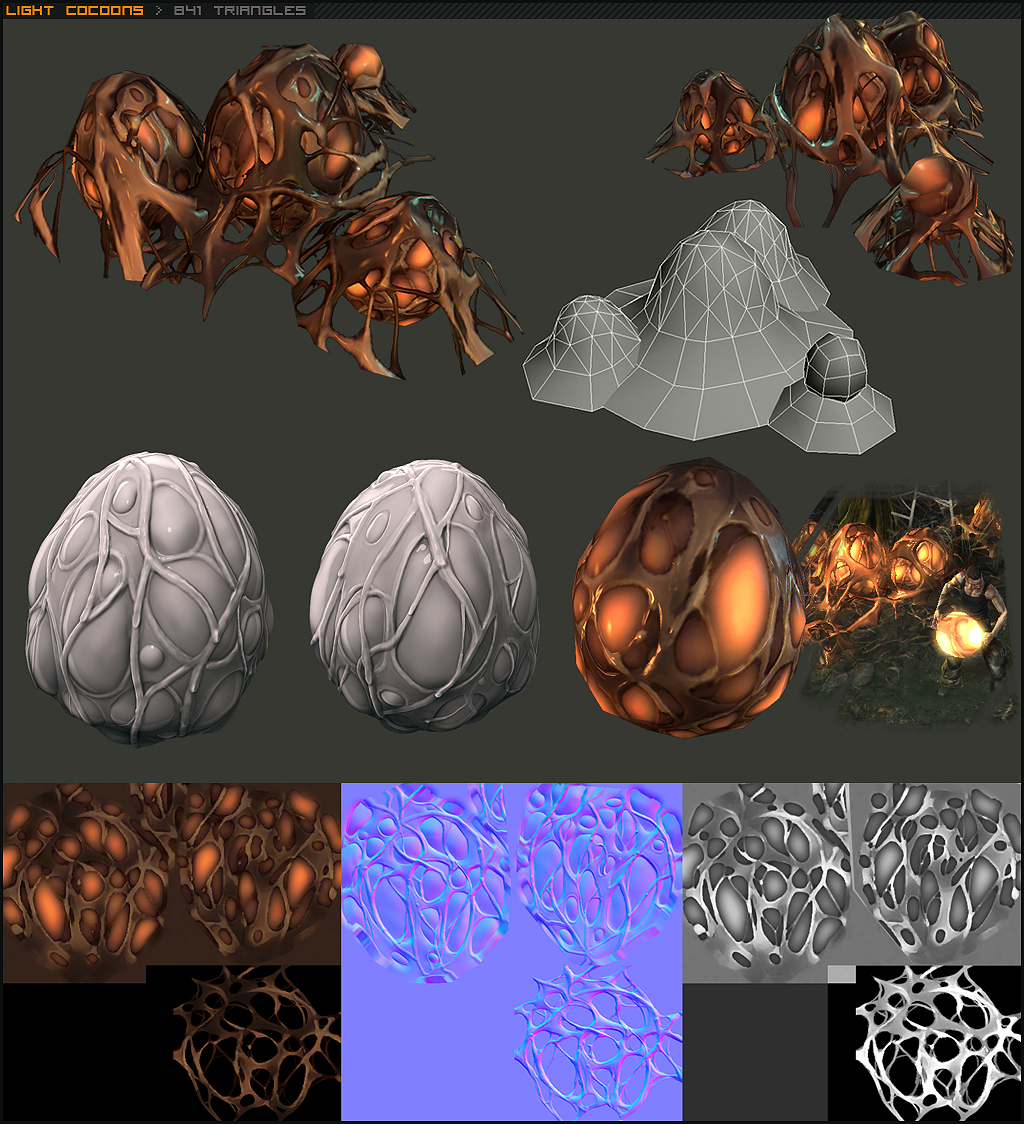
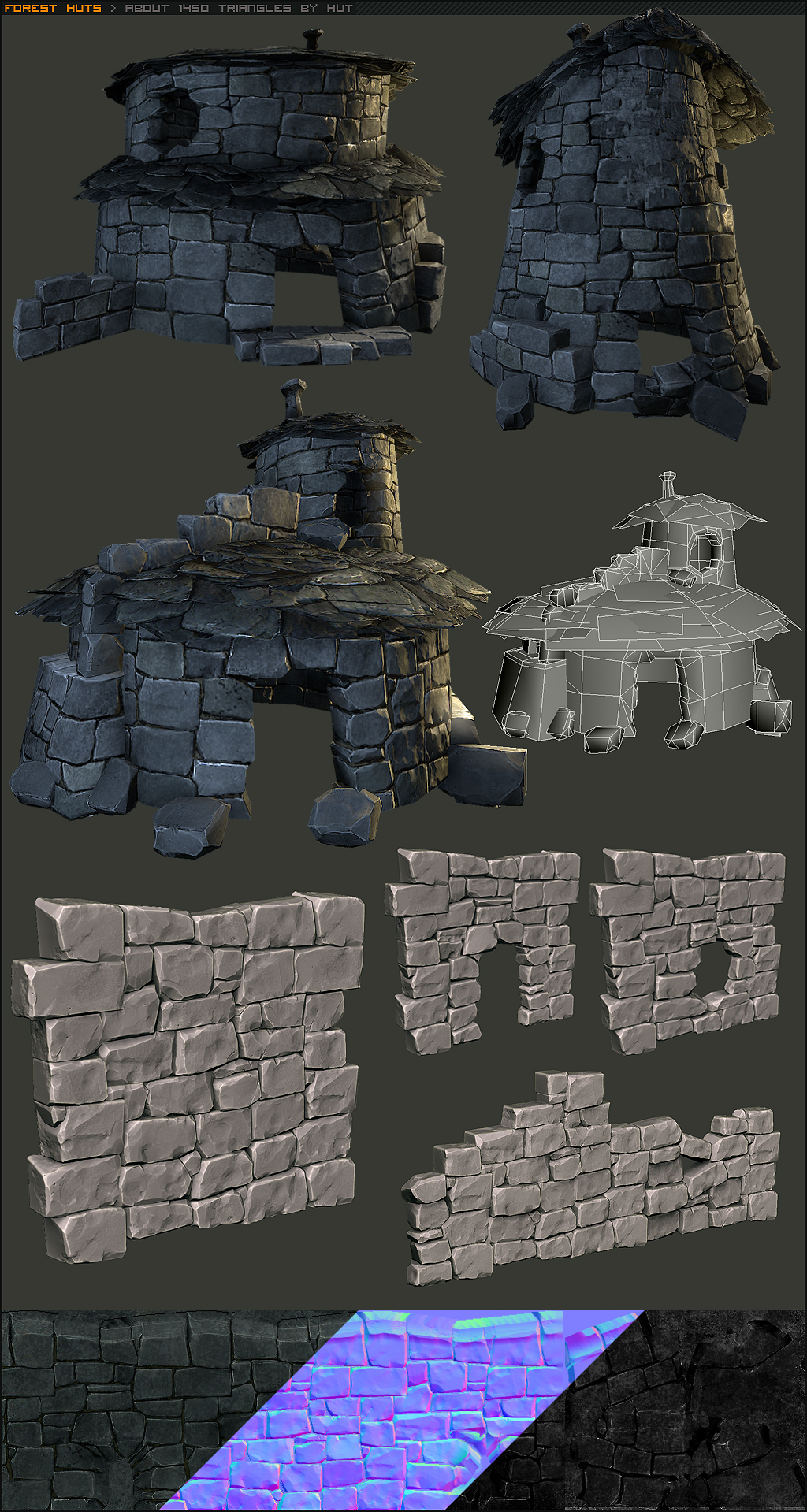
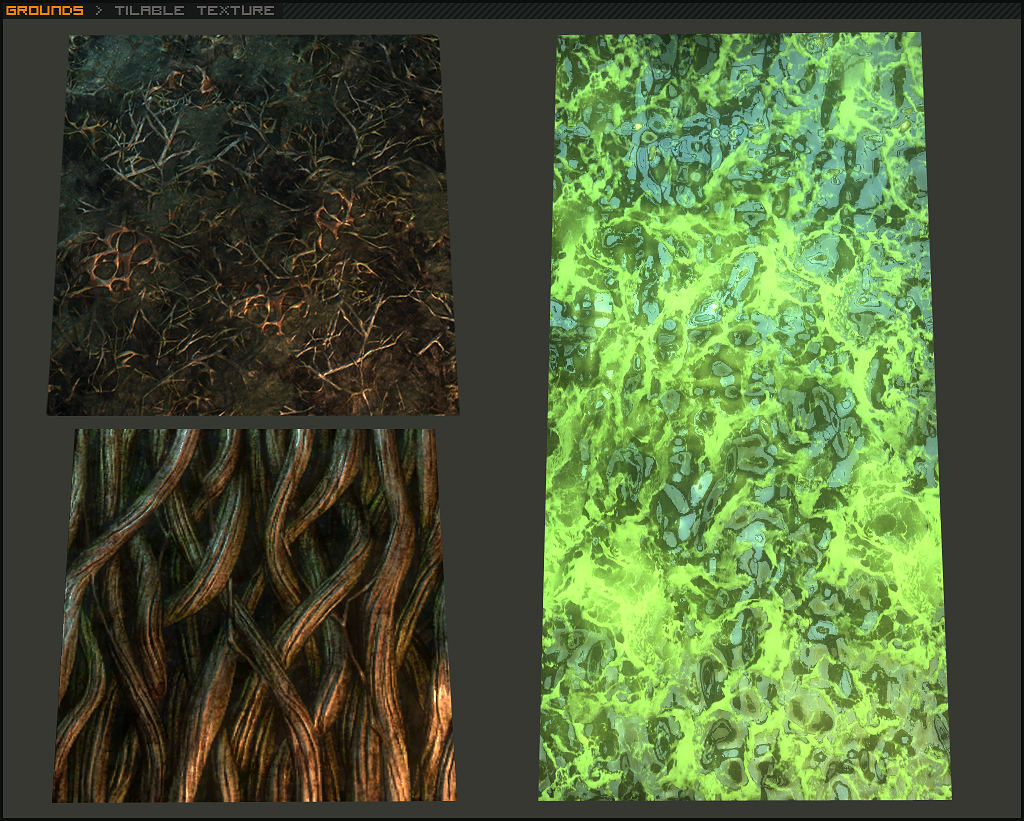
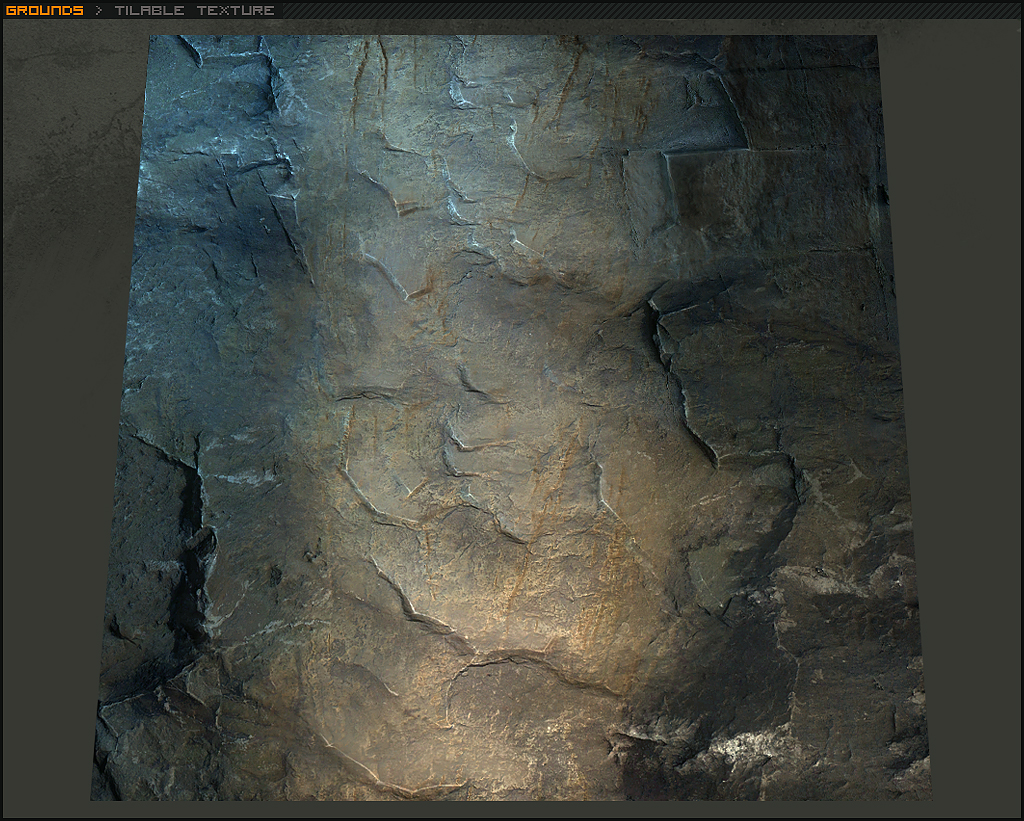
I worked on 2 unity games as an Environment Artist, You may know the first one cuz we worked together with Orb on this game Crasher and after i switched to DeathMonsters wich is unfortunately a dead game due the economic dismissal of the same company. It was my first "nextgen" game experience.
2 games with two human size teams, i really enjoyed working with them on those projects cuz i just learned so much.
I recently finished my portfolio, so now i can show you some of my work.
I hope you enjoy it!
DeathMonsters:
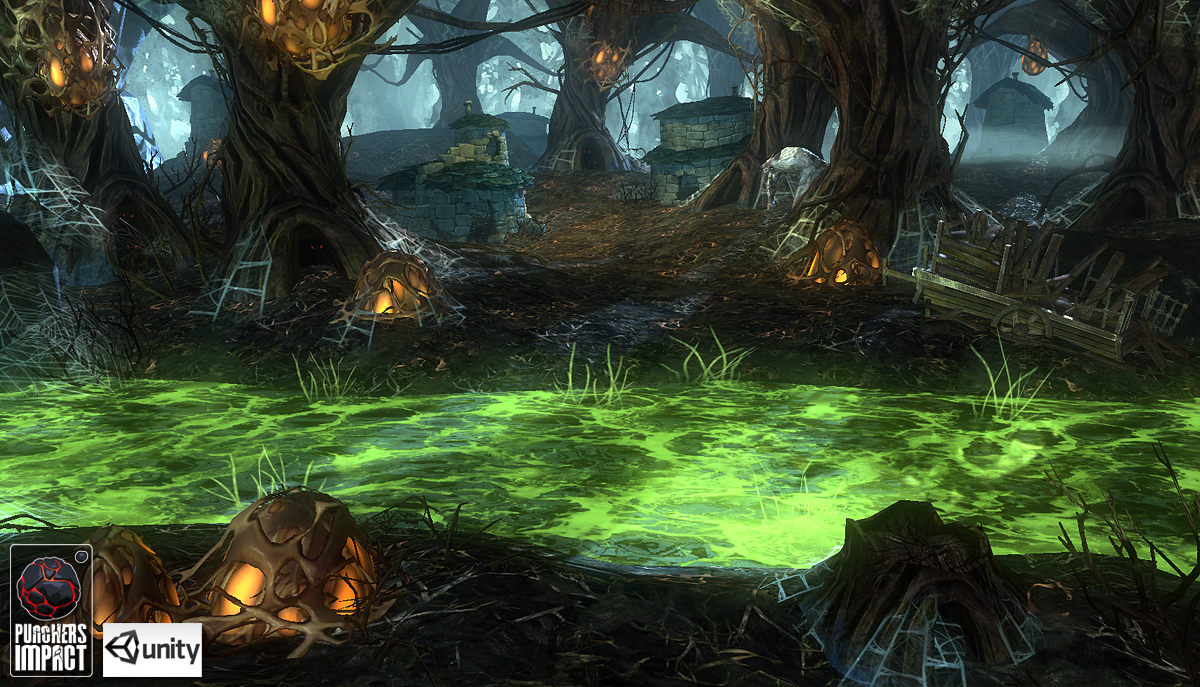
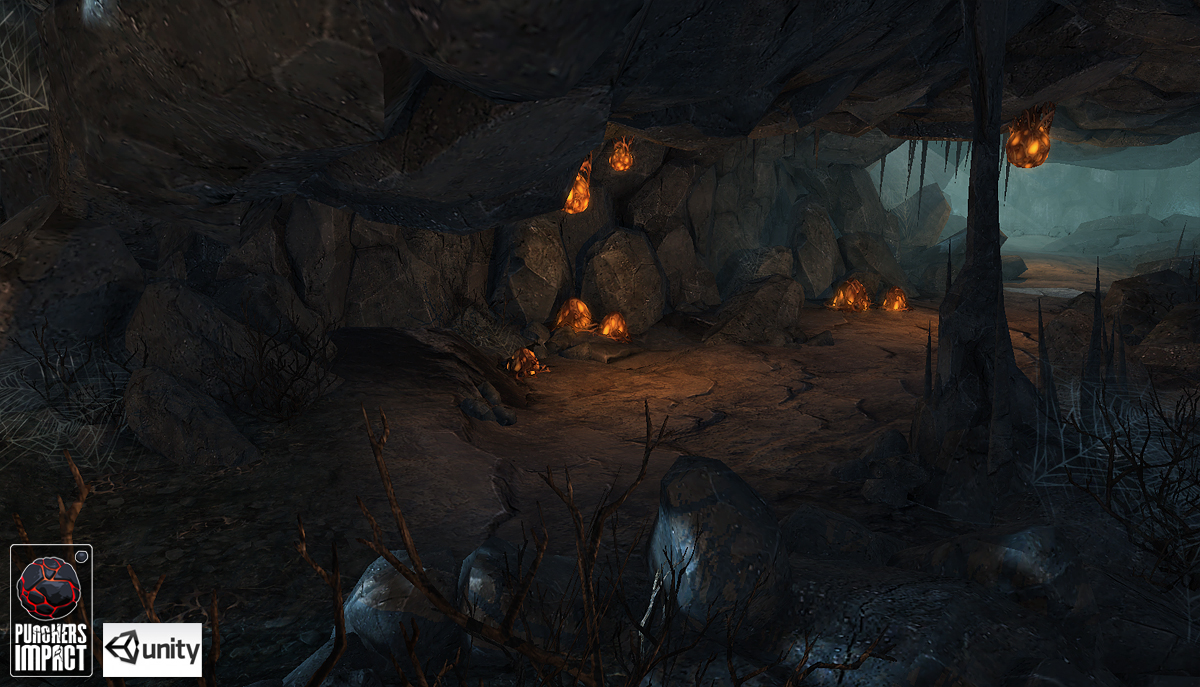
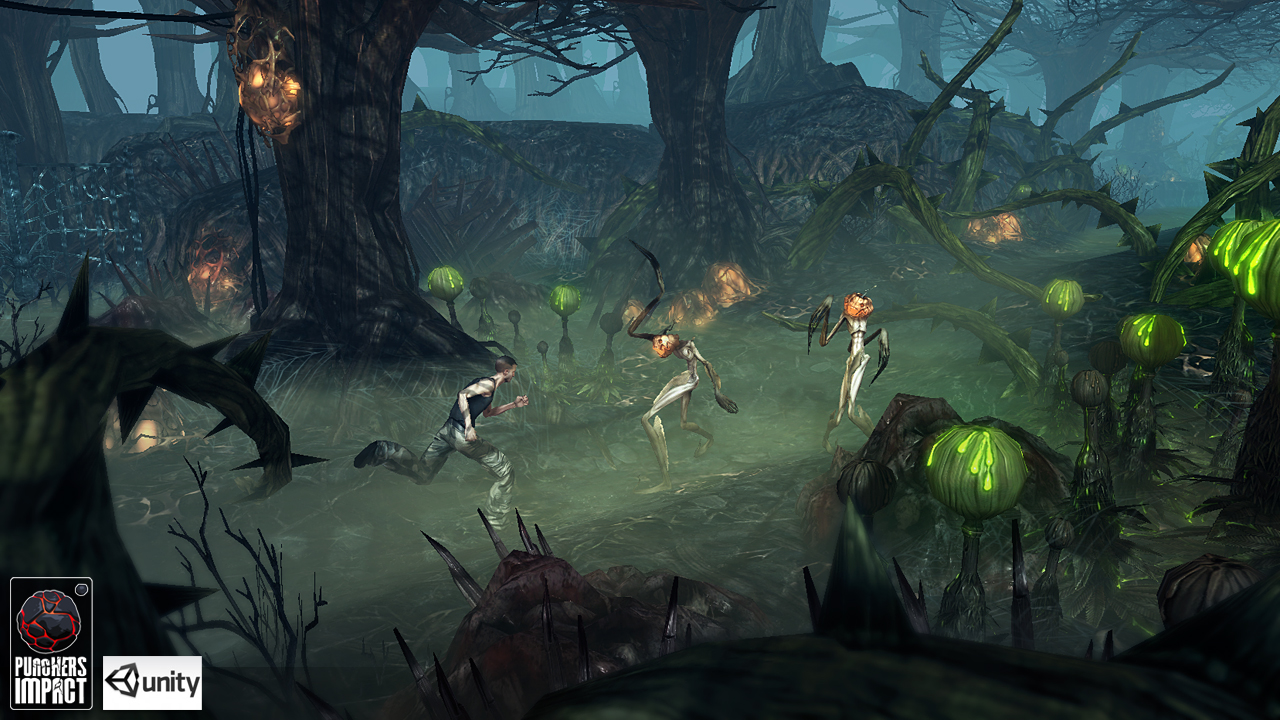
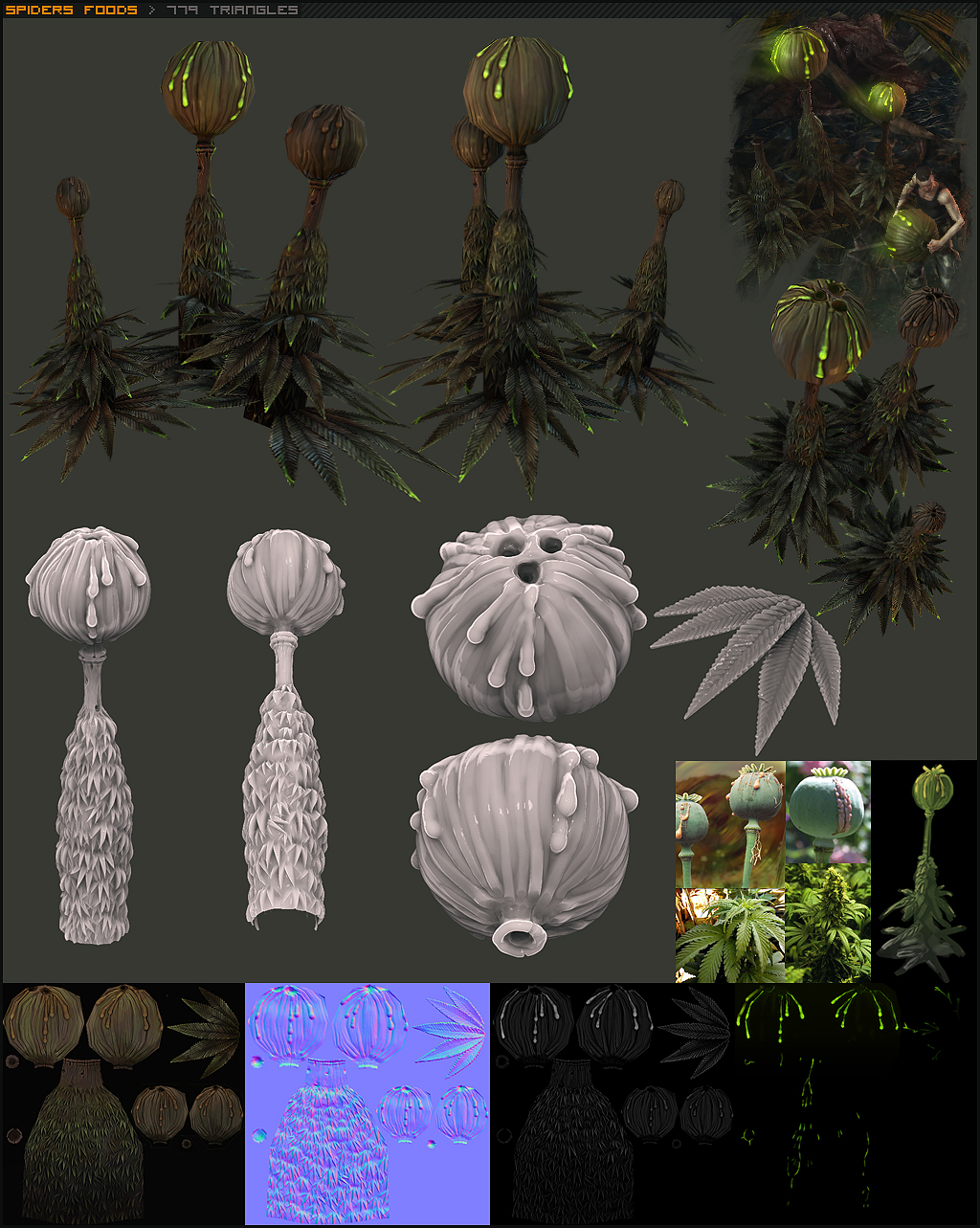
Crasher:
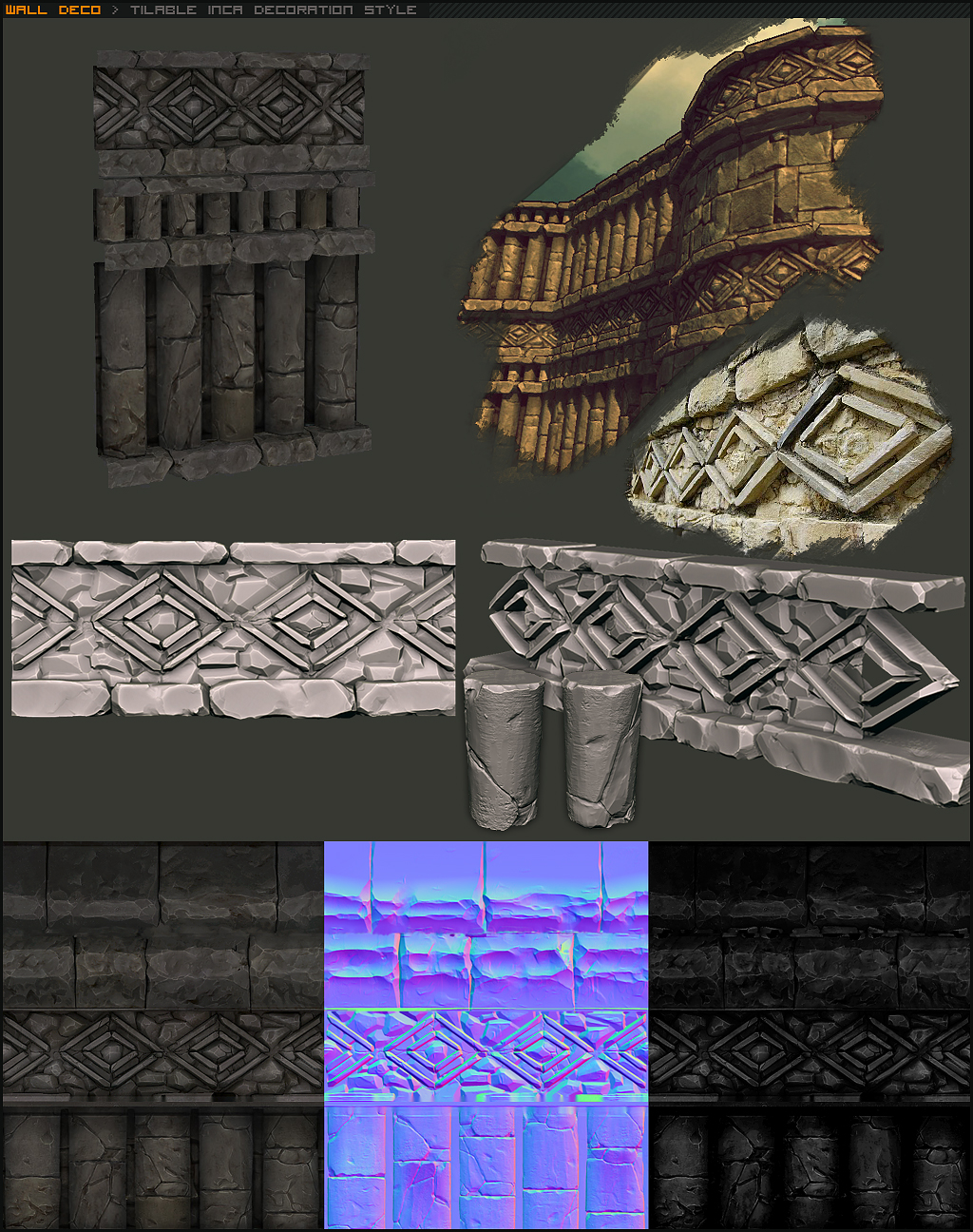
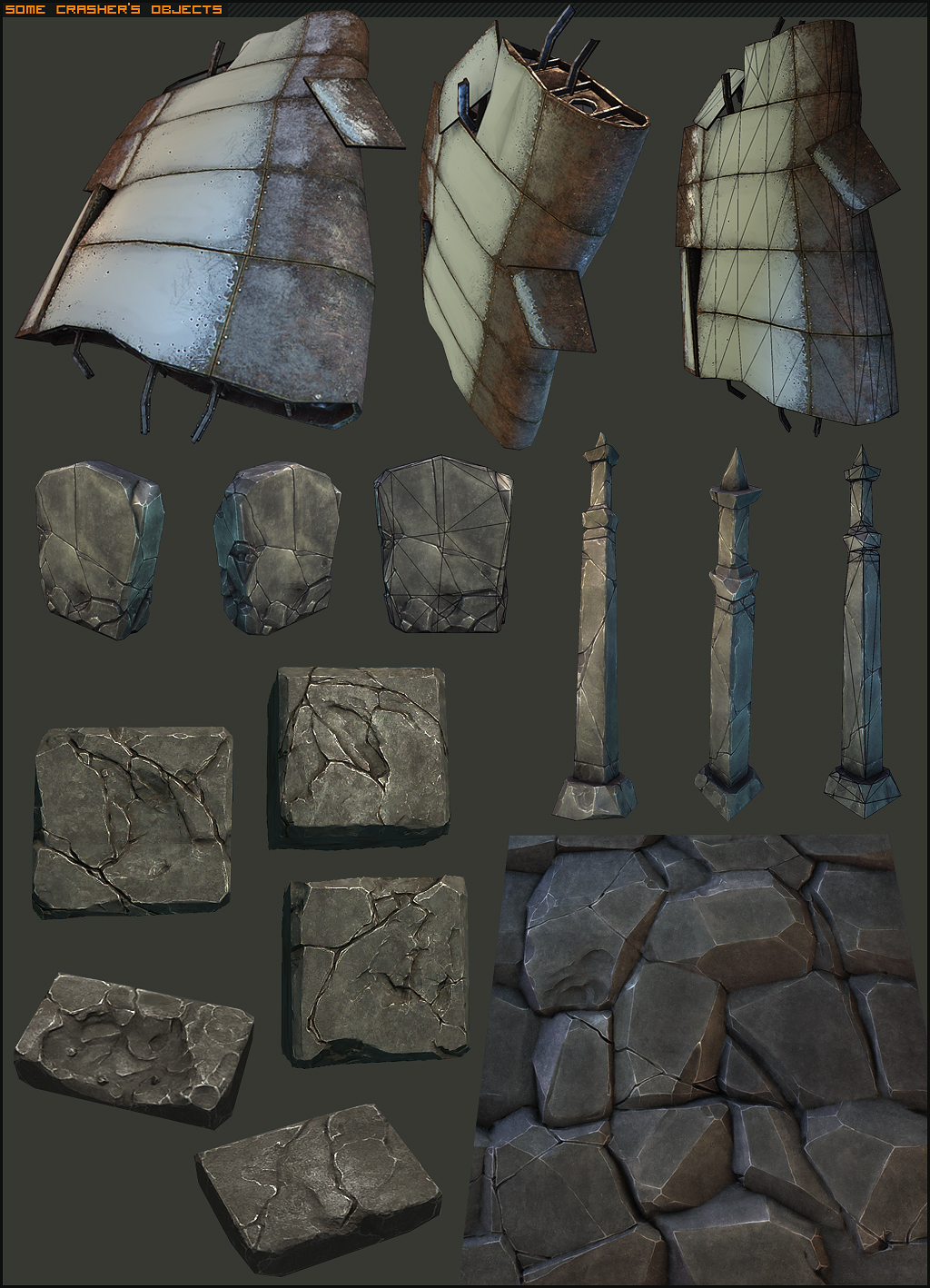
 alloa
alloa
The Bi-Monthly Environment Art Challenge | January - February (82)
Happy New Year everyone! Welcome one and all to the 82nd Bi-Monthly Environment Art Challenge for the months of January and February!
This challenge is a way for real-time 3D artists to test their skills and create a piece of work based on concepts provided. It's open to those of all skill levels and we do our best to provide meaningful feedback along the way so everyone can come away from the challenge with actionable points on which they can improve their craft!
Anyone is welcome in this challenge no matter your skill level! It's a test of your own ability not a competition between members. We're all here to improve as artists and learn from each other.
- ENVIRONMENTS -
HARD SURFACE ENVIRONMENT:
Memory Lane by JonasDeRo
https://www.deviantart.com/jonasdero/art/Memory-Lane-262883938

STYLIZED ENVIRONMENT:
tree house by Oksana Govorova
https://www.artstation.com/artwork/Oenr6

- PROPS -
HARD SURFACE PROP:
Guild hall props by Carlyn Lim
https://www.artstation.com/artwork/leZ1J

STYLIZED PROP:
Factory buildings by WHJ
https://www.artstation.com/artwork/L2OALk

- RULES -
Please read all the rules before starting:
- Try to post at least one critique for every post that you make. This will make for a better learning environment and help us all grow as artists.
- Try your best to finish as much as you can in the time frame provided, but remember even if you don't finish by the end of the challenge we encourage you to keep pushing and finish your piece!
- Post what you are working on in this thread so that way it's a more centralized place for advice and critique. Please avoid creating a new thread as we don't want to spam out the forums.
- It is recommended to use a game engine to present your work. Unreal Engine, Unity, and CryEngine are very common engines that can be used but feel free to use any alternatives that you want. (Marmoset Toolbag for example.)
- Feel free to change up your chosen concept a bit if you want! Interpret these concepts to your liking, especially if your aim is to add storytelling elements.
- If you finish your project and decide to post it to Artstation, make sure you give credit to the concept artist in the form of a link to their profile. Additionally, it is recommended to ask a concept artist for their permission to post a 3D piece based on their work before doing so.
- RECOMMENDATIONS -
- When you are just starting out making a scene, it can seem complicated or imposing. Take your time planning and blocking out, it will set you up for success later on.
- Think about how you can re-use assets, re-use textures, break it down as simple as possible and plan it out. A lot of people will break it down in their own way when they start out their challenge. Gather some reference images as well for different parts of the scene, don't be afraid to make it your own.
- We strongly encourage you to go and look at other games and see how they make their assets as well as get concept art to give it your own feel.
The goal is to learn and grow both artistically and in your ability to both give and receive critique, but don't stress about it and remember to have fun!
Good luck!
 Pinkfox
[WIP] Shoemaker Workshop
Hi everyone!
I started working on a personal project and I would like to share with you my progress. I want to create a shoemaker workshop with every small detail so I need to model many props. I am new to environment design (I am motion designer) so this is a way to practice and get better in this field. Modelling was done in Blender texturing in Substance painter and rendering in Unreal Engine 5.1.
Refs:

Composition blockout

Result So far


I would love to hear your feedbacks ! Feel free to share any throughs!
satforce
Re: What Are You Working On? (3D) 2022
Currently working on Kaido Dreamers, an anime racing game with RPG elements. Here's Dock stage wich is a location for drift racing and gymkhana
We added some rain, and introduce some splash particles instead dust.
A Demo is coming soon. For getting updated, just subscribe to our newsletter here: https://kaidodreamers.wixsite.com/kaidodreamersgame
Or join our Discord: https://discord.gg/qTucBQVPjC
Much love
 KaidoDreamers
Re: Some artist's using metallic values in painted metal for guns?
Reality is you can make things look good even if you completely do everything 'wrong'.
 rollin
Re: Improving viewport of 3ds Max

Without HDR, and no material, but you can certainly add those if you like.
 Eric Chadwick
Re: How The F*#% Do I Model This? - Reply for help with specific shapes - (Post attempt before asking)
@Deqa The edges on the model look a bit too sharp when compared to what's shown in the reference images. Though the fender is mostly flat surfaces, there are a number of angled transitions that are missing. Some of which are difficult to see. Gathering some higher quality references, with better lighting and more contrast, would make it easier to see exactly what's going on with the shapes.
As far as the topology goes, though it possible to add all of the smaller scale support loops in a single operation, it will be much easier to do so once all of the larger shapes are fully blocked out. It's also completely acceptable to use support loops on just one side of a soft shape transition or to slide some of the double loops further apart to ease over the rounded edges. Just be sure to constrain any movement to the underlying surface. That way everything stays co-planar.
Looking at some additional reference photos: the fenders and trim line do appear to be single piece molded fiberglass. Something that should probably be added to the block out. Especially before generating the smaller scale support loops. Getting all of the shapes into the block out and figuring out the basic loop flow will make it a lot easier to decide which edges need support loops on one side and which edges need support loops on both sides.
Here's a quick example of what the rough block out could look like. Larger curves, like around the corners of the wheel well, can usually be added with single support loops. After all of the major shapes are present then the rest of the smaller support loops can be added with a bevel / chamfer operation.
Though there's a number of different ways to setup variable width loop generation, sometimes it's just easier to apply the modifier and slide the support loops away from the edges that need to be softened. Really just depends on what makes the most sense for that specific part of the model.

Soldeus Are there any specific areas that seem like they could be improved or concerns about the results? A bit more context on the intended use case would also make it easier to give actionable feedback.
FrankPolygon