Best Of
Re: The Bi-Monthly Environment Art Challenge | November - December (81)
@Pep_mepla this looks really awesome. The details are great! This looks like a good hard surface practice.
@Fabi_G and @Kruskebunken thank you very much for your feedback. I took another go at the textures and the environment based on your comments. This is my final go at this, as I want to start the next project. It was a good practice and I hope to make more challenges in the future.


 YairMorr
Re: Sketchbook: Frank Polygon
Subdivision sketch: studying shapes and simplifying subdivision.
This write-up is a brief overview of a simple, shape based approach to subdivision modeling. This approach, with the primary focus being to create accurate shapes that define the loop flow paths, can help streamline the modeling process for most hard surface objects.
Working without enough information to visually interpret the shapes tends to add unnecessary frustration. So, start the modeling process by researching and gathering different references. Which can include things like background information, images, measurements, videos, etc. These references should be used as a guide for modeling real world objects and as a baseline for evaluating the form and function of design concepts.
Look at the references and think about how the object is made and how it's used. This will provide additional context that ties the real world details from the reference images to the creative narrative used to guide the development the artwork. Something that also helps inform decision making during the modeling process and provides inspiration for developing the visual storytelling elements that carry through to the texturing process.
Analyze the shapes in the concepts and references. Identify the key surface features and observe how they interact with each other. Establish the overall scale of the object then figure out the proportions between the different shapes that make up the surfaces. Use this information to come up with an order of operations for blocking out the basic shapes. If necessary: draw out the basic primitives that make up the object. Highlight flat areas, curved areas and the transitions between them.

Most topology flow issues can be solved during the block out. Which is why it's generally considered best practice to: Use the edges of the existing geometry as support for shape intersections whenever possible. Use the minimum amount of geometry required to create reasonably accurate shapes. Use a segment matching strategy to maintain uniform edge spacing when joining curved shapes.

Develop the block out in stages. Keep things relatively simple for the first few iterations of the block out. Larger shapes should generally be defined first, while also keeping the smaller details in mind. Focus on creating shapes that are accurate to the references then solve the major topology flow issues before adding the support loops. Overall mesh complexity can also be reduced by modeling individual components of the object separately.

Let the shapes define the loop flow. Some features may have curvature that influences or restricts the loop flow of adjacent surfaces. Block out those shapes first then adjust the number of segments in the adjacent surfaces to roughly match the edges where the two shapes intersect. Any significant difference between the edges of intersecting shapes can usually be averaged out between the support loops.

With this iterative approach to blocking out the shapes then solving the topology flow issues, the edges that define the borders of the shapes become the loop paths. Which means most of the support loops can be added by simply selecting those defining edges and using a bevel / chamfer operation to add the outside loops. Alternately, loop cuts and inset operations can also be used when the support loops are only needed on one side of the edges that define the shapes.

This shape based loop routing strategy tends to require little manual cleanup and can be mostly automated using modifiers. Something that helps make hard surface subdivision modeling much more approachable. The examples in this write-up show how this basic workflow can be applied to a moderately complex, plastic injection molded part which has a mix of soft, lofted shape transitions and hard seam lines. Which are commonly found on a variety of different hard surface objects. So, the same sort of approach will generally work with most hard surface modeling workflows.
Recap: Analyze the shapes in the concepts and references. Develop the block out in stages. Let the shapes define the loop flow. Match the segments of intersecting shapes. Use the existing geometry to guide the loop paths. Solve topology issues early on then add the support loops.
 FrankPolygon
Re: The Bi-Monthly Environment Art Challenge | November - December (81)


Happy holidays everyone!!!
I wanted to thank you for the feedback, it was really helpful. However, I must call it a day with this one. My goal was to practice more my hard surface skills and learn to use blender's boxcutter addon.
Given the time left, I won't be able to retopo and texture the model, but so far the experenice was great. I'll try to make this challenges more often and with more time.
Stay safe guys!
 Pep_mepla
Re: Is there a protest going on right now at Artstation?
I think for now it's best to judge this on a case by case basis.
Use the Flag:Report button, and give us details on exactly how the piece is infringement. Include screenshots of original art side-by-side with the new one. If it's an un-attributed steal, we'll take it down, and warn the offender.
We've done this recently, when an outsourcer used someone's store content in their portfolio, with minimal changes and without attribution. We'll do the same with infringing AI art.
As it stands right now, AI art appears to be a gray area on outright infringement. Yet it's not gray in terms of morality, if an AI user is passing off a piece as wholly their own, without attribution.
Should we prohibit all AI art, period? Only allow when clearly attributed? Allow unless demonstrably infringing on a specific pre-existing piece?
 Eric Chadwick
Re: The Bi-Monthly Environment Art Challenge | November - December (81)
Thanks a lot for your feedback guys!!! It is really encouraging. So I tried to correct some of the things you pointed out, but leaving the overall proportions which I like.

I'm slowly but surely getting there :D

@AD_3D I love how clean your bakes are turning out! It really shows the effort on the high poly model!
@YairMorr I think I saw your final renderings on Artstation yesterday and it looks AAA for sure, loved the final result!!!
Pep_mepla
Book of Tyrael
Hey gang! Long time no see.
I've been noodling with photorealism for some time now and decided to take on this old thing.
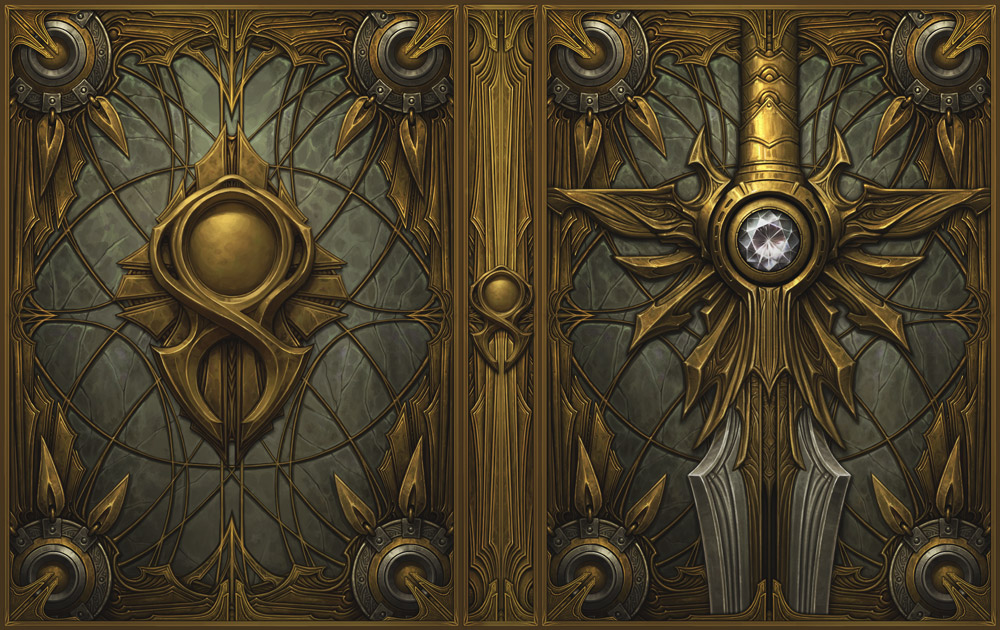
Naturally, as a modern day CG enjoyer, I went to town on that sweet sweet subdiv modeling. In Blender, no less.

With pretty shaders included!

I then tossed it over to Zbrush and effed it up a little, so that it looks properly old and beat up ^^ Just a little bit though.
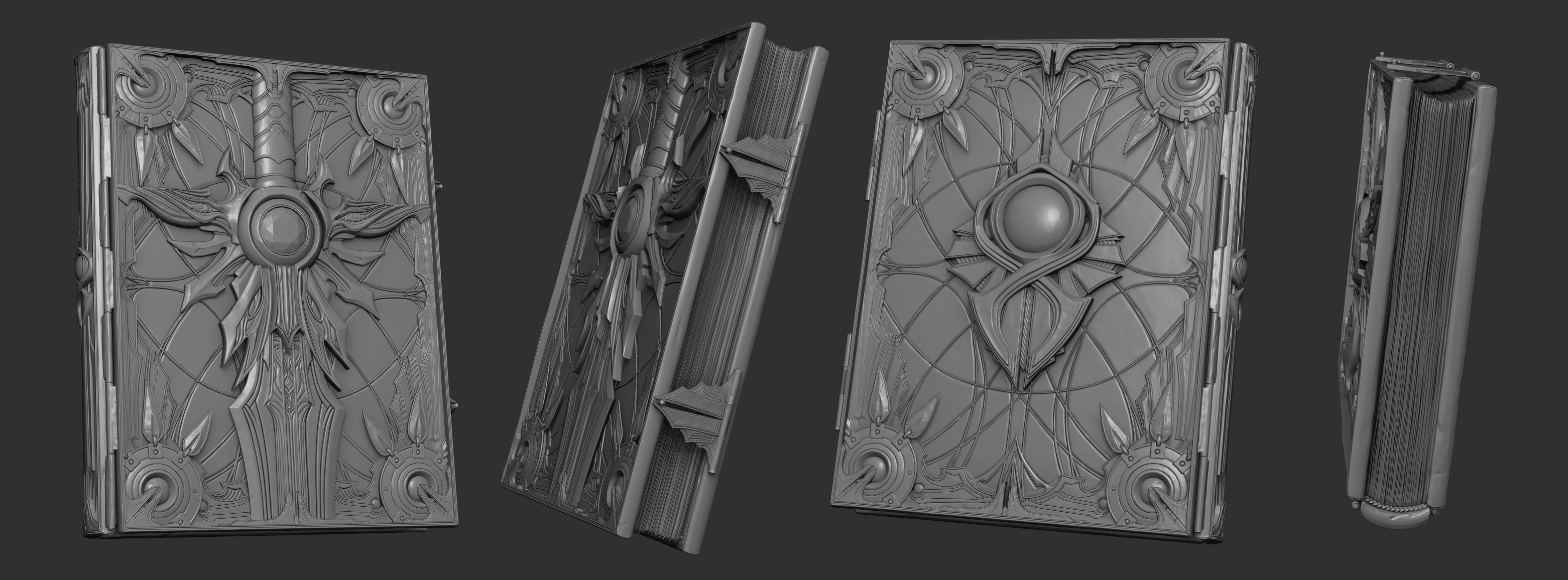
And then over to retopology. This time in Maya, I haven't tried it in Blender yet, so in the interest on expediency I went back to my roots.

When all was said and done, I've sent it over to Substance and using a metric ton of macro references and another metric ton of coffee started texturing this bad boy!

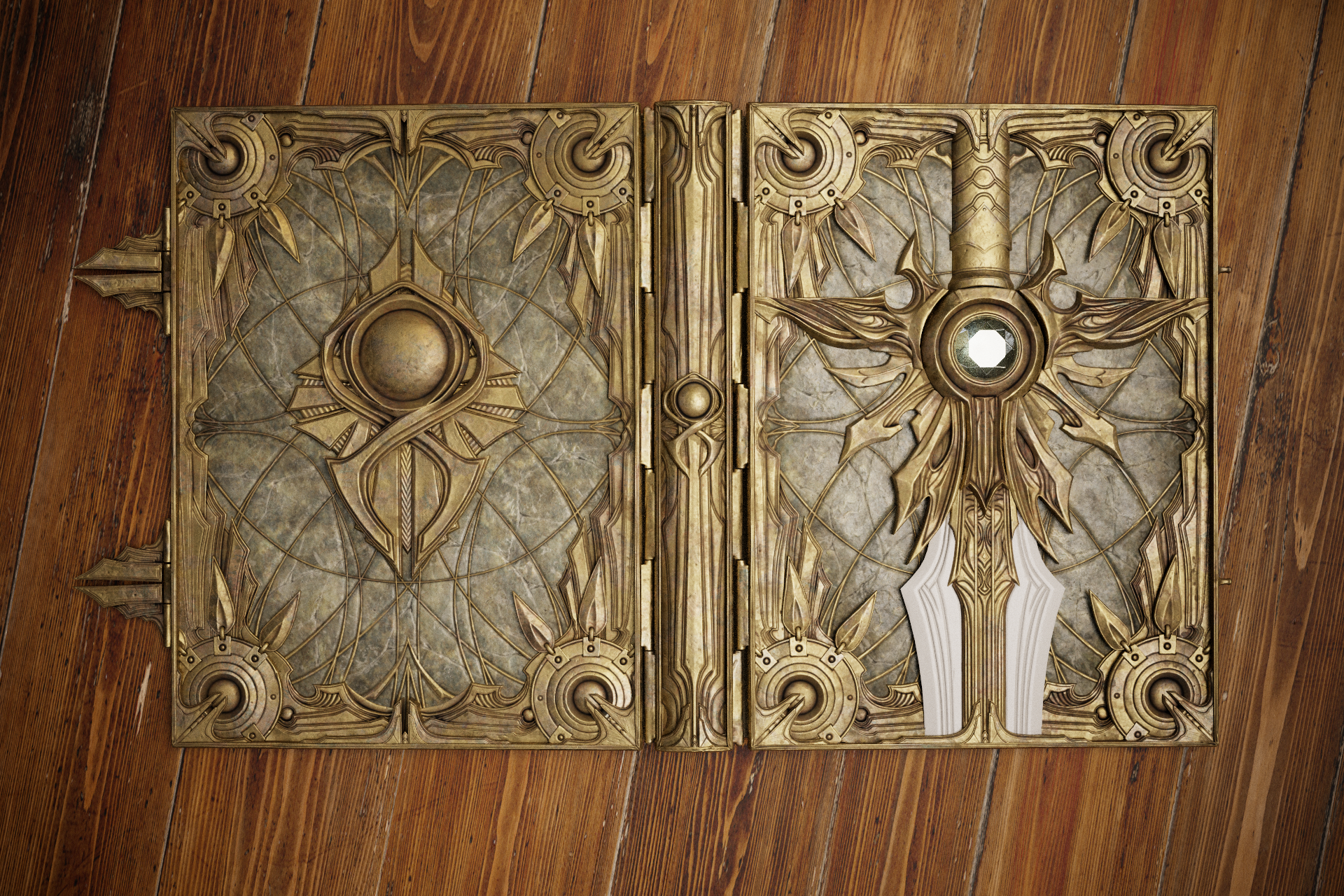

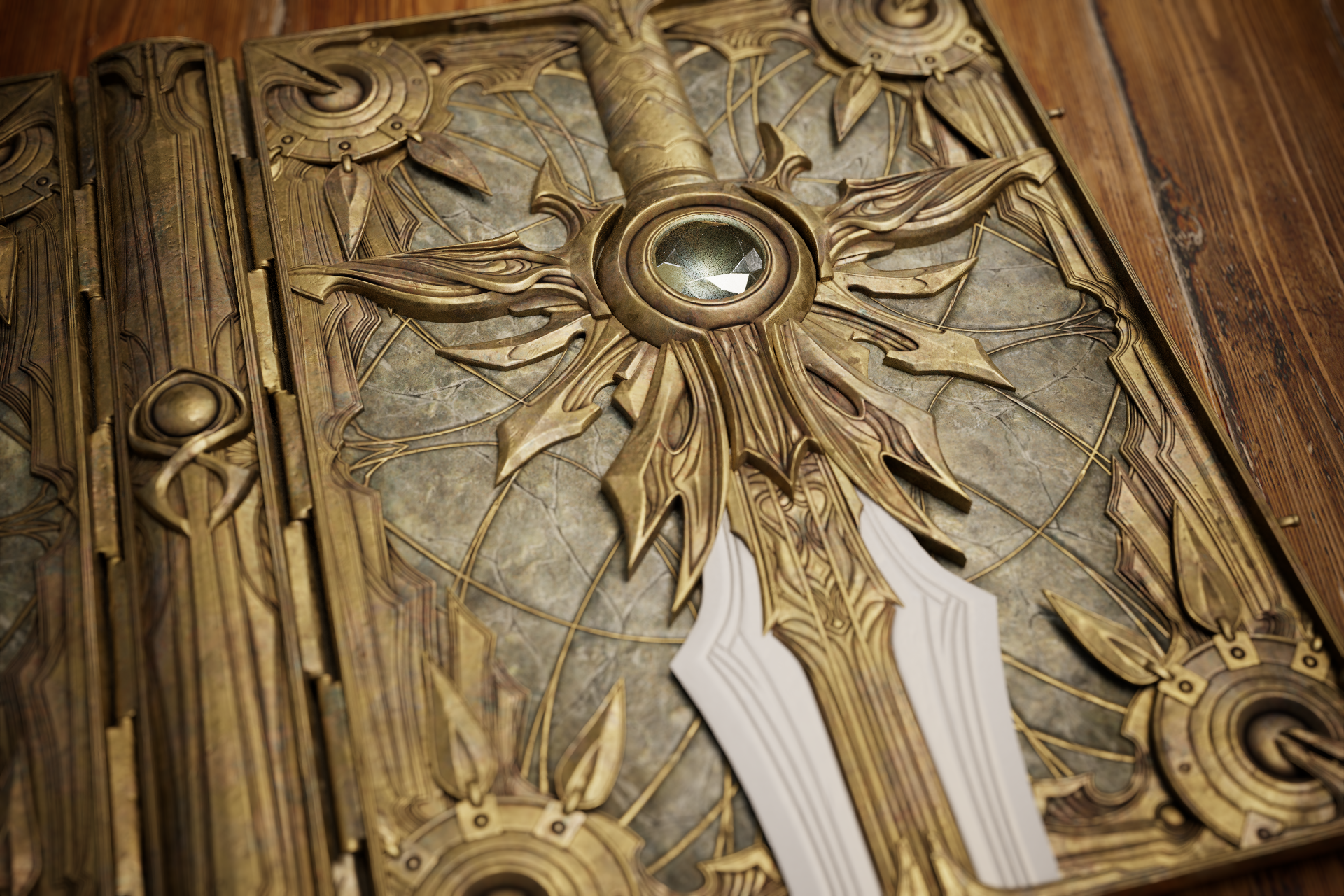

So here's the thing, folks. I wanted to gauge your guys' opinion on how it's going so far. It's nowhere near done, there's still a lot of work to do, but i would really appreciate some feedack, if you got any.

Cheers!
 Svartberg
Re: AI Art, Good or Bad? A (hopefully) nuanced take on the subject.
This is hardly a good comparison.
The decent thing to do is to credit the asset maker, list what you used and most importantly, pay for the asset. Just like you paid for all the software in your pipeline. The artist also makes a choice of the assets to purchase. Amongst numerous other decisions, scene layout, converting materials, editing textures, lighting, rendering AOVs and compositing to realize the artwork.
These aren't rote tasks not needing creativity, they each require the thoughtful consideration and sometimes trial and error on the part of the artist. How many of these decisions are being made by the artist and how much of them by the AI when it comes to AI Art workflow?
dodeqaa
Re: What Are You Working On? (3D) 2022
I finished this character base on concept art by Zatransis last week:

I've been meaning to post it here but it kept slipping my mind! More angles, progress shots, and a 3D viewer here.
 jgarrison
Re: AI Art, Good or Bad? A (hopefully) nuanced take on the subject.
I know that it feels wrong to you that AI looks at your images and then draws in your style. But feeling doesn't count. This part is simply not illegal. Style cannot be patented. Maybe in the future there is some regulation. But not now.
Well I mean, it sort of counts. You seem to have this interesting viewpoint that it doesn't matter if it isn't strictly (at this point in time) illegal.
But like...
Being an asshole isn't illegal. But if I can help it, I'm still not going to associate with, hire, or financially contribute to the livelihood of assholes.
There's a lot of things that aren't illegal that don't make the world richer. Making it easier for stupid people to be stupid and disrespectful isn't an impressive innovation. Creating tools that encourage corporate greed, that push people to keep consuming, that tell people results come not from well-meaning effort and study but from ripping people off - this does not benefit mankind (or local community, or even oneself).
Why is it we started with stealing from artists? Why did we instantly try - all over the world, to monetize people being lazier? To reward people who do less work, who have less creativity, and harm those who are already a rare and valuable breed of person? We seriously thought that was better than training AI to detect cancers? We want to put out apps on Google Play more than we want help designing better prosthetics? Solve for energy efficiency?
Of course we do. Like with most other things, it's easier to do harm than it is to do good. And as this technology perfectly illustrates (lol) - people want to be lazy.
And yes - as you've pointed out @Tiles - there are many technological innovations we've had and use that make people lazier. This is not the first. It's becoming more and more clear that we've been foolishly chasing some truly stupid things for a good long while. I hope that the world pivots, regulates, and brings things to a more reasonable and respectful place with regards to AI generative content. I hope that we wind up in a place where people like you can be happy, and the artists of the world can feel respected at the same time.
Until then - as you've noted, you are allowed to go about doing what you're doing. For all intents and purposes at the moment, it is not "illegal". And similar to how respect for the artists whose work was used was apparently not required...
Respect for the people who use the tools is also, not required.
 Two Listen
Re: Book of Tyrael
Thank you so much guys. You're totally right about the metal and the feather-like elements. I also did some work on the white metal.
Still need to do some experimenting with a diamond and then move on to paper.

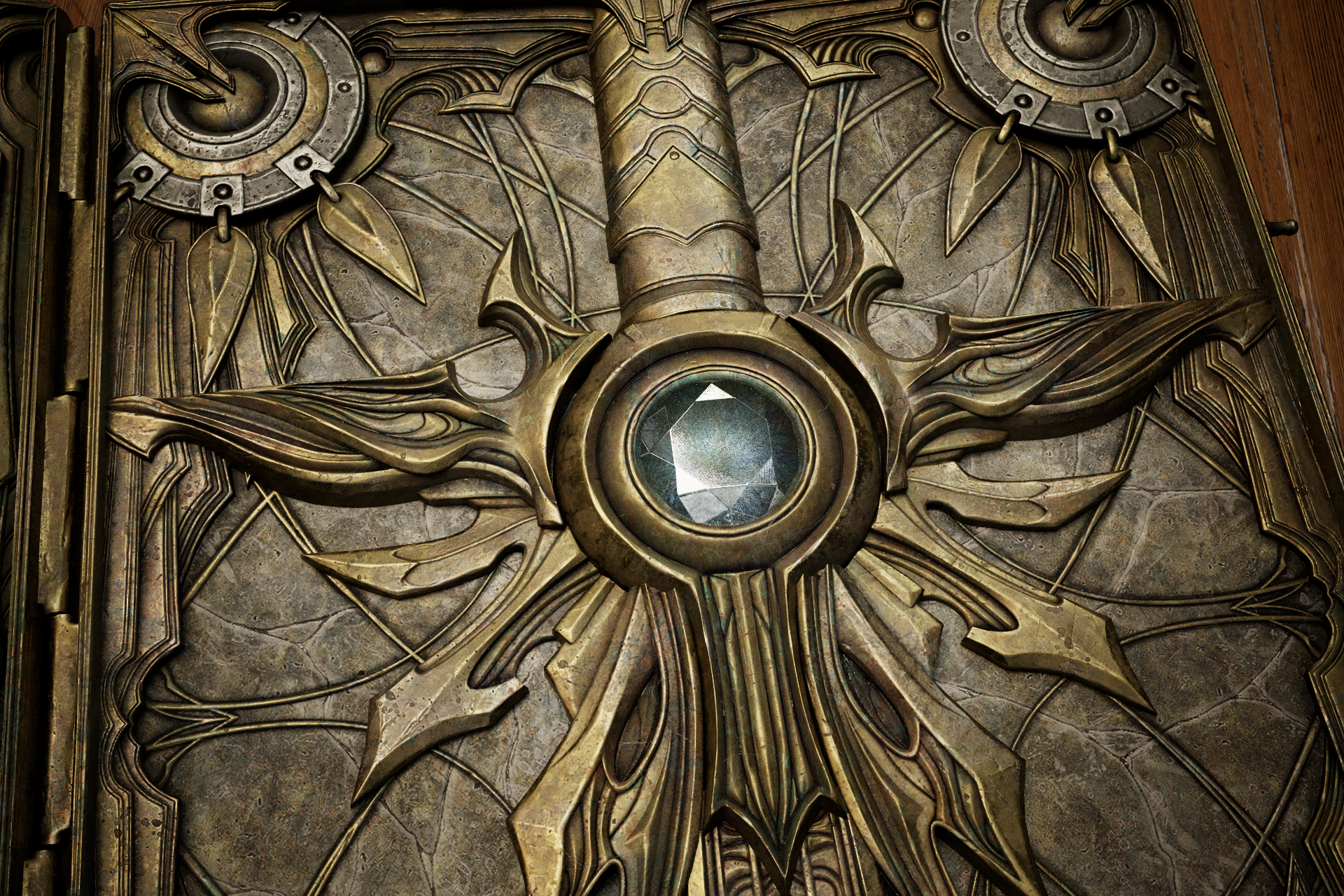

Also, raytracing was eating up some AO so I painted some to add the accents on the layered parts. Maybe it got a little out of hand, let me know what you guys think.
 Svartberg