Best Of
Re: LOW-POLY ART
Realtime Eye Pratice for Games
Hello guys, I need this eye and I decided create a ready eye for my characters. Thanks for Alfred Roettinger xyz tutorials!
Iris PBR textures created from bitmap on Substance Designer.
Total tris; 3600
All Textures PBR
2 LOD
https://www.artstation.com/yunuskilic
www.yunuskilic.com


 yunuskilic
Re: LOW-POLY ART

 lsgrandchamp


Re: What Are You Working On? (3D) 2022
This is my personal work i started long ago to learn Zbrush live boolean workflow and ended up making it with final texture and game mesh.
i tried to make it used and made some smart materials while doing it which i will share soon.
I am planning to add more skins for this and some gillie wraps on it later.
lot more to come so tune in.
Hope you guys like it.
Enjoy.
Full renders here--
https://www.artstation.com/artwork/Zekgb1

 Shashank
The Bi-Monthly Environment Art Challenge | November - December (81)
Hey everyone! Welcome one and all to the 81st Bi-Monthly Environment Art Challenge for the months of November and December!
This challenge is a way for real-time 3D artists to test their skills and create a piece of work based on concepts provided. It's open to those of all skill levels and we do our best to provide meaningful feedback along the way so everyone can come away from the challenge with actionable points on which they can improve their craft!
Anyone is welcome in this challenge no matter your skill level! It's a test of your own ability not a competition between members. We're all here to improve as artists and learn from each other.
- ENVIRONMENTS -
HARD SURFACE ENVIRONMENT:
Gears 5 by Yaroslav Odnorogov
https://www.artstation.com/artwork/aGR42z

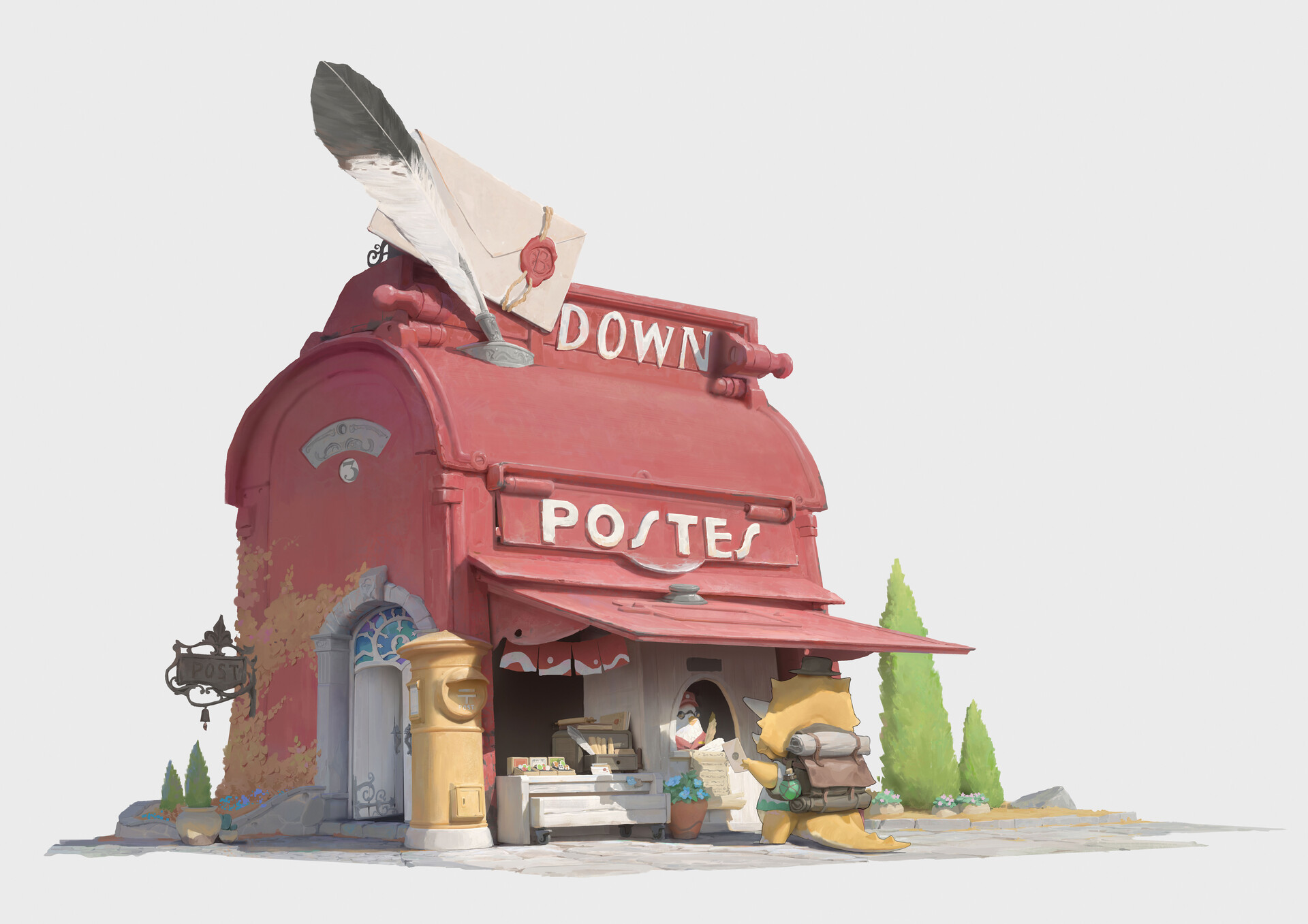
STYLIZED ENVIRONMENT:
红邮局 by joker chen
https://www.artstation.com/artwork/r9VBXe
- PROPS -
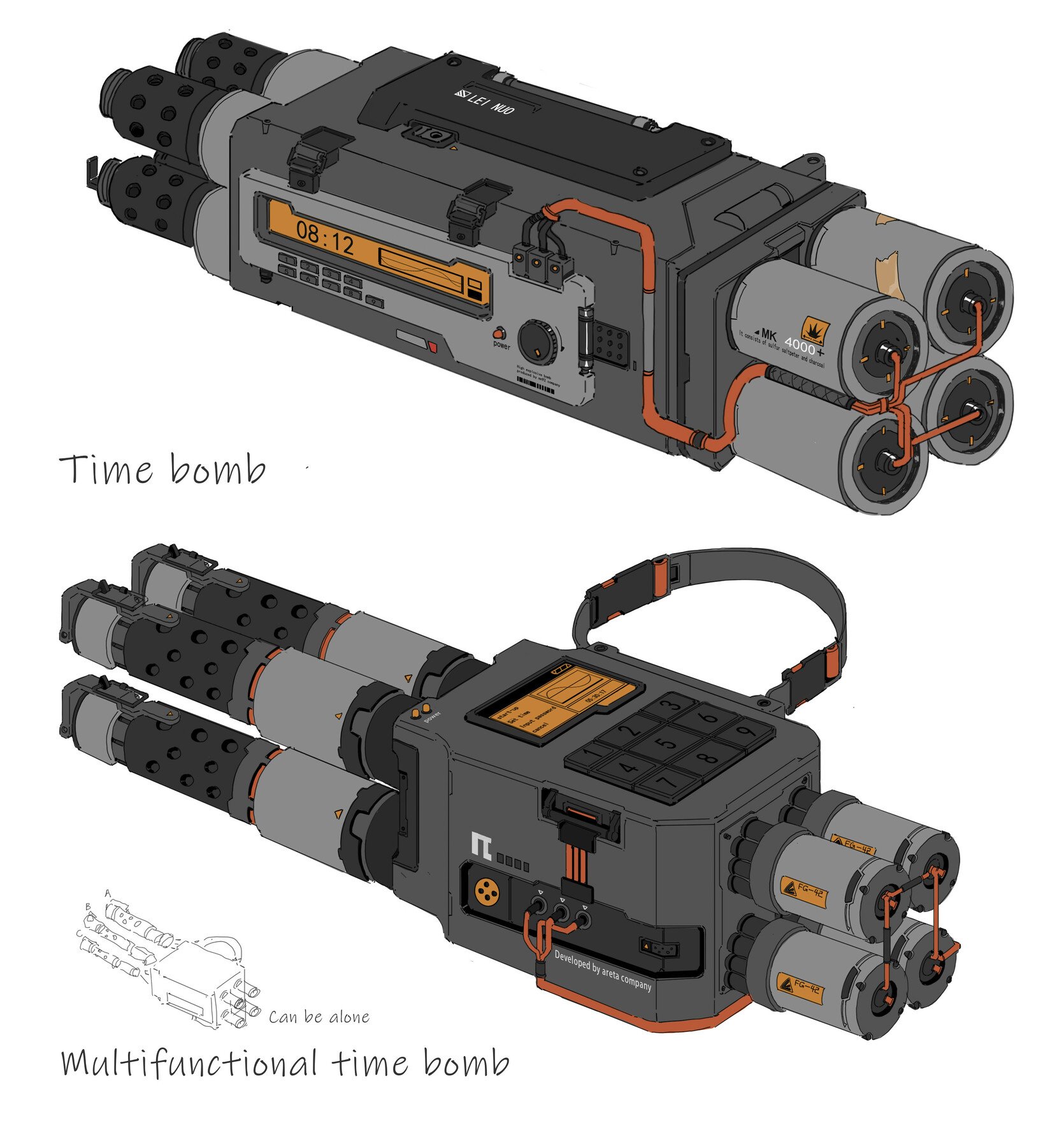
HARD SURFACE PROP:
bomb by kunbei
https://www.artstation.com/artwork/zD6xxw
STYLIZED PROP:
Props design / interior - Islandia by Victor Maillet
https://www.artstation.com/artwork/2qaA6Y

- RULES -
Please read all the rules before starting:
- Try to post at least one critique for every post that you make. This will make for a better learning environment and help us all grow as artists.
- Try your best to finish as much as you can in the time frame provided, but remember even if you don't finish by the end of the challenge we encourage you to keep pushing and finish your piece!
- Post what you are working on in this thread so that way it's a more centralized place for advice and critique. Please avoid creating a new thread as we don't want to spam out the forums.
- It is recommended to use a game engine to present your work. Unreal Engine, Unity, and CryEngine are very common engines that can be used but feel free to use any alternatives that you want. (Marmoset Toolbag for example.)
- Feel free to change up your chosen concept a bit if you want! Interpret these concepts to your liking, especially if your aim is to add storytelling elements.
- If you finish your project and decide to post it to Artstation, make sure you give credit to the concept artist in the form of a link to their profile. Additionally, it is recommended to ask a concept artist for their permission to post a 3D piece based on their work before doing so.
- RECOMMENDATIONS -
- When you are just starting out making a scene, it can seem complicated or imposing. Take your time planning and blocking out, it will set you up for success later on.
- Think about how you can re-use assets, re-use textures, break it down as simple as possible and plan it out. A lot of people will break it down in their own way when they start out their challenge. Gather some reference images as well for different parts of the scene, don't be afraid to make it your own.
- We strongly encourage you to go and look at other games and see how they make their assets as well as get concept art to give it your own feel.
The goal is to learn and grow both artistically and in your ability to both give and receive critique, but don't stress about it and remember to have fun!
Good luck!
 Pinkfox
Re: The Bi-Monthly Environment Art Challenge | September - October (80)
Hey everyone! 🙂
I want to start out by saying it's been wonderful watching this challenge evolve over time. Everyone did fantastic work and we had really nice progress shots showing the process, but more than that there was a great amount of knowledge sharing and helpful critique that made me smile each time I saw it. I believe there are a couple people who may still be finishing their piece up, if that's you please keep us updated here! The work has been wonderful and it's always heartwarming to see it reach completion.
Apologies for getting this one out late but challenge 81 is now available! I opted to go for diorama-style environments this go around so hopefully some people here can take the lessons they learned and apply them to something new without feeling overwhelmed. Hope to see you over there!
Pinkfox


Re: What Are You Working On? (3D) 2022

Working on a female Sekiro lookdev character. more on my artstation https://www.artstation.com/artwork/zDrX6q
 doffyspider
Re: The Bi-Monthly Environment Art Challenge | September - October (80)
@Fabi_G This is so good!
So many people have inspired me to participate in the challenge by making such good art. I've procrastinated enough, definitely gonna join the Nov-Dec challenge. Can't wait!
 Yahska