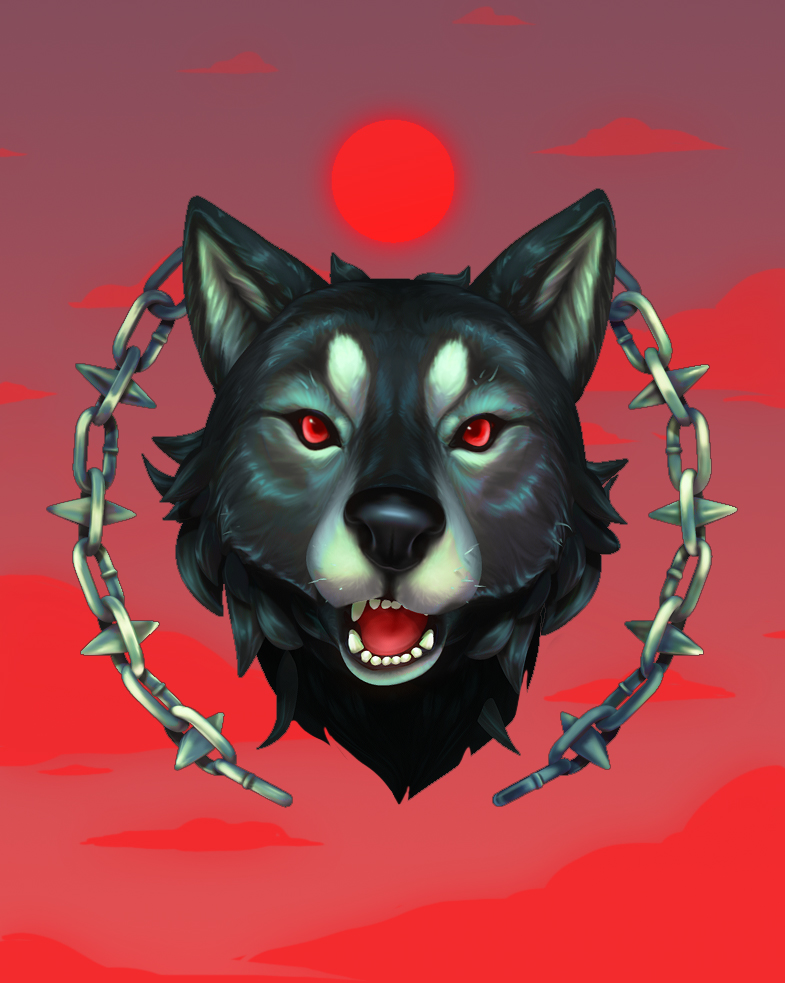
It starts May 12, and ends Oct 17. Let's see what you got!
https://polycount.com/discussion/237047/the-brawl²-tournament
Best Of
Re: 'Good Company' - 3D work
After 4 years, 9 months and 1 day of hard work we've finally released GoodCompany. 🎉
 Controller51



Re: Sketchbook: Anastasia Wyatt
Another older artwork, of some deer type creatures on a snowy mountain top.

 AnastasiaWyatt






Re: Sketchbook: MrN
Thank you so much dude!Whoolkan said:great work! i've been scrolling through this thread and you can clearly see the progression. A lot of different assets too
I created a new version of the supply drop for Rust recently!

 MrNinjutsu
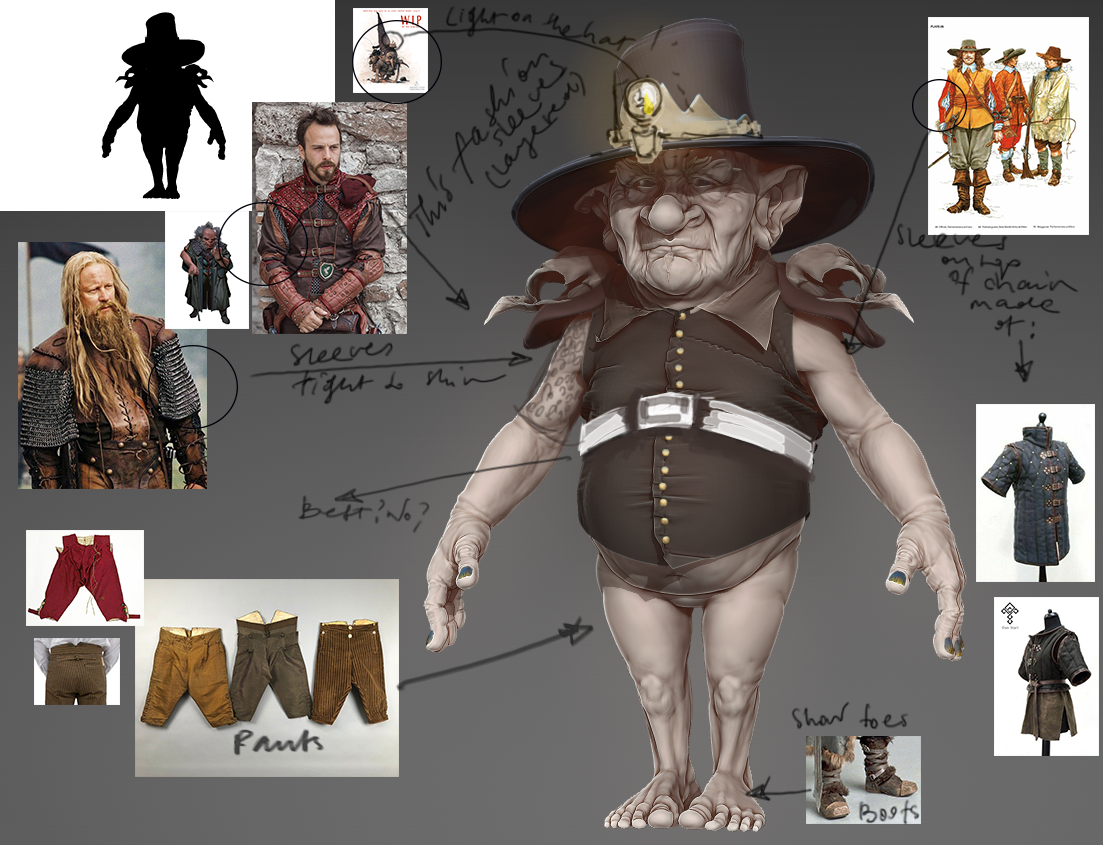
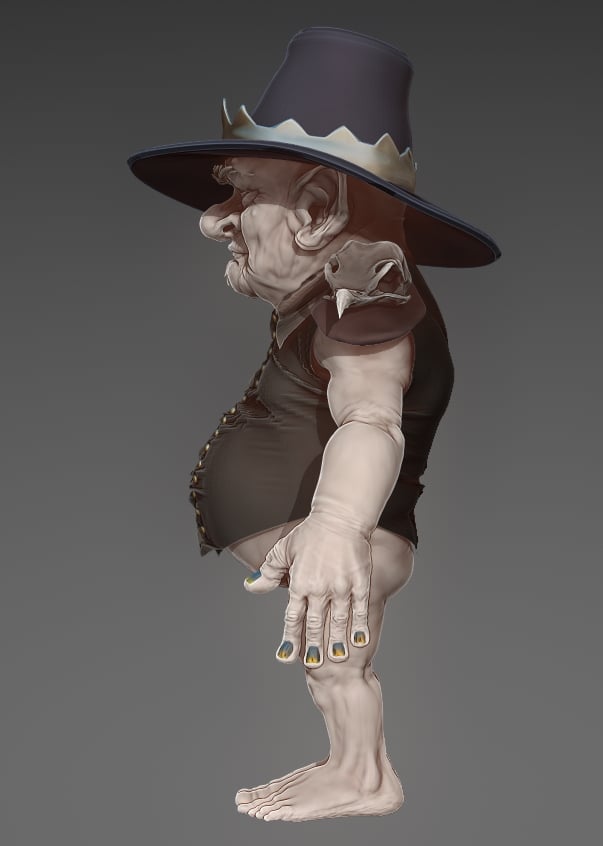
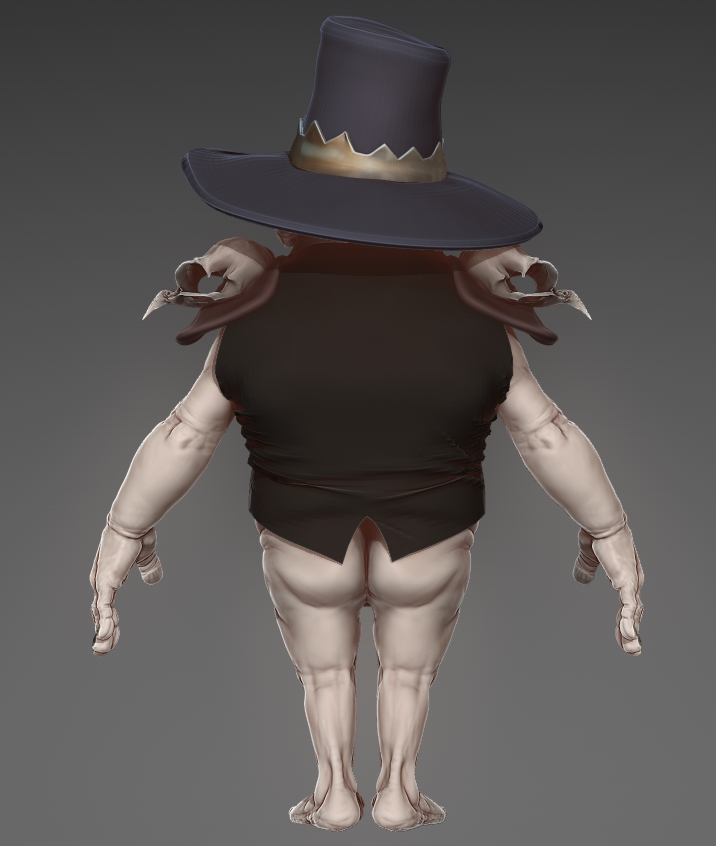
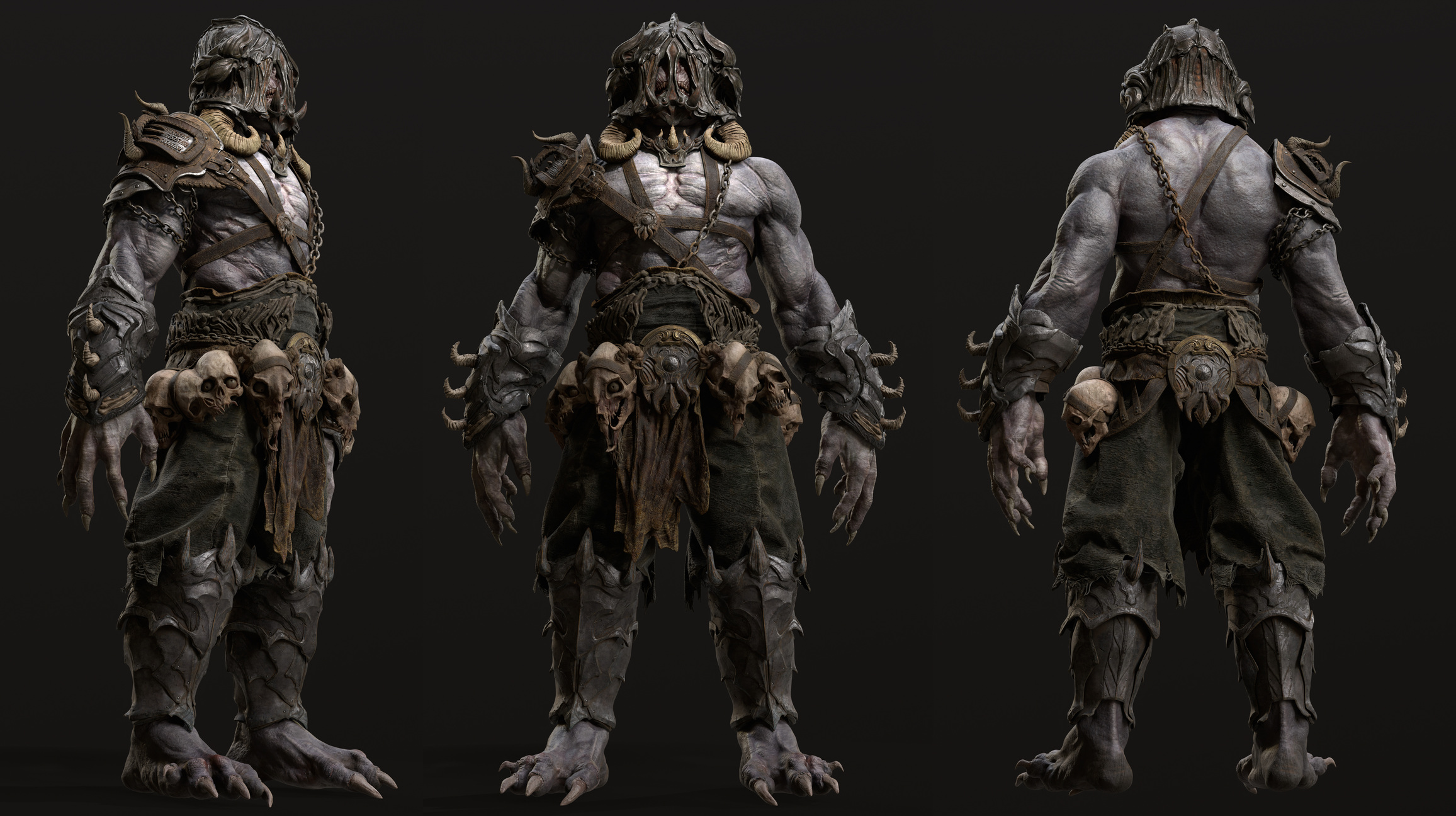
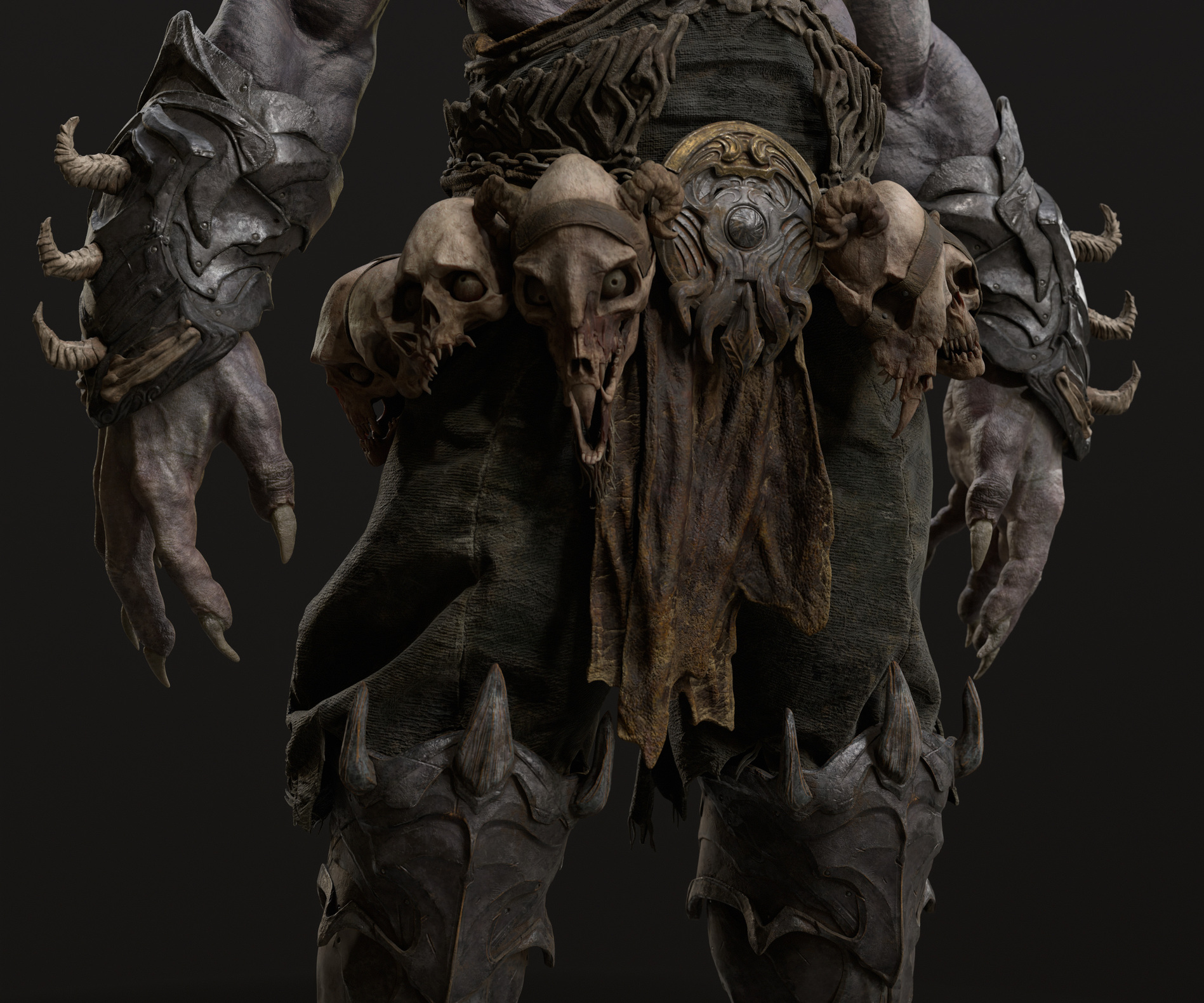
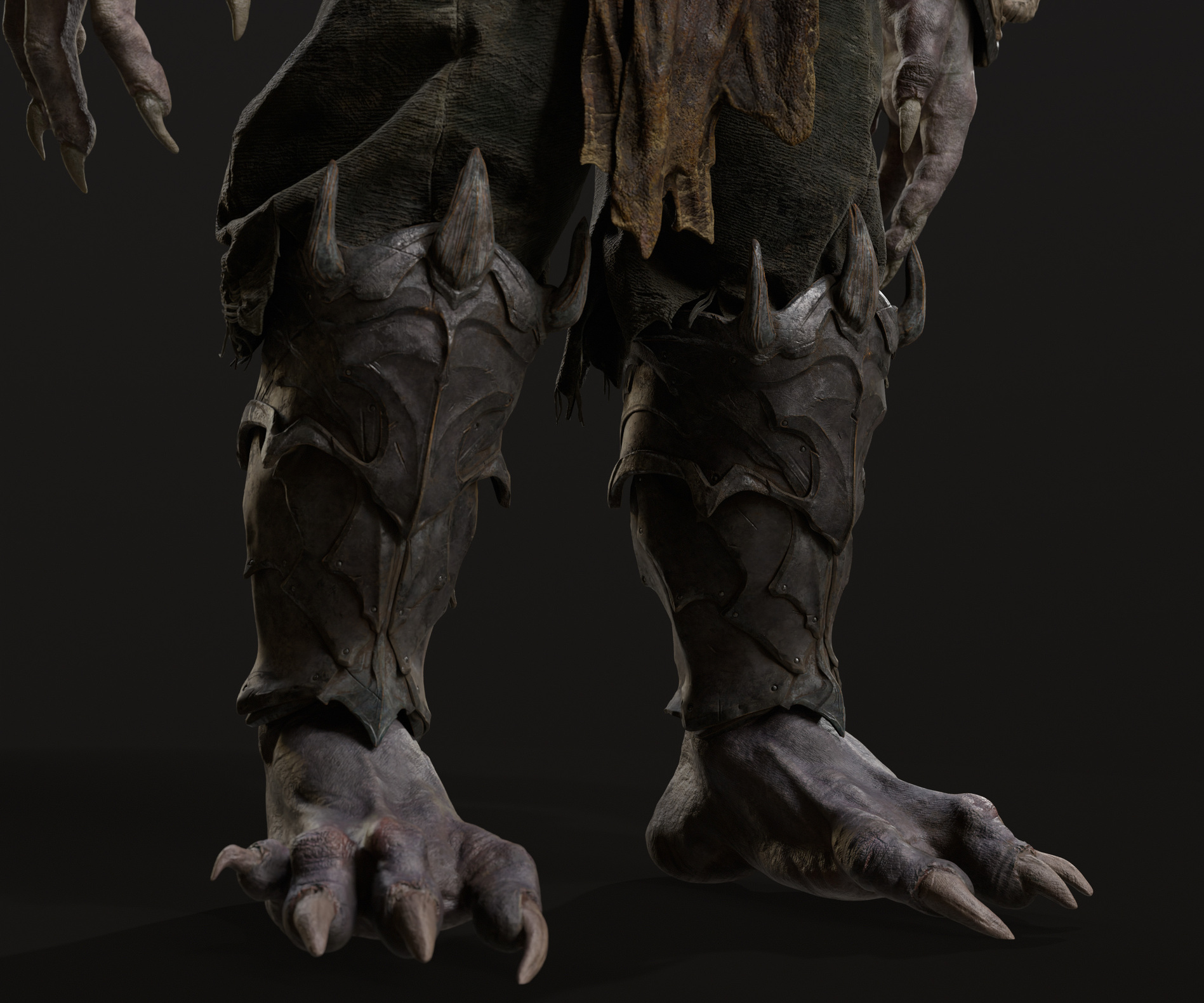
Warrior Monster
Hi polycount ! I don't usually post here but wanted to share my latest project with you guys
Amazing concept by Fenghua Zhong
I've worked on and off on this project for a long time now. It's the frankensteined result of my own growth and experiments. I am calling it "done" but I'd love to revisit a lot of these things with what I've learned over that time span.
Render in Marmoset 4.


 Yasimax
Re: Loops vs Grid
Really good advice here.
To further illustrate Eric's point: pure quad grid topology does tend to have a relatively consistent and dense geometry distribution. Which might not require support loops but can make it difficult to edit the basic shapes and control the edge sharpness. Most base meshes can be simplified by using support loops to concentrate geometry where it's needed and different topology layouts can be used to direct those support loops around the shapes.

Grid topology and support loops aren't mutually exclusive either. There's only so many times the base mesh can be subdivided, to sharpen the edges, before it becomes non-human readable. Which is why support loops are a fundamental part of subdivision modeling.
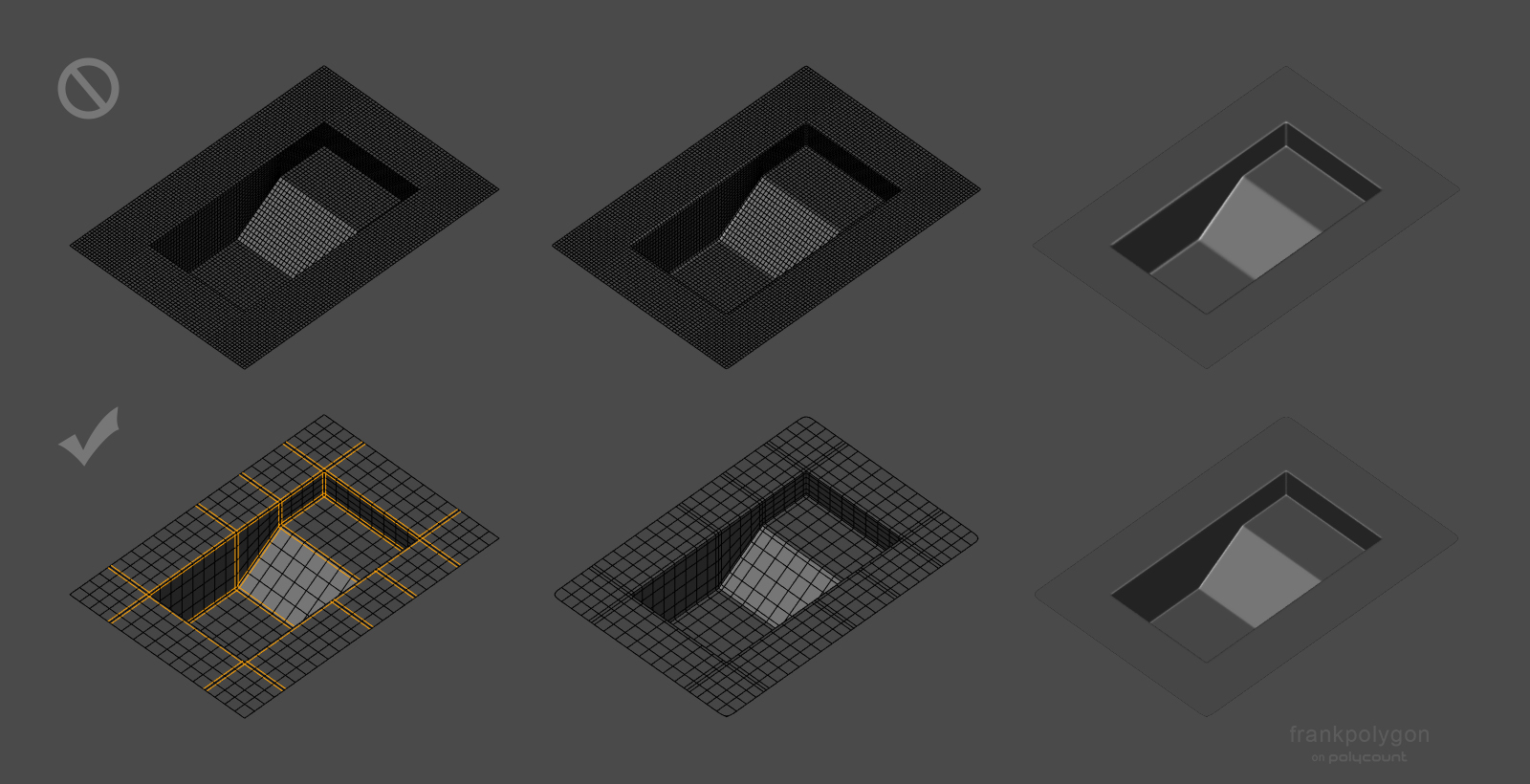
Support loops can also be used to control the sharpness of subdivided edges, without having to add any new geometry. Wider support loops produce softer edges and narrower support loops produce sharper edges. It's also possible to vary the width of a loop to produce an edge that goes from soft to sharp or vice versa. Something that would be a bit more difficult to do with a dense, quad grid mesh.

Catmull–Clark subdivision basically adds geometry and averages [smooths] the surfaces. So even with traditional subdivision modeling techniques, it's a lot easier to just create the basic shapes, add support loops and let the subdivision do the rest. While there still are a few situations where strict quad grid topology makes sense, most contemporary subdivision modeling workflows have evolved to become more efficient and user friendly.

It's way too easy to get bogged down trying to resolve complex loop flow before establishing all of the major forms. Which is why it can be helpful to focus on creating accurate shapes that flow together, before adding a bunch of support loops that increase the overall complexity of the model. A lot of the manual loop routing work can be automated by using bevel / chamfer modifiers and resolving the topology flow issues early in the block out.
As far as game art goes, it's also possible to bypass a lot of the high poly modeling process by using a boolean re-meshing and edge polish workflow in ZBrush. Though this workflow does have it's own drawbacks in terms of reduced manual editability and generating dense output meshes.
Streamlining a subdivision modeling workflow really comes down to learning the fundamentals then figuring out the tradeoffs and deciding which approach fits best with the specific goals of each project.
FrankPolygon