Best Of
Re: Early-Late 2000s CGI/Game textures
I'd say you are thinking about this backwards. You are assuming things about the past based on what you know of game art and 3D software of today, which I suppose is an intuitive thing to do ... but this leads you to imagine things about previous tech and workflows that just don't apply at all.
- First off, metalness and roughness are just greyscale masks. They can of course be be baked down from complex materials (like the materials one may create in Substance) but that's in no way mandatory. These greyscale masks can be created any way one wants, and because of that the only thing needed from a texture baking tool is the ability to transfer a simple texture map (regardless of what it may be called) from one object to another. As a matter of fact, for some stylized art styles painting the needed masks by hand (either projected on the model or directly on the 2D texture) can still be much faster than attempting to create a complex Substance material and baking it down.
- Secondly, just because an older game looks great doesn't mean that it uses bells and whistles analogous to today standards. Games from the PS2/PS360 era managed to look great with very simple rendering tech. It is perfectly possible to make a character look fantastic with just a well painted diffuse map and a simple mask driving specular on/off. As a matter of fact this simplicity is IMHO specifically what made some older games visually striking, because it favors a strong differentiation of materials (shiny/not shiny).
Here's a rip from The Boss from MGS3, loaded into XNAlara with a very simple material setup applied. The skin of her face looks matte, and her outfit looks shiny. But this doesn't involve any baked metalness or roughness (or any handpainted metalness or roughness either for that matter) - just a low specular value applied to the face and a high specular value applied to the outfit. That's it ! It doesn't involve any painted masks. And the game as whole doesn't use anything more complex than that on anything really. It's enough to convey a whole world of rich locations and characters.

You can see this effect (or rather, this design choice) very clearly in game during the first Sokolov cutscene. His black leather coat has strongly painted highlights in the diffuse texture to take care of most of the look, and it is enhanced by a bit of dynamic spec applied to the whole garment. It's as bruteforce as it gets but it works.
I would highly recommend you to look into actual asset rips from any game you are interested in to see the texture sets involved. Or even better, attempt to mod your own models into PC games from a few gens ago with a strong, still active community (like for instance games that are being community-enhanced with highres models and texture packs). There's a ton to learn from poking around.
And it will also shed some light onto why the way we are building game assets now is incredibly resource-intensive, compared to the barebones (but efficient) processes of 20 years ago.
 pior
pior
Timeless Epoch (Procedurally Generated)
Artstation: https://www.artstation.com/muqaddasaman
Hey Polycounters! Just wrapped up my final MA project — Timeless Epoch — and I’m super excited to share it here.
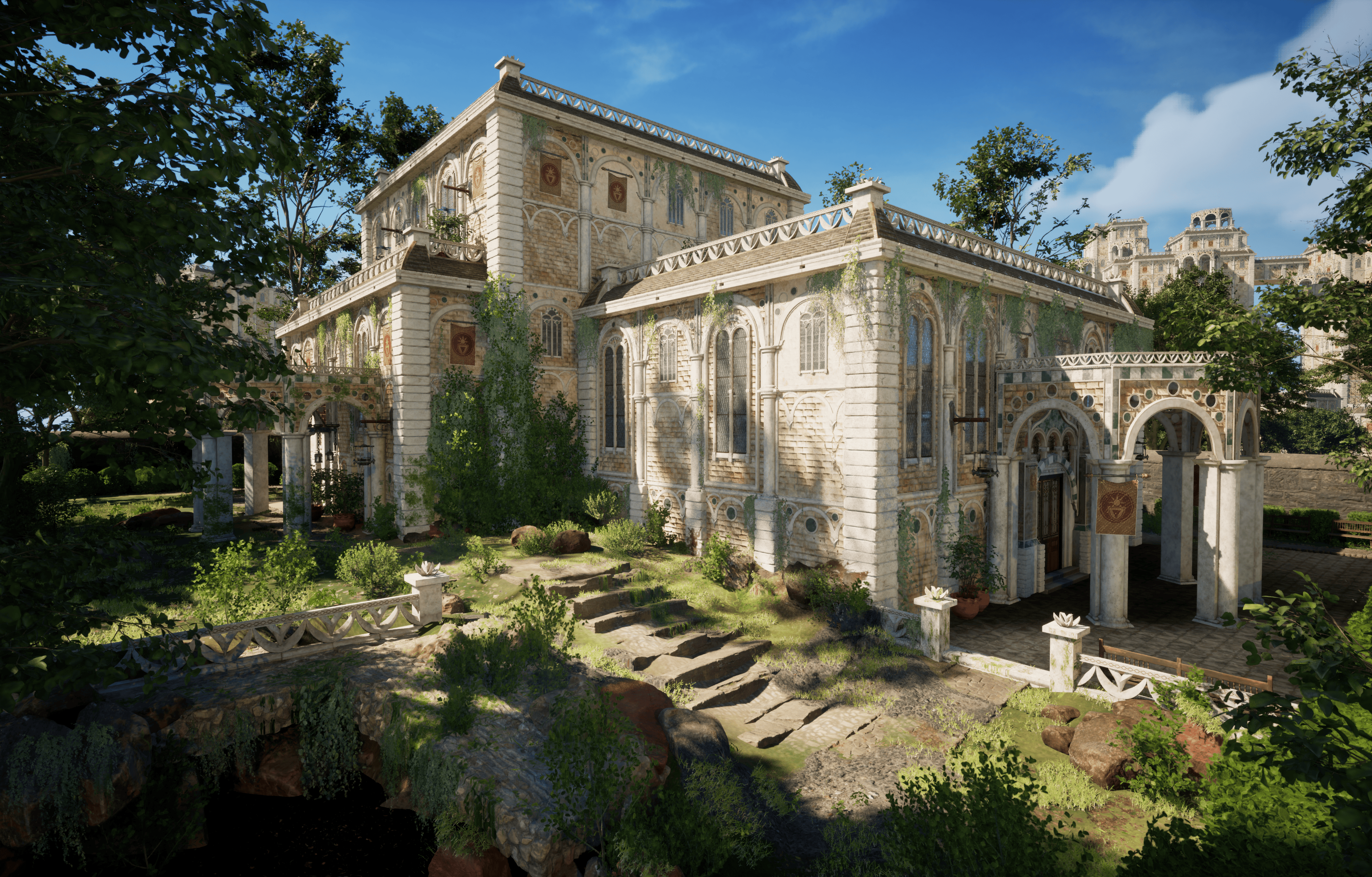
1. Initial Inspiration
The idea for Timeless Epoch began with my fascination for base-building mechanics in V Rising. I was especially intrigued by how rooftops were generated automatically whenever an enclosed structure was detected. That simple, elegant solution sparked a question that became the backbone of this project:
“Could an automated system empower artists to generate game-ready structures while still matching the quality of handcrafted environments?”

This question aligned perfectly with my passion for environment art and became the challenge I set for my Master’s final project. My visual benchmark throughout was Oscar’s House from Baldur’s Gate 3, created by Jef Simons and the team at Larian Studios.
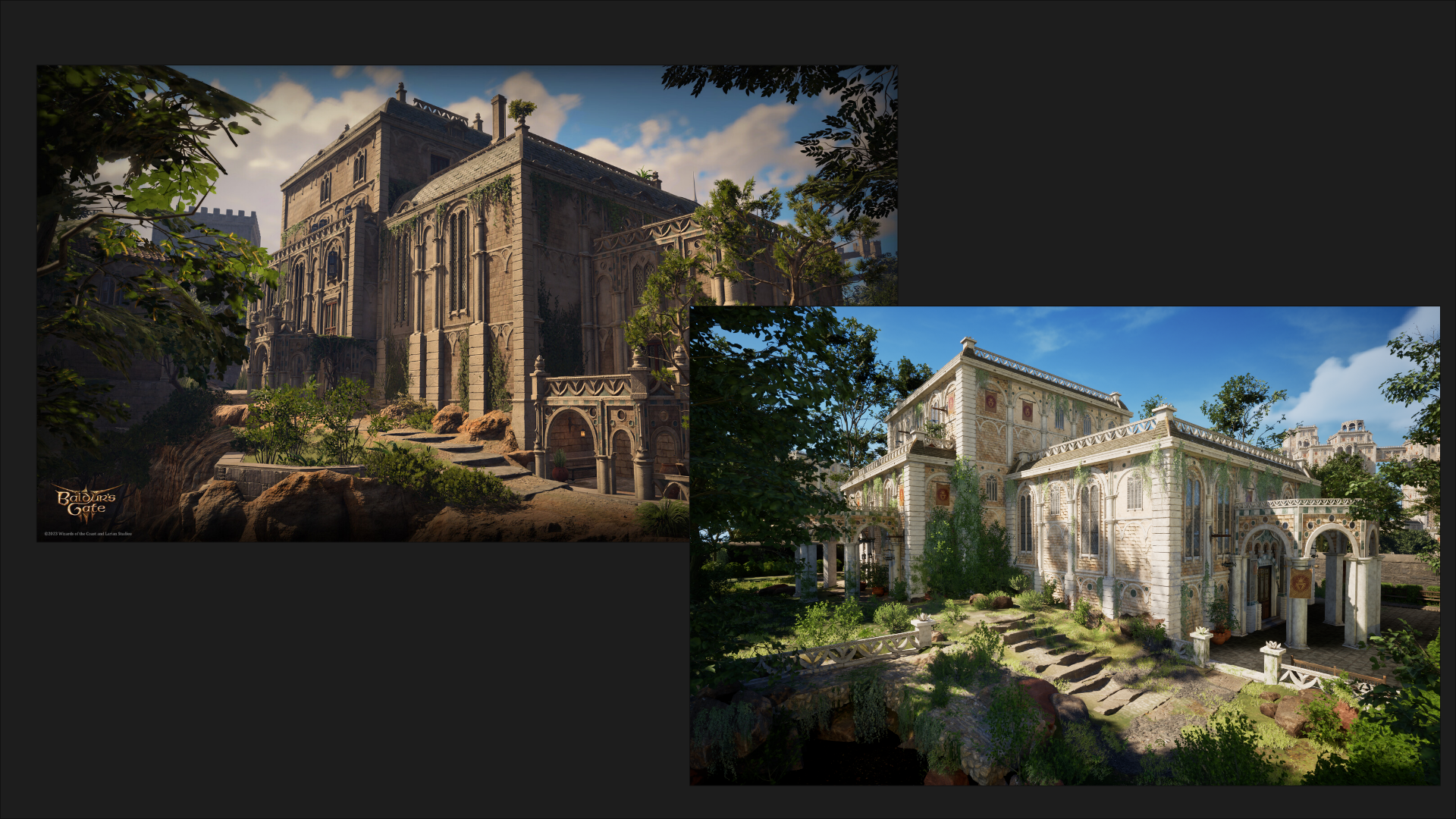
2. Creating the PCG System
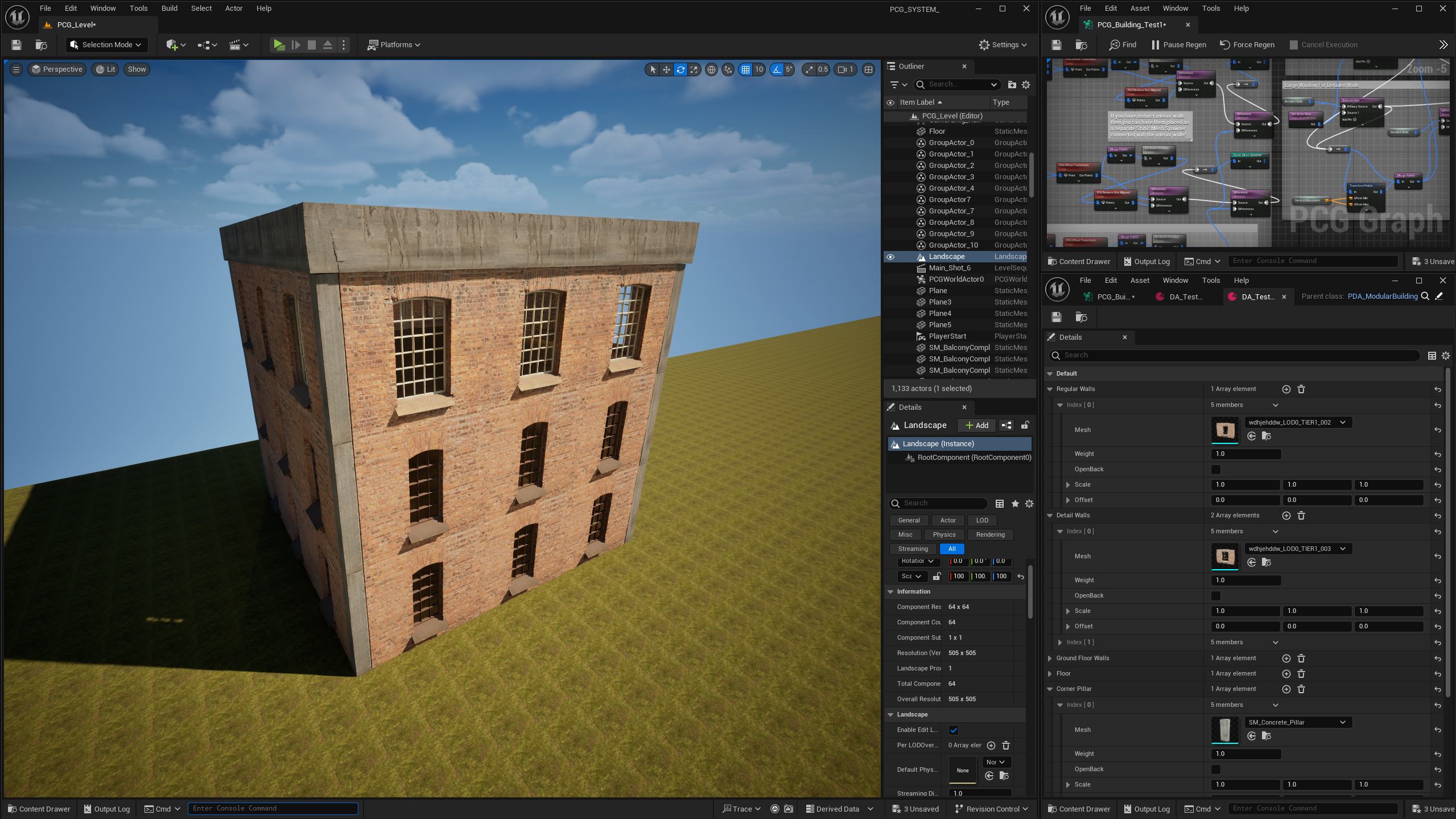
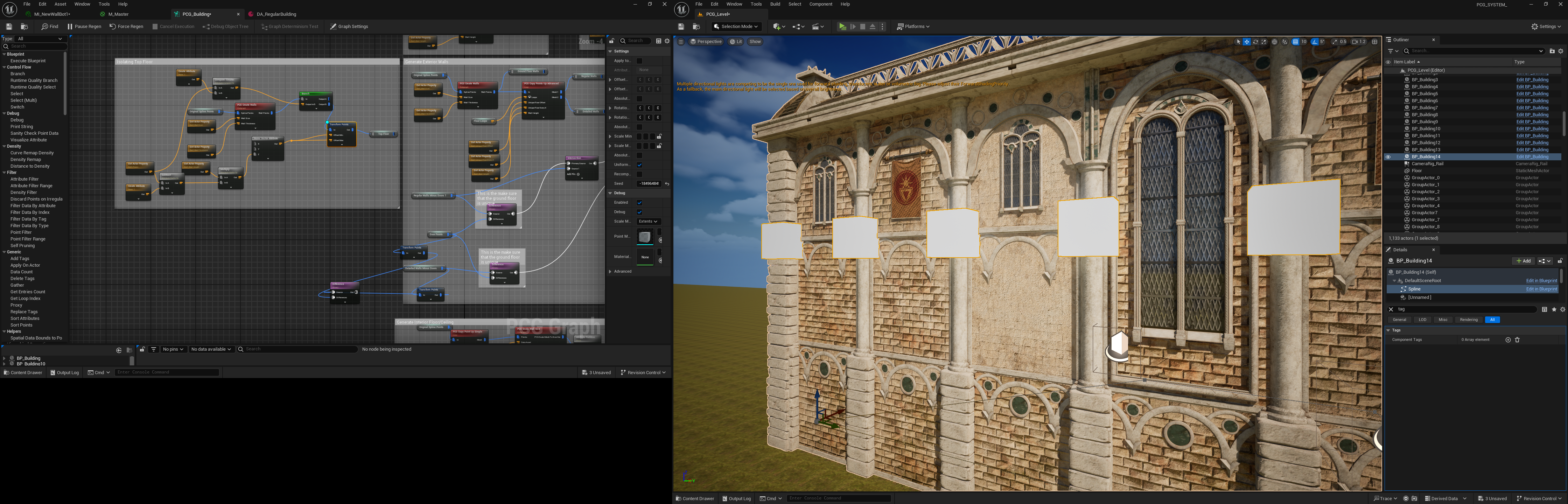
At the technical core of Timeless Epoch lies a Procedural Content Generation (PCG) system built entirely in Unreal Engine 5. The system uses:
-
Spline Points → to define the structure’s footprint and height.
-
Data Assets → a library of modular components such as walls, pillars, windows, and roofs.
-
Blueprint Graphs → which control how assets are placed, offset, and replaced dynamically.
I expanded this base system with custom logic for:

-
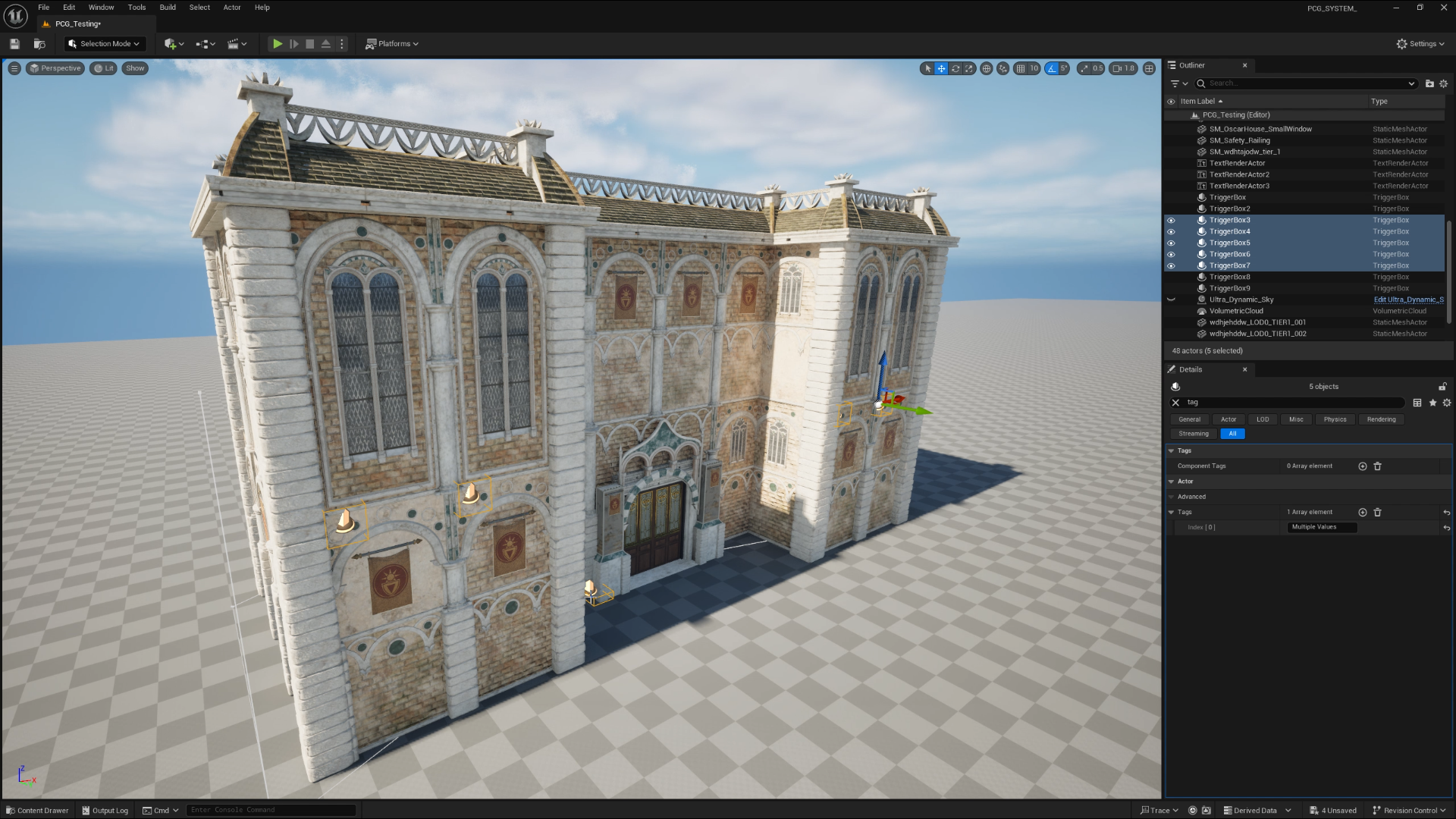
Trigger boxes with tags → allowing unique props (like windows or doors) to automatically replace spline points.
-
Corner detection → solving one of the hardest challenges of modular PCG generation.
- Custom floor controls → enabling unique designs for ground and top floors
The result is a spline-based system where entire medieval structures can be generated instantly, with artists free to customize parameters like height, wall type, or decorative elements.
3. Creating the Modular Asset Kit
While the PCG system provides the brains, the modular asset kit serves as the heart of the project.
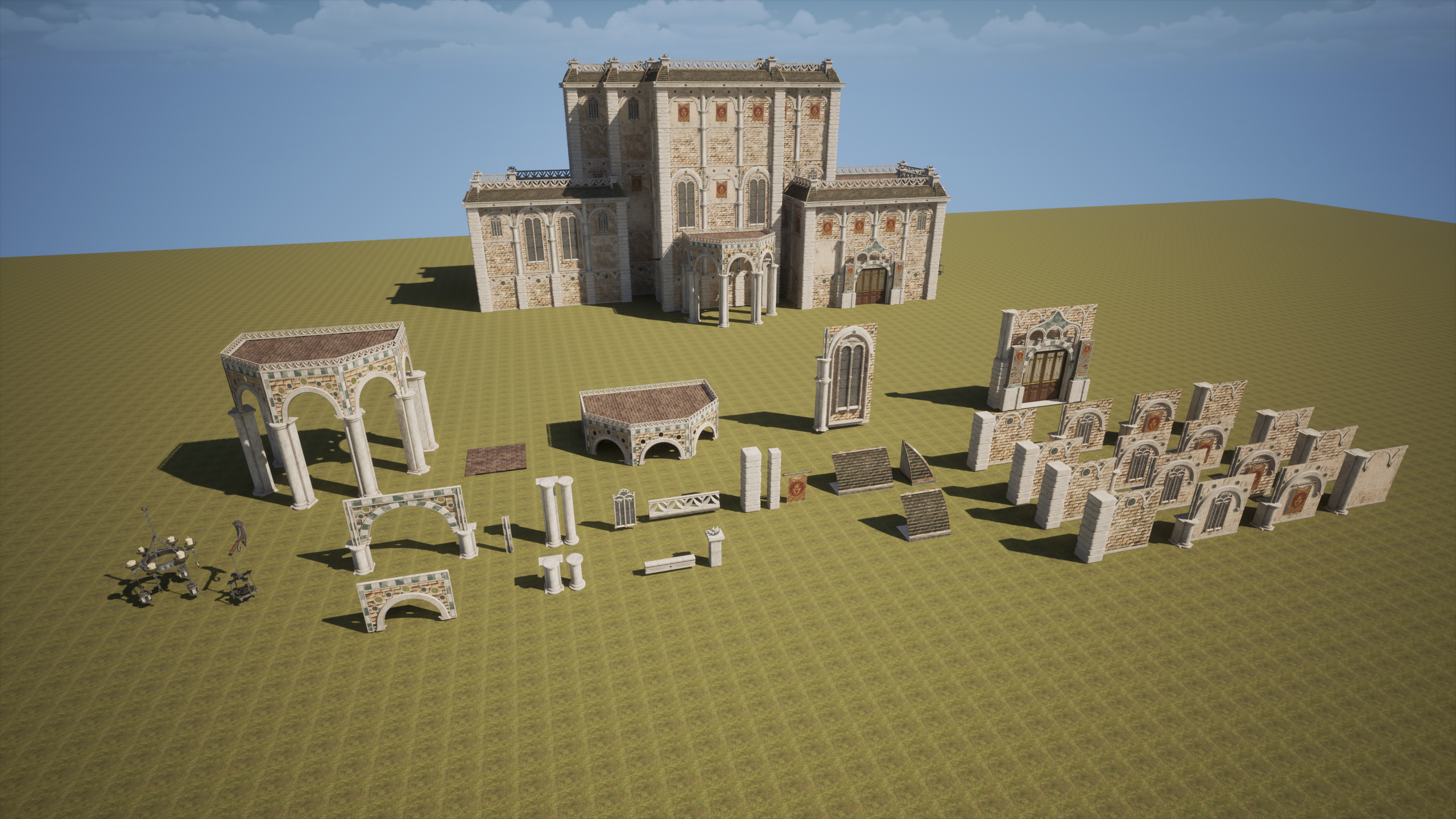
Over 20 unique modular pieces and props were hand-modeled in Blender and textured in Substance Painter/Designer.
-
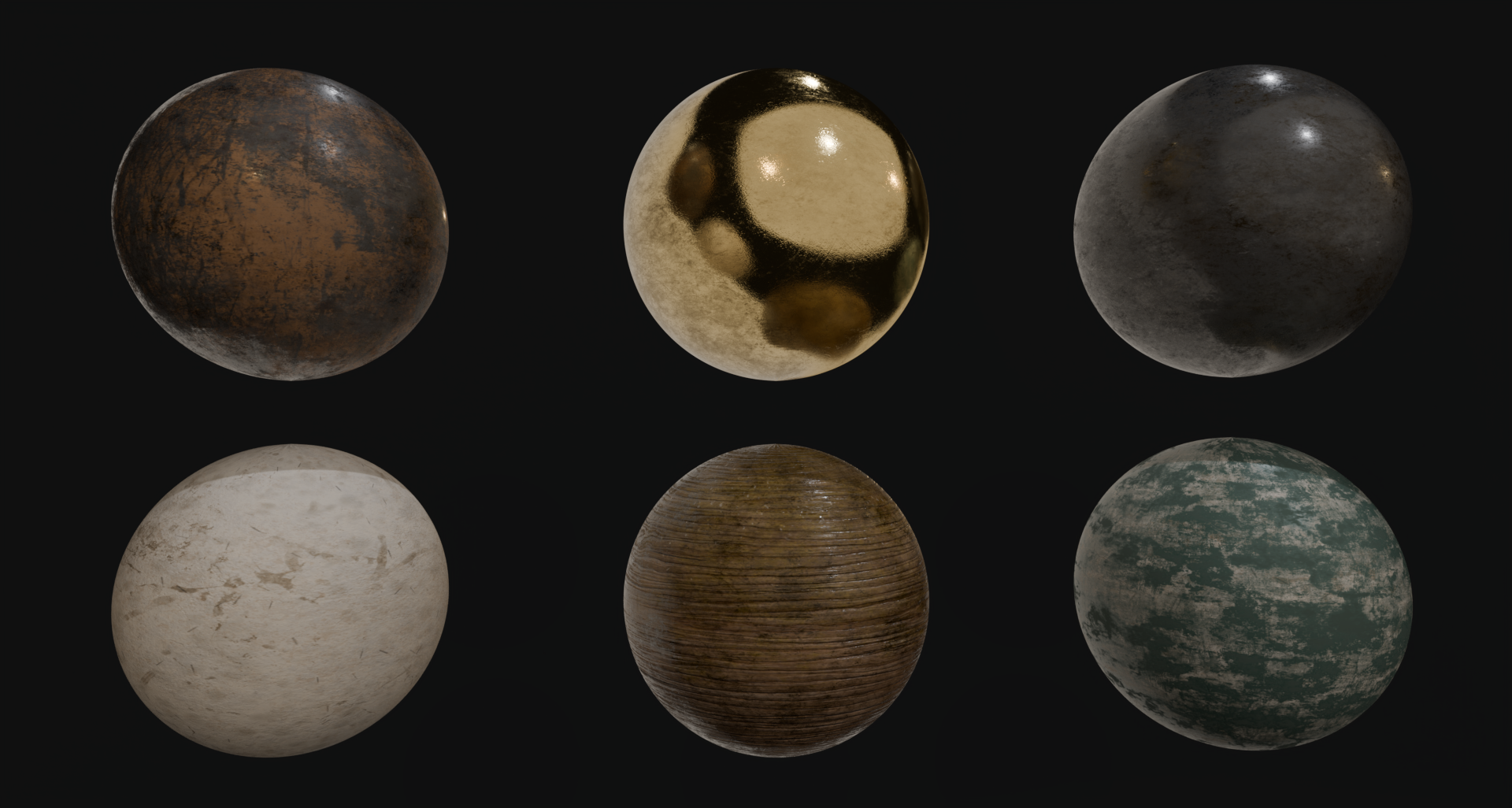
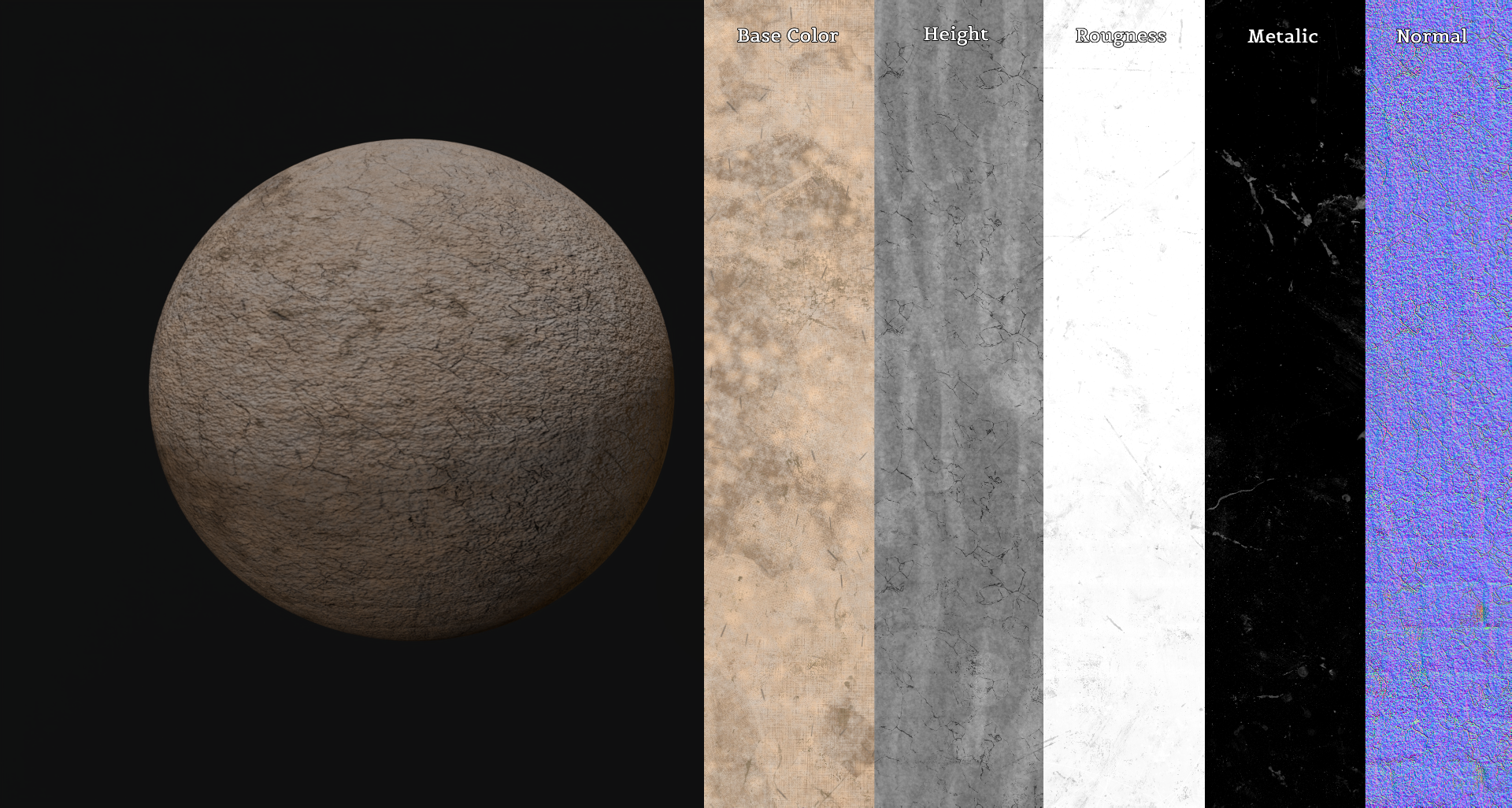
Materials were crafted to match the visual quality of Baldur’s Gate 3 and A Plague Tale: Requiem.
-
To compensate for the lack of vertex painting in the PCG workflow, I created alternate wall variations (plastered, mossy, damaged) divided across ground, middle, and top floors.
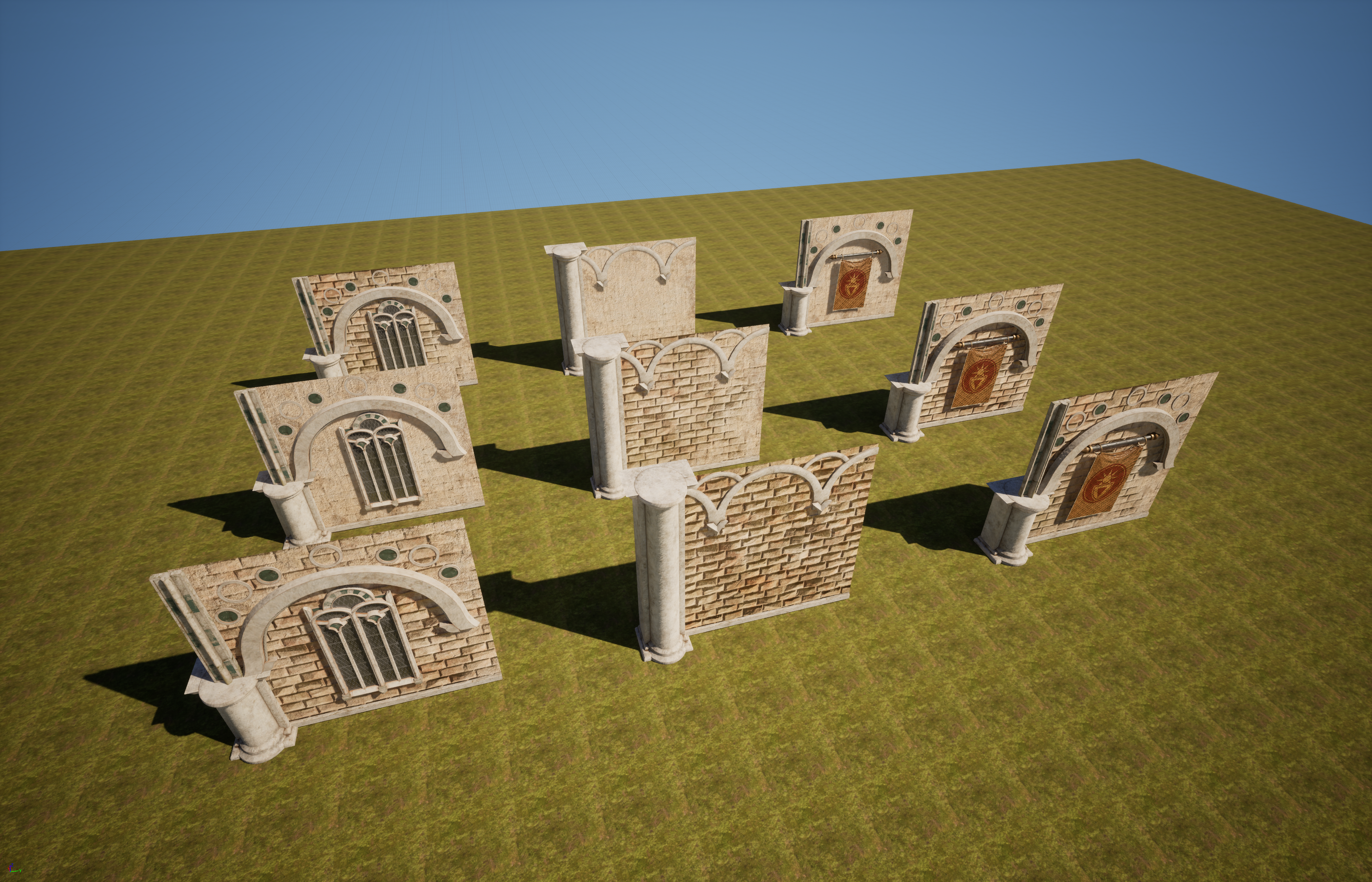
-
Decorative props such as torches, chandeliers, pottery, and a custom-designed entrance door added richness and variety to the generated buildings.
The goal was always to build assets at a quality where, even though procedurally generated, the structures would still stand shoulder-to-shoulder with handcrafted works.
4. Final
After months of iteration, the final environment was set as a villa-inspired layout, surrounded by foliage and stone walls (using Megascans for environment props to save time). The focus was deliberately on showcasing the PCG system and modular kit rather than environmental clutter.
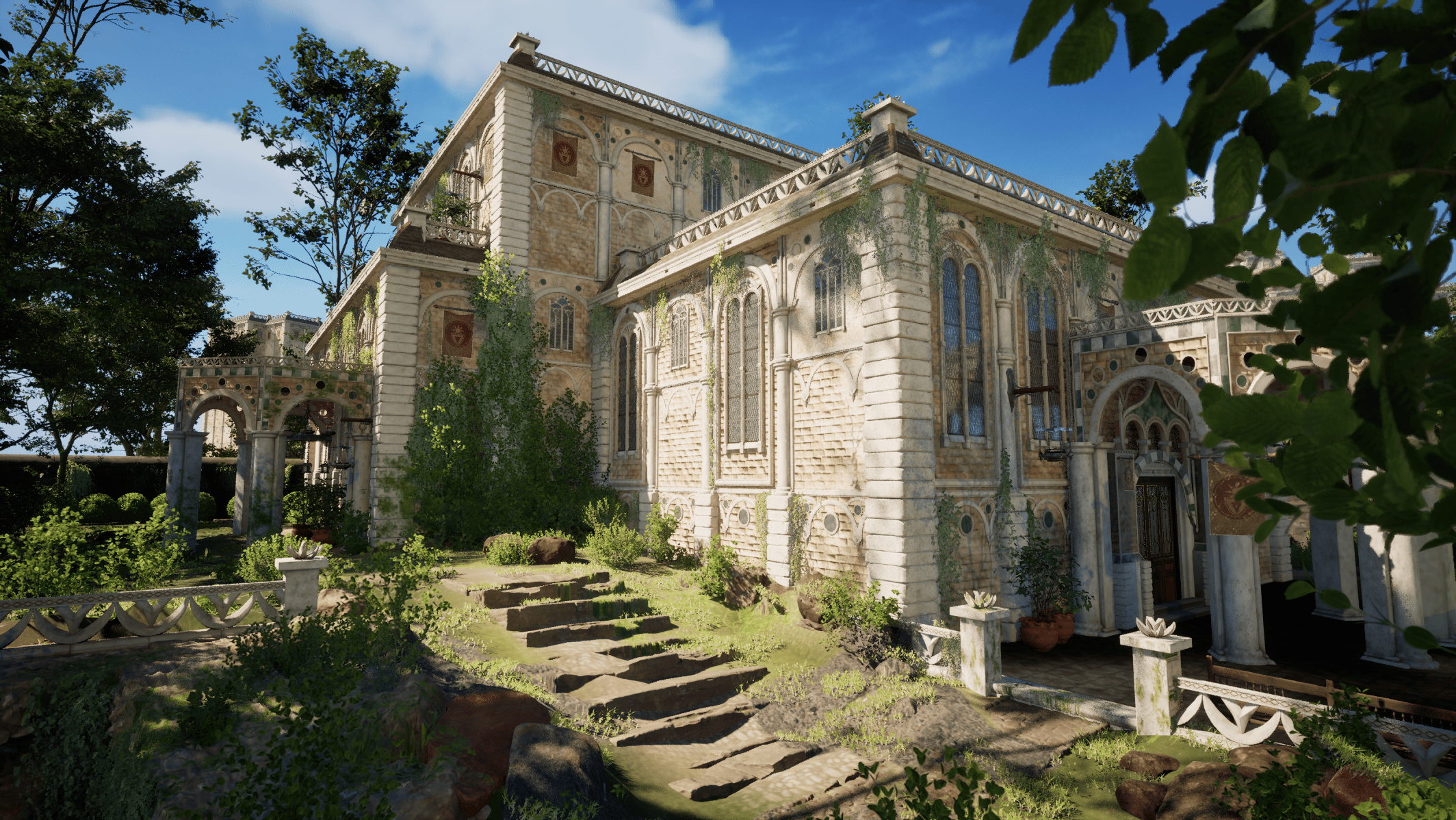
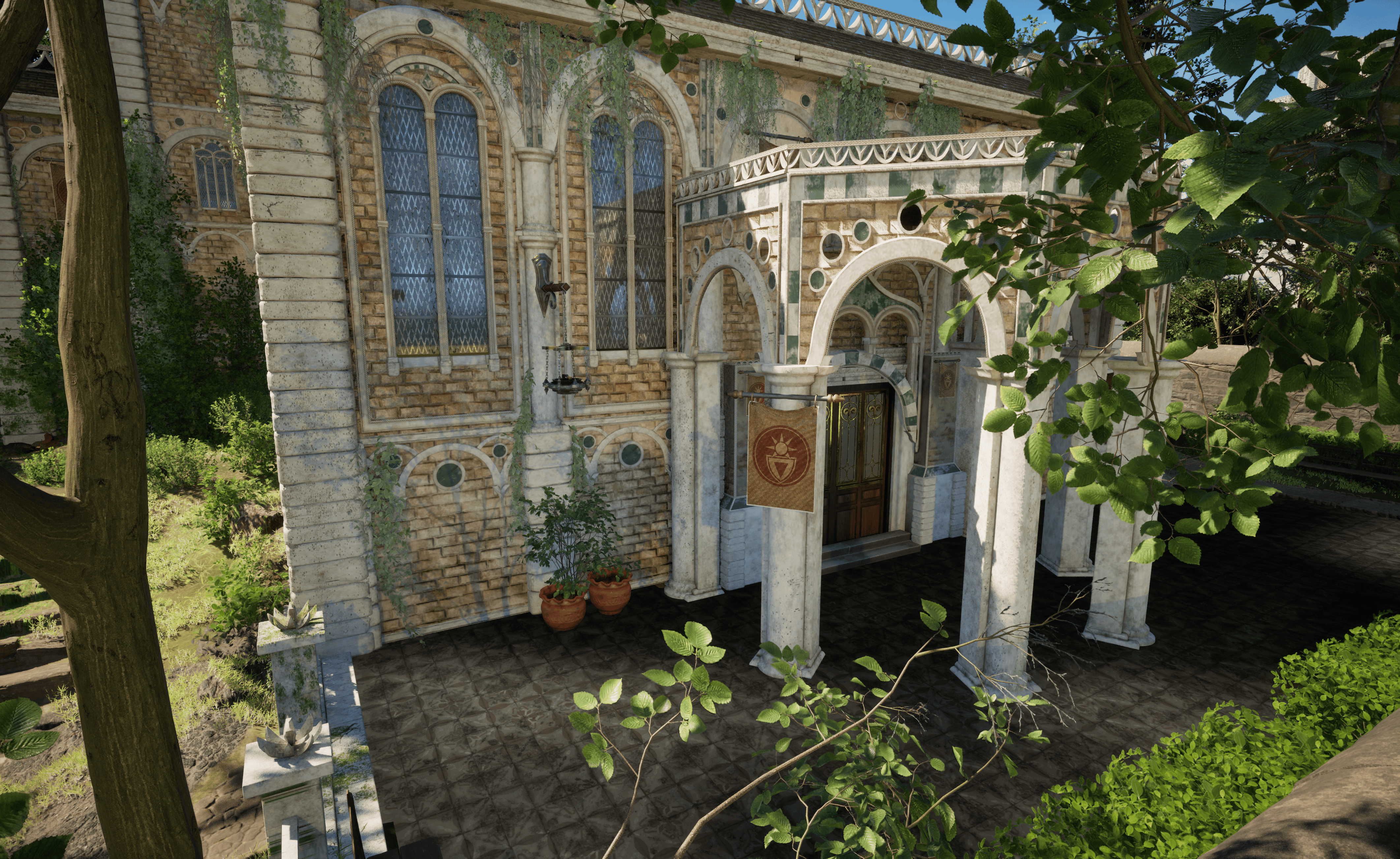
The project concluded with a two-minute promotional video highlighting both the artistic and technical aspects of the system. This milestone marks the culmination of my MA Games Art and Design journey, where I transitioned from an artist experimenting with ideas to someone building full-fledged procedural pipelines for game-ready environments.
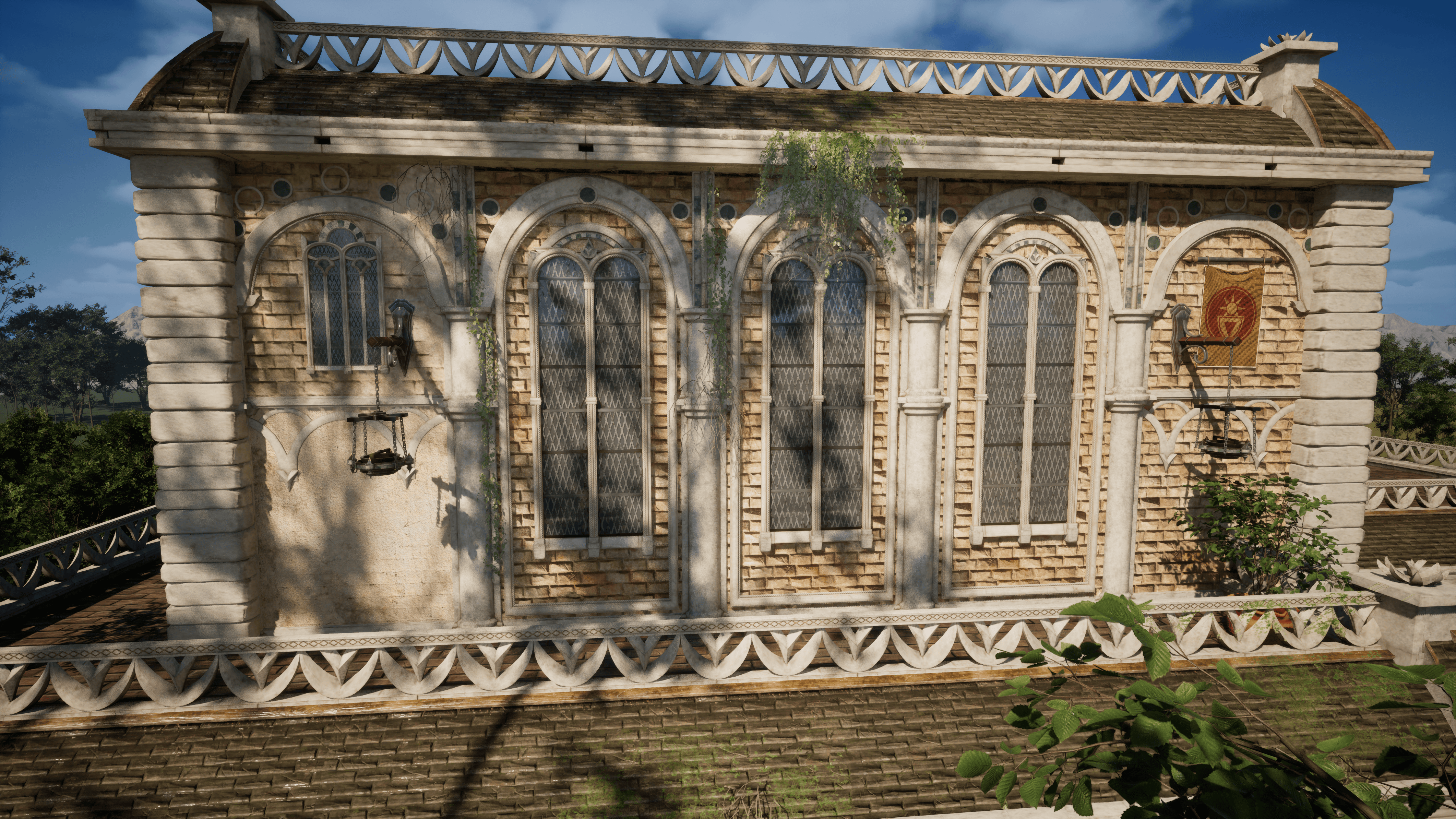
Most importantly, the project proves a key point:
Procedural generation doesn’t replace artistry — it amplifies it. By automating repetitive structural building, artists can spend more time where it matters: pushing the detail, storytelling, and beauty of their modular assets.
Here is a link to complete project breakdown on my Artstation: https://www.artstation.com/muqaddasaman
Link to a video breakdown of the project: VideoBreakdown_TimelessEpoch
 MFThree
Re: Stuck: My Topology Journey Has Hit a Wall
I've been frequenting various forums for a long time, and this makes me realize how much added value it truly is.FrankPolygon said:@Gikkio Although there is some overlap in the basic art, observation, and problem solving skills required: concepting and subdivision modeling are different disciplines. While it may be possible to learn both at the same time it tends to be easier to focus on mastering each discipline separately..
What forums can produce, no video or social media can match. I was asking for help on which direction to take because I was lost, and you even wrote a guide on where to go. I thank you so much.
For the incredible quality of your post, but above all for the time you took to help me with my problem. I have no questions, everything has been answered, and now I just need to study and follow the path that I now know is the right one. My mind is now at peace
 Really, thank you so much for your help and the equally amazing links. Best forum I've ever been on.
I hope one day I can return the favor by helping someone here.
Thank you all
Really, thank you so much for your help and the equally amazing links. Best forum I've ever been on.
I hope one day I can return the favor by helping someone here.
Thank you all GIZ
GIZ
Re: Hard Surface Blog: Sci-Fi Processing Station

 mpuLse
Re: Early-Late 2000s CGI/Game Models
I found the original tutorial on the Wayback Machine! I can see why he dropped it, he vastly improved the likeness in later attempts. But the workflow and insights are still golden! https://web.archive.org/web/20080714114321/http://www.daz-art.com/hi_poly_tut.htmEric Chadwick said:Darren Pattenden used to host a tutorial walking through his whole process of modeling and texturing a bust of Peter Cushing. I can't find the original anymore, but he does have this... "21 Tips on Capturing a Human Likeness" https://www.artstation.com/artwork/w8yrQO
We also have some archives of the old now-defunct modeling forums Spiraloid and Subdivisionmodeling, see the PDFs here http://wiki.polycount.com/wiki/Subdivision_Surface_Modeling#Organic_Surfaces
 Eric Chadwick
Re: Early-Late 2000s CGI/Game Models
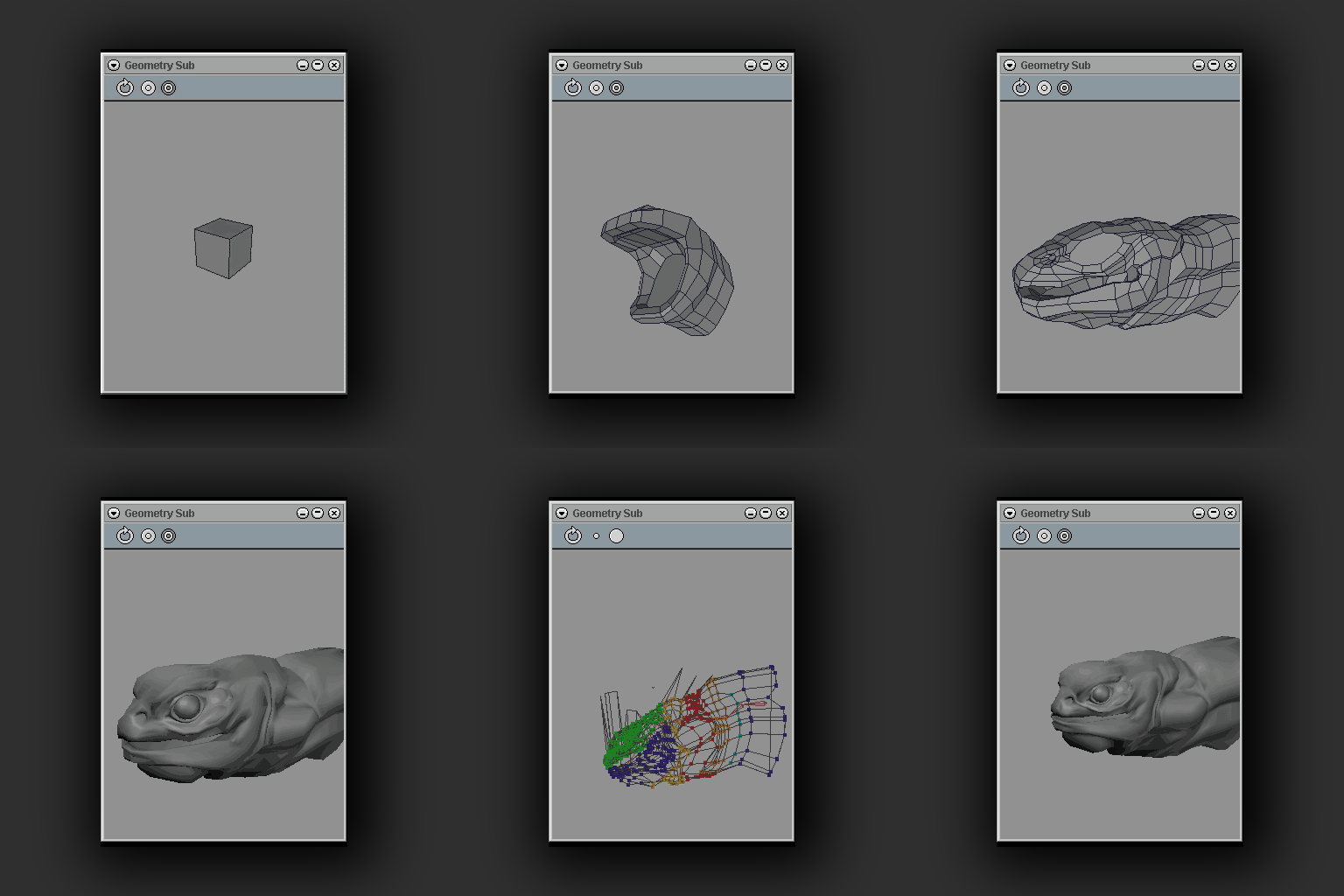
Done in a software called Mirai
https://spiraloid.artstation.com/projects/KPyRB
 jStins
Re: Anatomy study entirely made on my Ipad
If you are going to sculpt/model human anatomy its useful to have a great 3d reference on a screen next to the one you are working on. your second screen can be a really cheap one if you aint rich.
Daz3d is still free to use. You can change the reference model's height, weight, pose and also switch off the textures so you can get a better view of form. Rotating around a reference while you work is invaluable.
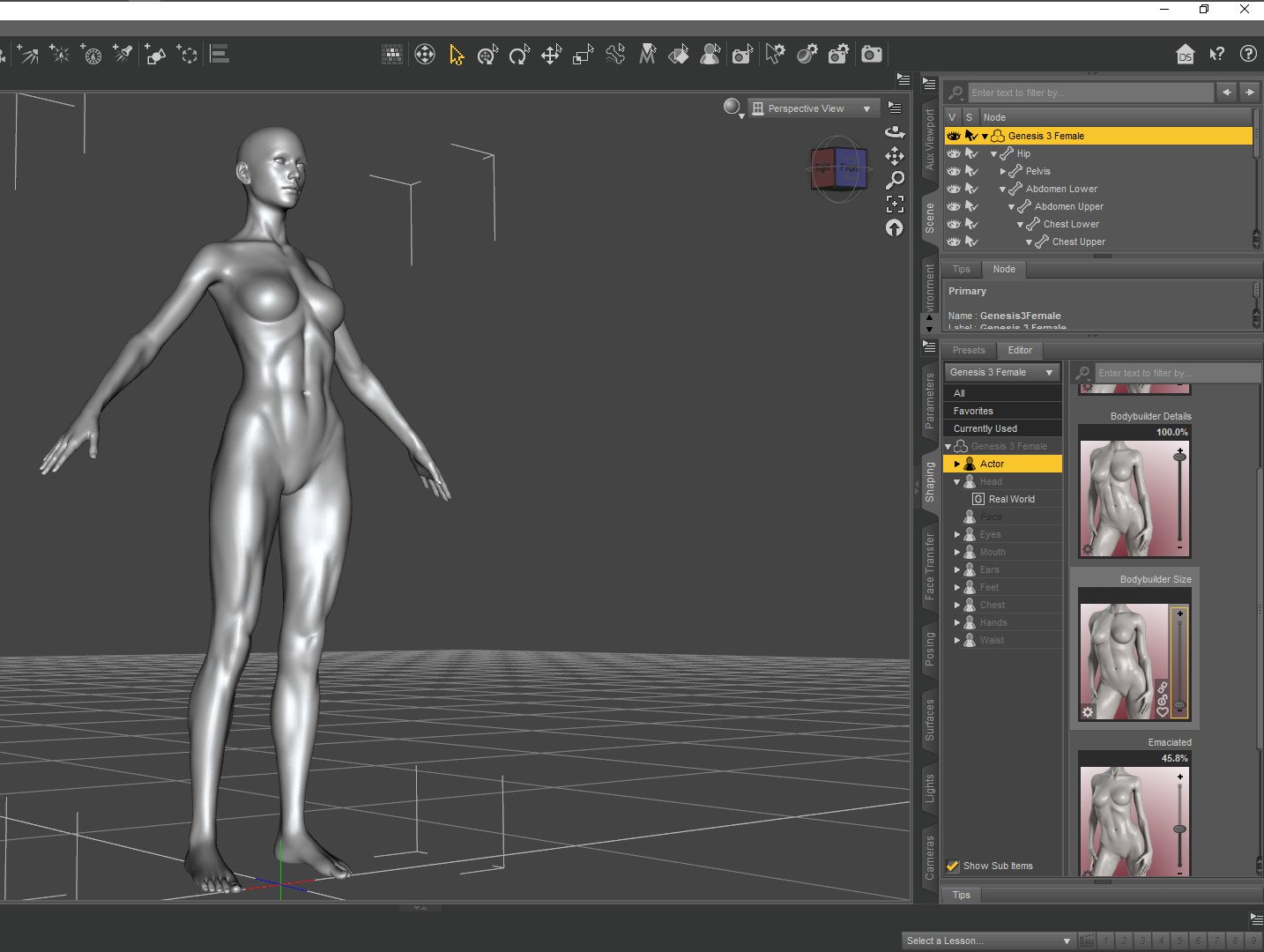
Also the pose you work in helps if it shows visual weight, a model is only a cloud of air 1 pixel thick. Pelvis slightly forward and the rest balanced though a cemtre line in profile. Legs slightly apart and feet at a relaxed angle will ad visual weight to your figure. Have fun!
 kanga
kanga

Re: Stuck: My Topology Journey Has Hit a Wall
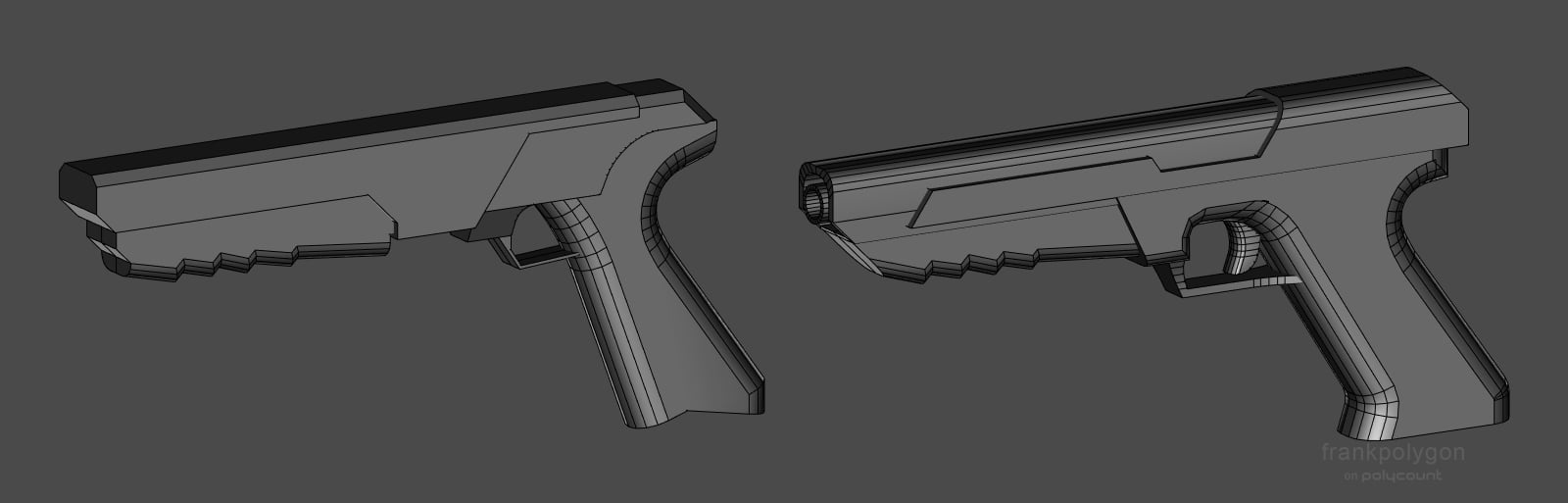
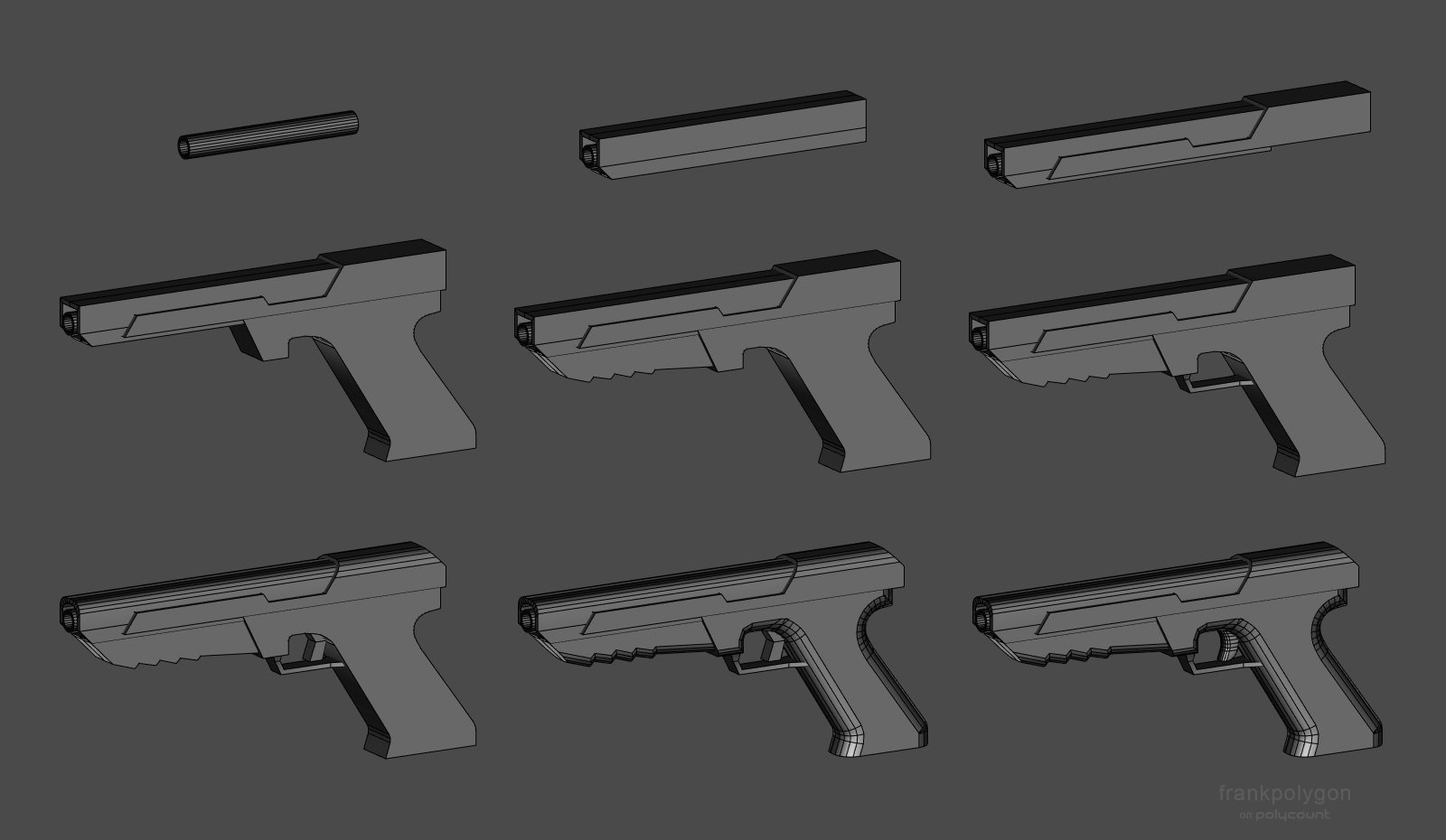
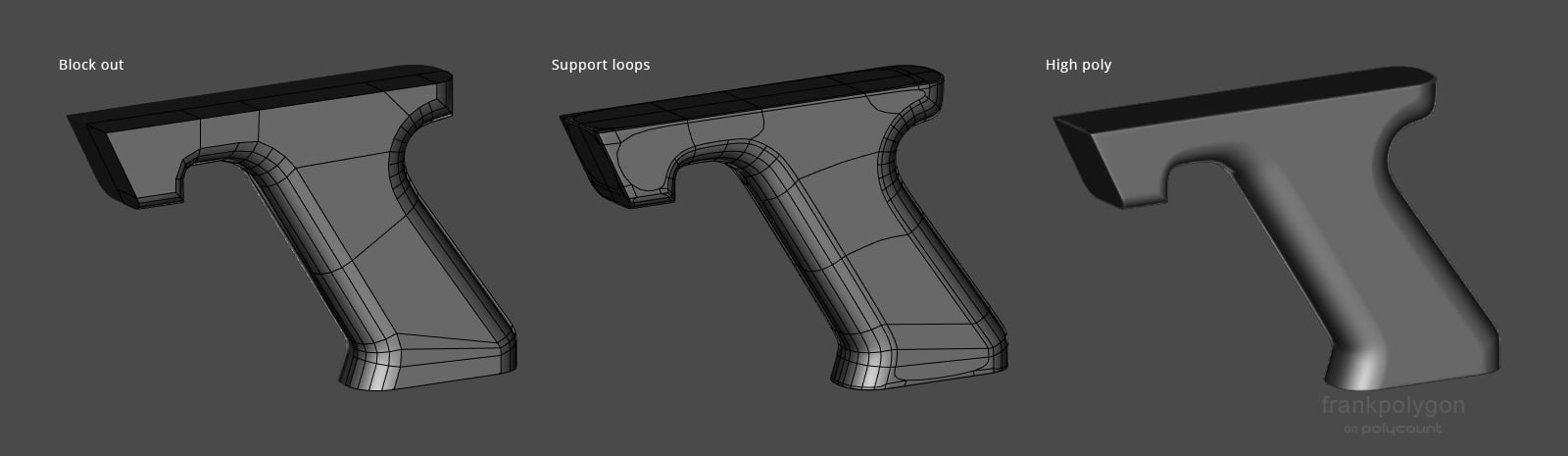
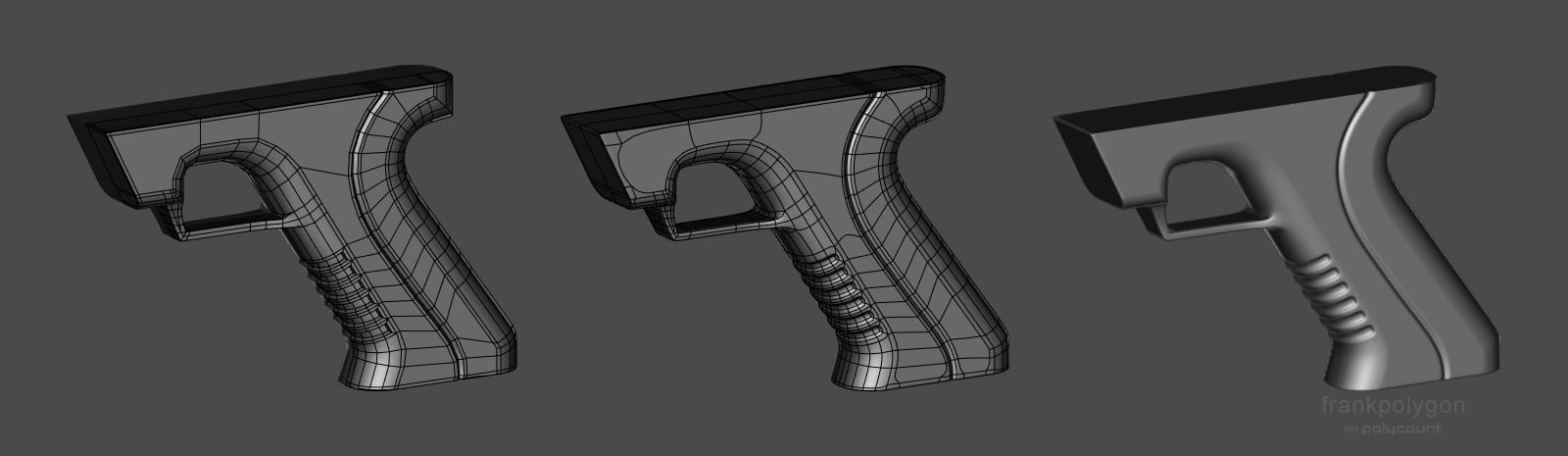
Some links to additional hard surface subdivision write-ups with animated workflow demonstrations:
https://polycount.com/discussion/comment/2779584/#Comment_2779584
https://polycount.com/discussion/comment/2777123/#Comment_2777123
https://polycount.com/discussion/comment/2780536/#Comment_2780536
FrankPolygon