Best Of
Re: BRAWL2[Character] Phoenix Ikki, Renanfabricio
Hey much success and anything to do with X-Men willl be rad for sure 
 sacboi
1 ·
Re: WIP Portfolio piece Critique
Thanks for the big resolution shots! Looks promising.
You'll probaby fill the scene up more, but right now, the big empty floor area with the repeating board pattern is something that stands out immediately. The shot towards the sun works best in that regard, as the specular breaks up the shading.
The materials and colors would profit from some more variety. Sure, most of it is wood, but the floor could be much more dusty and bleached (right now it's the most saturated element in most of the images) and the green growth on the roof happens to match the painted accents on the house pretty closely. Similarly, the background colors are pretty close to the foreground as well.
The textures and noise seem pretty homogenous, too. Good for tiling, but you'll want to add some blending or trims for transitions, e.g of the walls towards the floor.
It might be the interaction with the light, but some of the noise also seems to have too much contrast locally. E.g. in the more dirty areas, don't go from full to no dirt within your pattern unless that is exactly what you want. It can be especially difficult if your reflection or roughness have high contrast noise as it can look very different depending on lighting. Depends on you intended degree of realism how much you can (or should) bend that.
For the fence in the foreground of two of the shots, you have some variety in that one main piece has dirt and another doesn't, but the one which does has the same amount and size of dirt all over once again. It also seems to stick in the ground, but I assume that will change.
The shadows are a bit dark on my monitor for the last two shots, which isn't that a much of a problem for the very last shot, but in the second to last one that dark area is pretty big and right in the middle of the image.
Perhaps show some textures and models if you want some more technical feedback.
You'll probaby fill the scene up more, but right now, the big empty floor area with the repeating board pattern is something that stands out immediately. The shot towards the sun works best in that regard, as the specular breaks up the shading.
The materials and colors would profit from some more variety. Sure, most of it is wood, but the floor could be much more dusty and bleached (right now it's the most saturated element in most of the images) and the green growth on the roof happens to match the painted accents on the house pretty closely. Similarly, the background colors are pretty close to the foreground as well.
The textures and noise seem pretty homogenous, too. Good for tiling, but you'll want to add some blending or trims for transitions, e.g of the walls towards the floor.
It might be the interaction with the light, but some of the noise also seems to have too much contrast locally. E.g. in the more dirty areas, don't go from full to no dirt within your pattern unless that is exactly what you want. It can be especially difficult if your reflection or roughness have high contrast noise as it can look very different depending on lighting. Depends on you intended degree of realism how much you can (or should) bend that.
For the fence in the foreground of two of the shots, you have some variety in that one main piece has dirt and another doesn't, but the one which does has the same amount and size of dirt all over once again. It also seems to stick in the ground, but I assume that will change.
The shadows are a bit dark on my monitor for the last two shots, which isn't that a much of a problem for the very last shot, but in the second to last one that dark area is pretty big and right in the middle of the image.
Perhaps show some textures and models if you want some more technical feedback.
 Noren
Noren
2 ·
Re: BRAWL2 [Vehicle] Bull Dust, sacboi [Tribute]
ah, DayZ them where the days, such an interesting game when it came out and intense when solo.
Awesome tribute piece can't wait to see how you tackle your idea, looking forward to it.
Image is a great reference and that trailer does add a bit of something, i can see a "dual" solo trailer, like those motor cycles more toward the backside though, type of style to it, just a random thought i felt like sharing that might spark some interest.
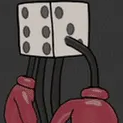 iam717
1 ·
Re: Tech Artist - What are you working on: FOREVER Edition!
I've been mucking round in Godot lately trying to get some nice npr/toon shading stuff going and I got upset with reflections because they look smooth and realistic and boring.
I don't want smooth and realistic and boring, I want my reflections to look like they're toon shaded as well.
so..
To get toon lighting you posterize the result of your lighting calculations. The obvious answer to this would be to do the same thing to your reflections.
sadly though, Godot does not let you get at the reflection calculations (neither do most engines afaik) so you must build your own.
Sampling a cubemap is simple enough so no problem there but then you're kinda knackered.
Making a nice toon style cubemap or posterizing a normal looking one kinda work but cubemaps exhibit a wide range of nasty artefacting (filtering/texel density etc.) and I don't like nasty artefacting.
Throwing resolution at the problem kinda works but not really
so - I became sad and angry
But then I realised that if I posterized the vector used to sample the cubemap I'd get what I want.
This isn't a 1 size fits all solution, but it works very well for what I'm trying to achieve.
it's really simple too - just calculate the vector as normal then floor( (v * levels) / levels) before sampling the cubemap texture


I don't want smooth and realistic and boring, I want my reflections to look like they're toon shaded as well.
so..
To get toon lighting you posterize the result of your lighting calculations. The obvious answer to this would be to do the same thing to your reflections.
sadly though, Godot does not let you get at the reflection calculations (neither do most engines afaik) so you must build your own.
Sampling a cubemap is simple enough so no problem there but then you're kinda knackered.
Making a nice toon style cubemap or posterizing a normal looking one kinda work but cubemaps exhibit a wide range of nasty artefacting (filtering/texel density etc.) and I don't like nasty artefacting.
Throwing resolution at the problem kinda works but not really
so - I became sad and angry
But then I realised that if I posterized the vector used to sample the cubemap I'd get what I want.
This isn't a 1 size fits all solution, but it works very well for what I'm trying to achieve.
it's really simple too - just calculate the vector as normal then floor( (v * levels) / levels) before sampling the cubemap texture
poopipe
3 ·
Re: The BRAWL² Tournament Challenge!
Paxwort said:I'm a little confused by the brief. Is it a requirement that the piece is based on existing work?
nope you can make up your "own", if you want to.
Edit: to explain more, the idea behind using "existing" works is to alleviate the current situation with these ... "generators", that are taking everything. At least for me it makes me feel better sharing work if i just replicate what is already there and "altering it a bit". It is like idc(to an extent) cause its not 100% my own thing. (no permissions given, to use the stuff though, outside this contest.)
iam717
1 ·
Re: BRAWL2 [Character] R&M, iam717
Nice! Very curious to see where you land with the execution/style on this 
 Fabi_G
1 ·

Re: The BRAWL² Tournament Challenge!
I'm a little confused by the brief. Is it a requirement that the piece is based on existing work?
Paxwort
1 ·
Re: Building a GPU powered painting program.
I was just reminded of very early versions of corel painter (around v4) in which you could attach basically any tool setting to any input - eg. stylus tilt could control color and size while pressure controlled opacity and rotation (or whatever), all configurable on the fly etc.
it was a very long time ago so rose tinted glasses apply but my heart has yearned for that level of brush control ever since
(possible hyperbole)
it was a very long time ago so rose tinted glasses apply but my heart has yearned for that level of brush control ever since
(possible hyperbole)
poopipe
2 ·