Search
-
Re: Sketchbook: Frank Polygon

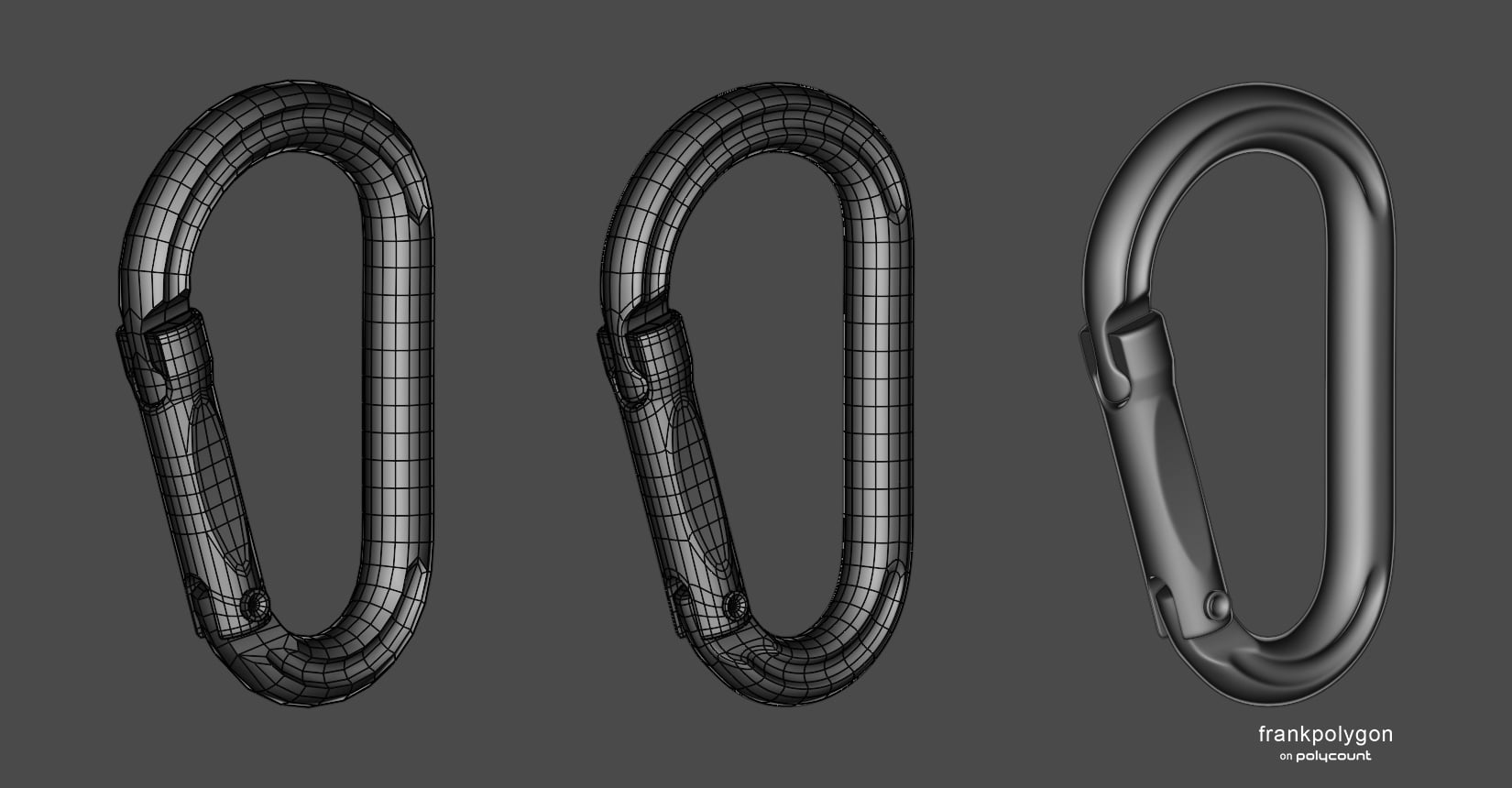 Subdivision sketch: non-locking accessory carabiner. Just a simple modeling exercise. None of the internal spring components need to be modeled. Consistent loop distribution to maintain surface quality. Basic boolean block out. All the geometry is generated by simple mesh shapes and non-destructive modifiers. Most of the…
 -
Re: Sketchbook: Frank Polygon
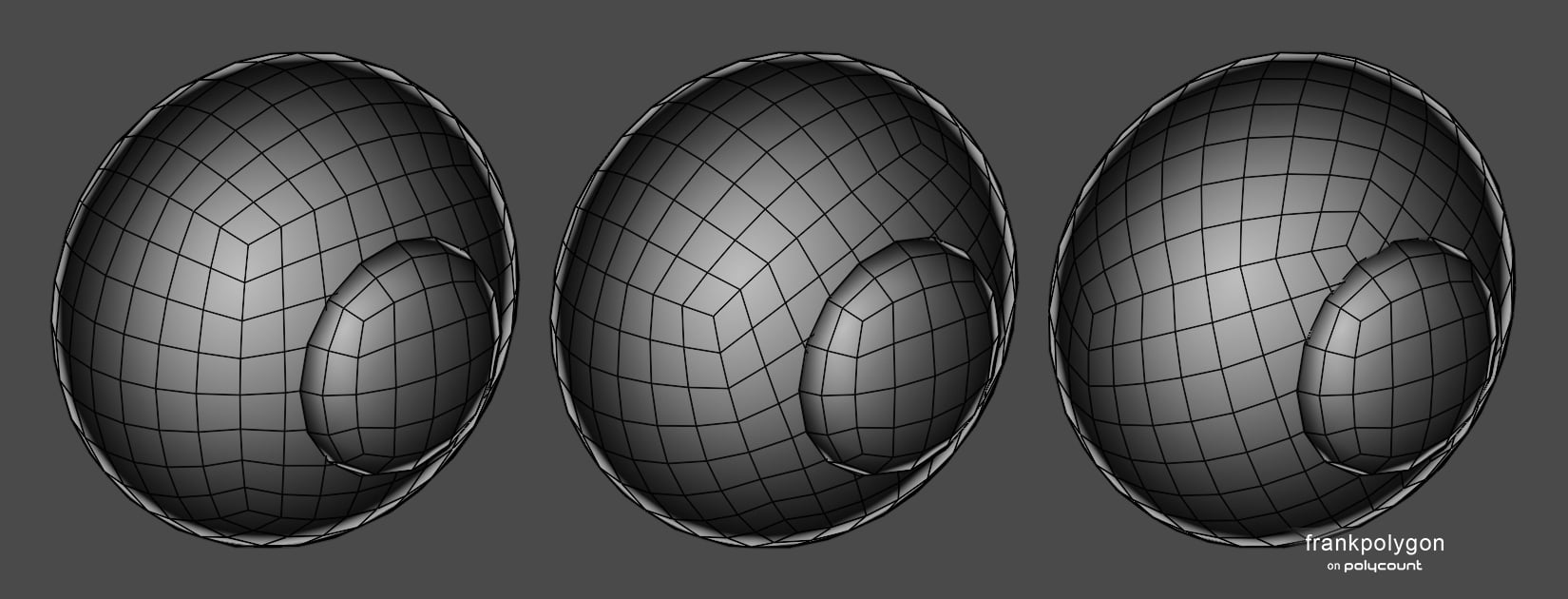 Subdivision sketch: Hemispherical helmet. This is a brief look at a few basic strategies for routing topology around cut outs and panel lines on spherical [and ellipsoid] surfaces. Note: there's several different ways to structure spherical geometry. Since this write-up is specific to basic subdivision modeling only basic…
 -
Re: Sketchbook: Frank Polygon
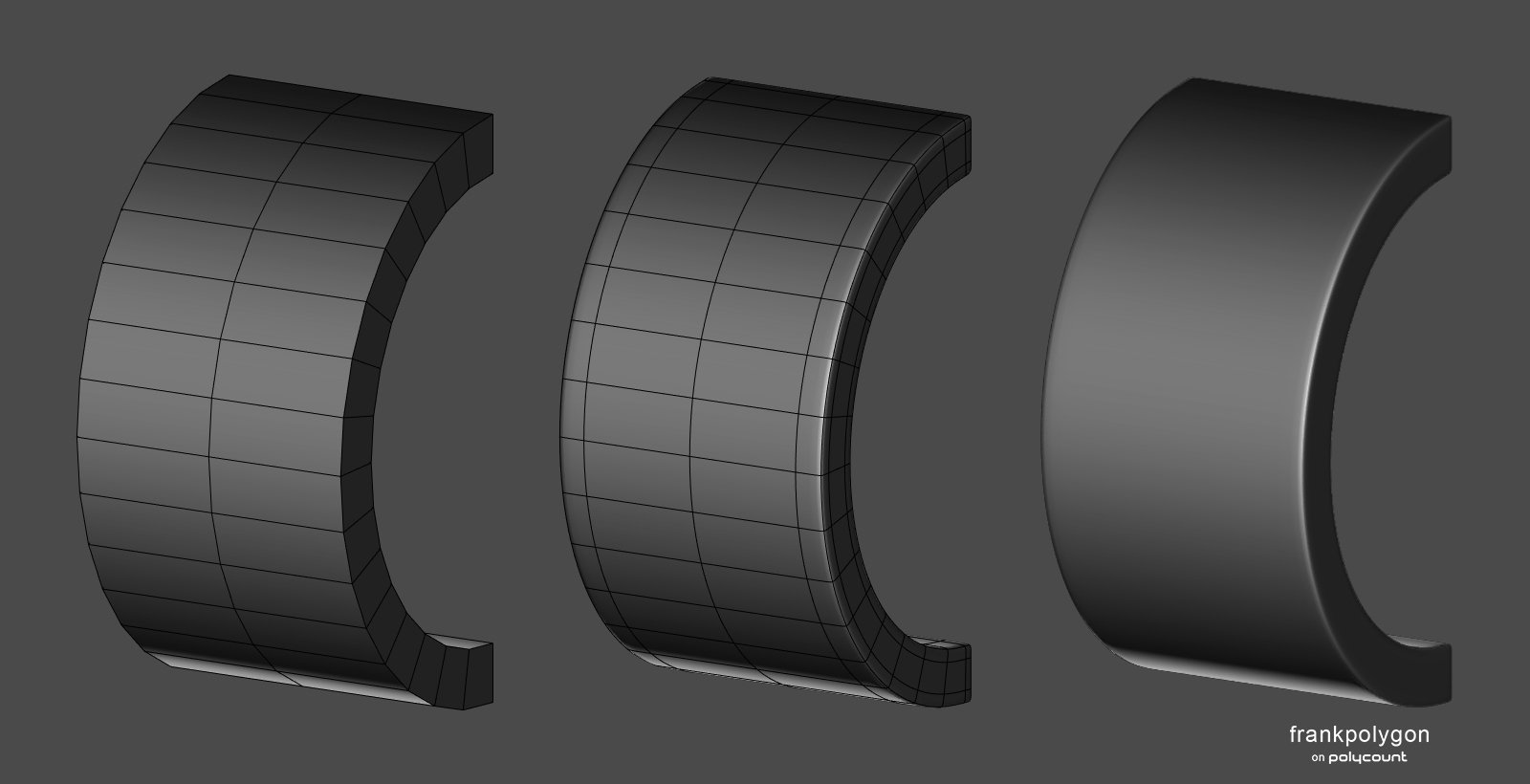 Subdivision sketch: it's all about flow. This is a really quick visual primer on curves, loop flow, and basic subdivision modeling concepts. Here's what a curved segment looks like. Notice how each of the edges that makes up the curve is evenly spaced around the central axis. That even spacing is why the mesh smooths…
 -
Re: Sketchbook: Frank Polygon
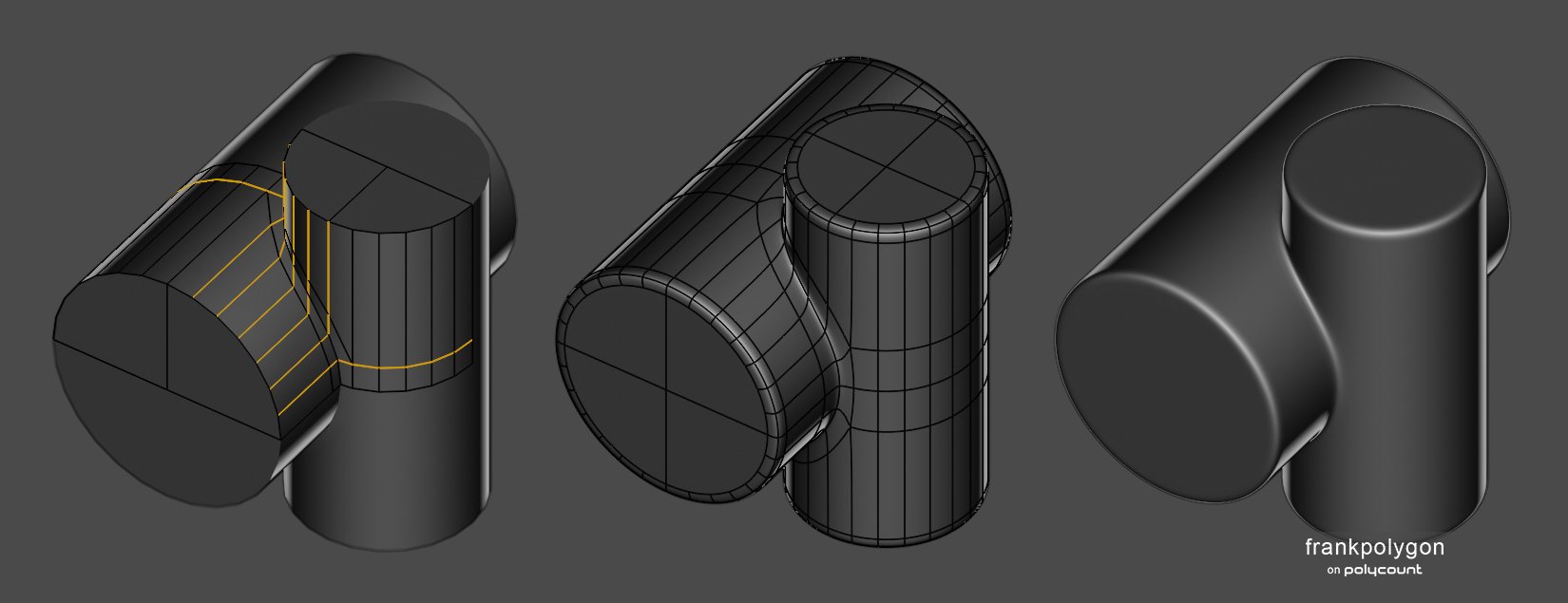 Subdivision sketch: Basic tubular frame intersections. This is a visual quick reference for segment matching when joining offset cylinders. The cylinders in this example have different diameters but it still works when the diameters are the same. Note the subtle changes in segment count and loop routing as the cylinders…
 -
Re: Sketchbook: Frank Polygon
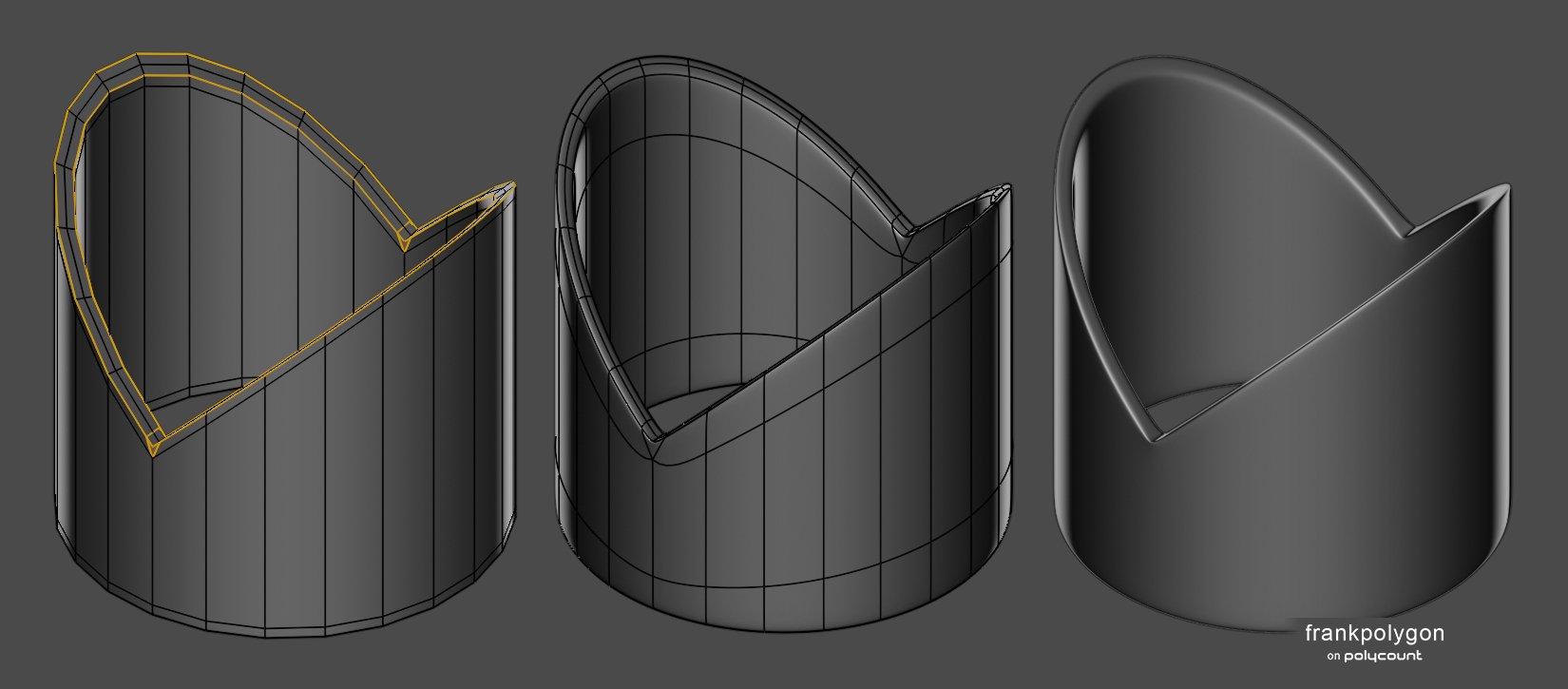 Subdivision sketch: Diagonal corners, diamond quads, and dealing with deformation. Here's a quick look at a few different topology layouts for sharpening the corners of diagonal edges on curved surfaces and a demonstration of how to manually compensate for unwanted surface deformation that's caused by inserting edges…
 -
Re: Sketchbook: Frank Polygon
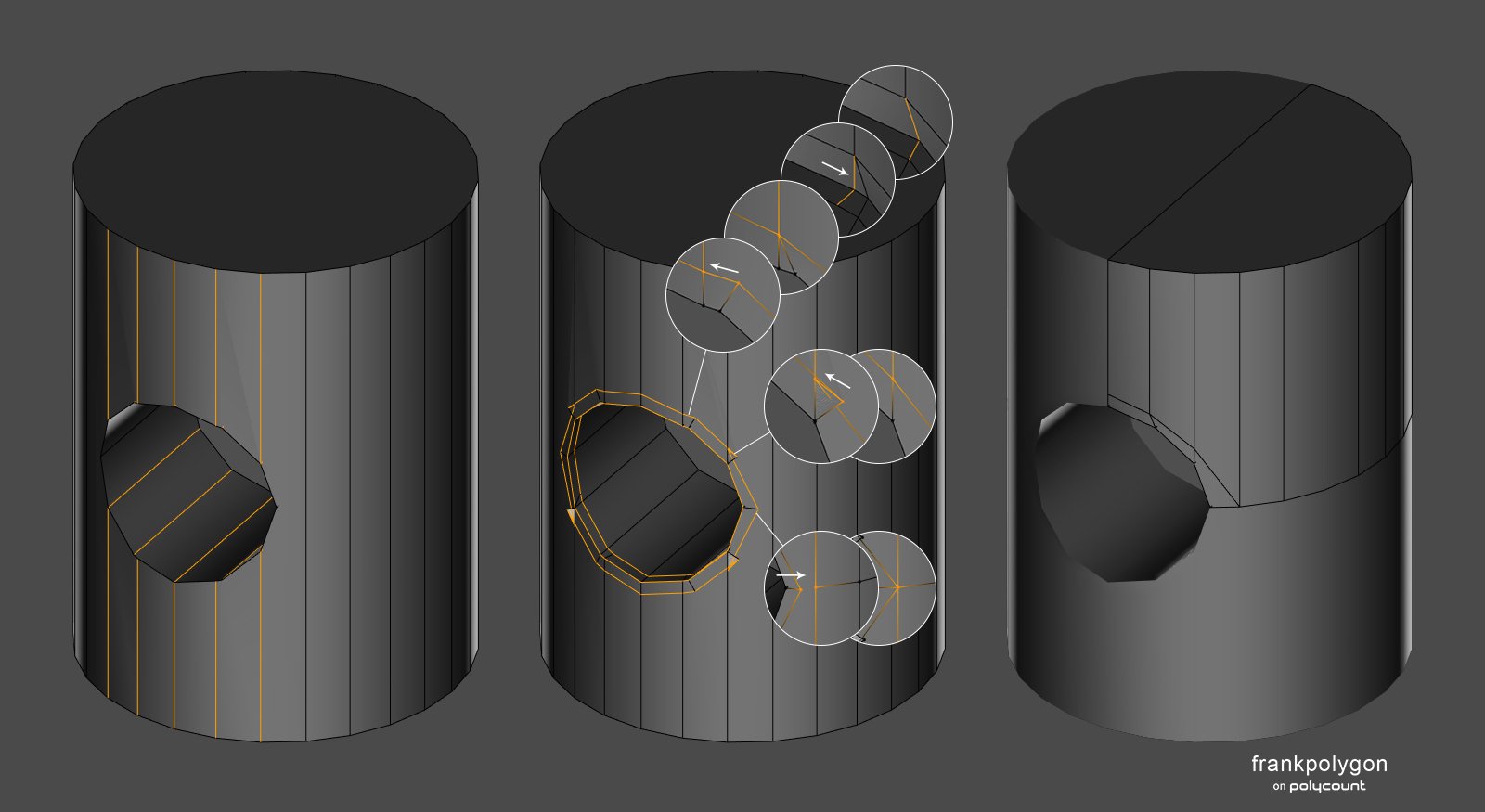 Subdivision sketch: it's all the same. This is a slightly less serious continuation of the previous posts about subdivision modeling and attaching shapes to curves. Only with more pictures and less text. The same basic approach can be used to connect different shapes to curves:-Keep things relatively simple and solve major…
 -
Re: Sketchbook: Frank Polygon
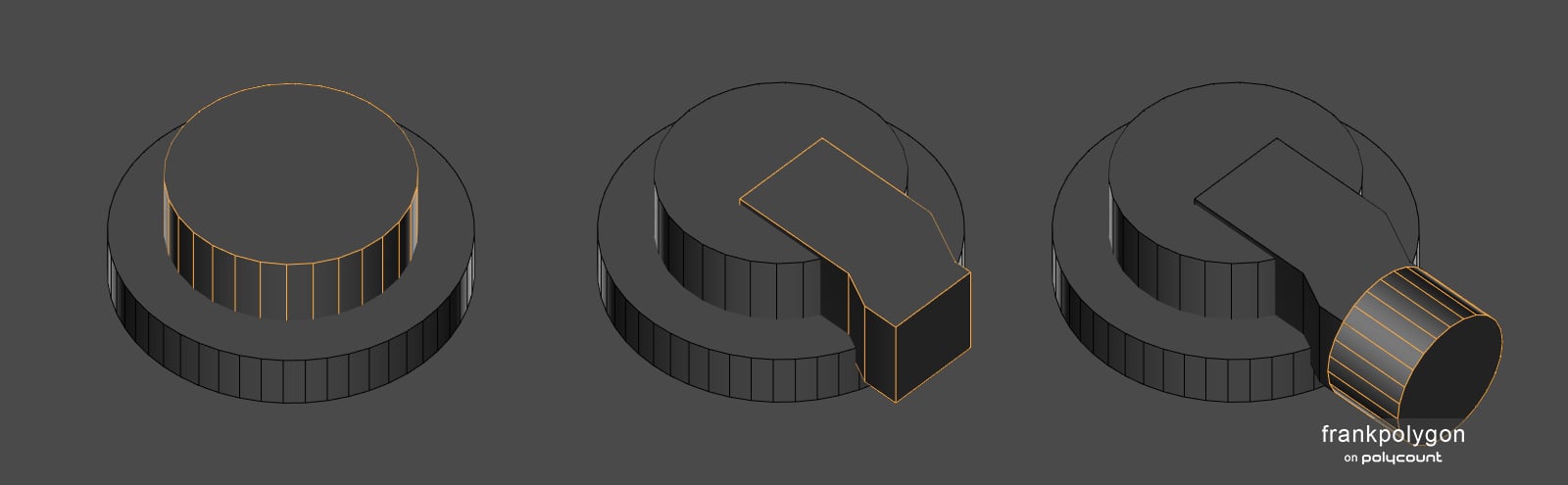 Subdivision sketch: throttle position sensor. This is a brief visual overview of an iterative block out process and streamlined subdivision modeling workflow. The write-up portion of the post also covers some questions to think about when it comes to workflow decisions and time. Simplified proportion block out. It all…
 -
Re: Sketchbook: Frank Polygon
@wirrexx Currently putting together a brief video of the modifier based process and will follow up by posting it here. Most of the modifiers in Blender inherit a transform orientation that's based on the object's stored rotation. Managing this, along with object origin points, does add another layer of complexity but also… -
Re: Sketchbook: Frank Polygon
 "Most of the modifiers in Blender inherit a transform orientation that's based on the object's stored rotation. Managing this, along with object origin points, does add another layer of complexity but also provides flexibility in how things can be setup. Transforms in object mode can be stored and reset but the same…
 -
Re: Sketchbook: Frank Polygon
 Texturing breakdown This write-up is a brief overview of the processes used to create PBR textures for a hard surface model with subtle weathering effects. The documentation for most of the popular texture authoring tools does a good job of covering the technical side of things. So the majority of the focus here will be…
18 results