Search
-
Re: How The F*#% Do I Model This? - Reply for help with specific shapes - (Post attempt before asking)

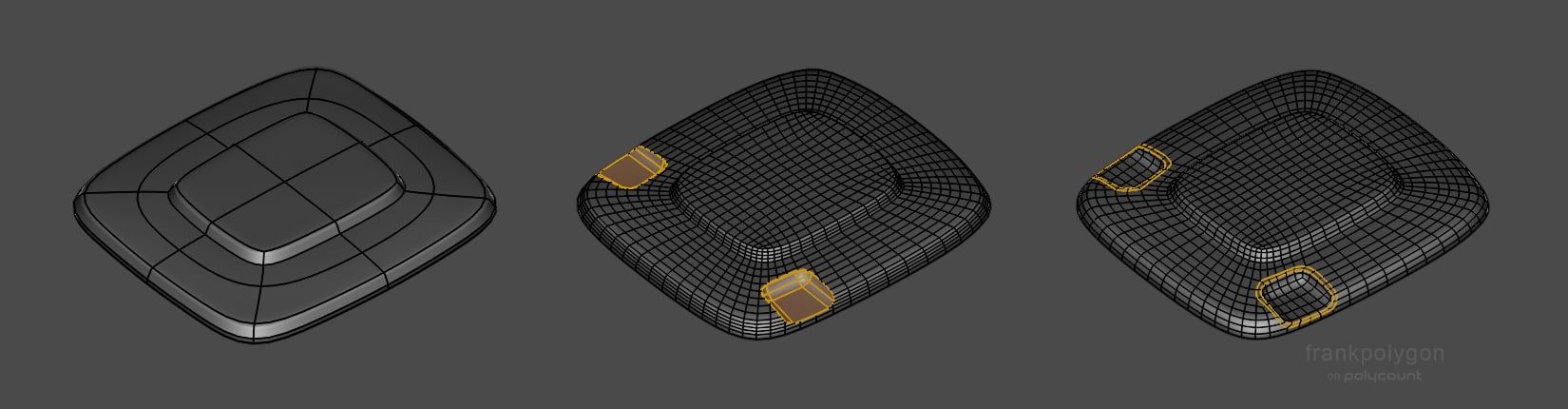 @christrom It looks like you're headed in the right direction. Like Eric already mentioned, what you have would be fine for baking in most high to low game art workflows. As far as a light technical critique of the model and topology: if the goal is to create accurate, detailed high poly assets with a relatively even…
 -
Re: How The F*#% Do I Model This? - Reply for help with specific shapes - (Post attempt before asking)
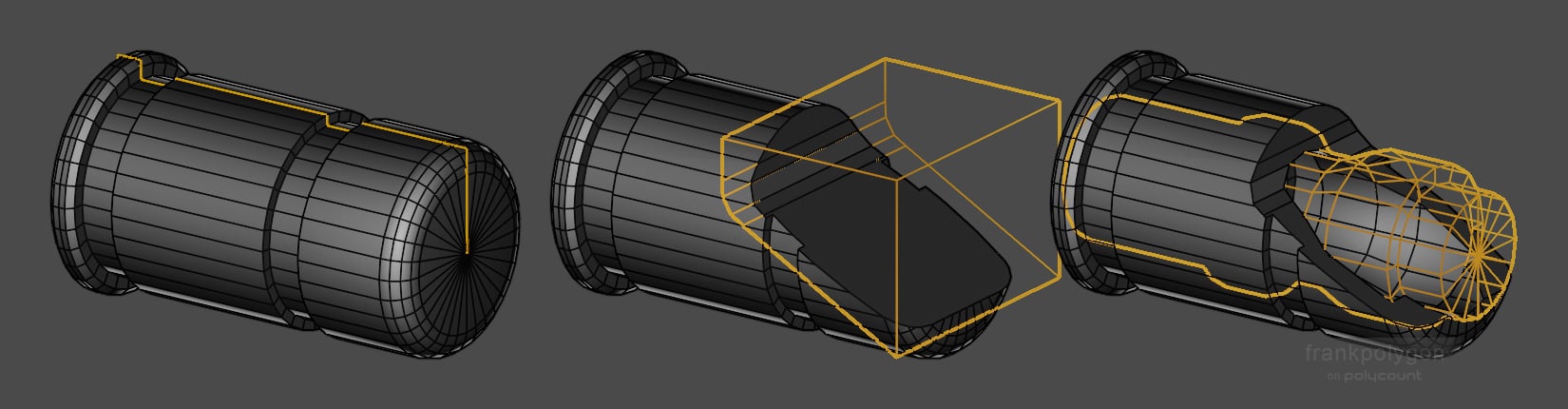 2300511685 Overall it looks like you're already on the right track. It really just depends on what the model is for. If it's for games: the brake has a very rough surface finish and it's a very small part that's typically further away from the player's main point of view. So the current high poly is more than passable…
 -
Re: How The F*#% Do I Model This? - Reply for help with specific shapes - (Post attempt before asking)

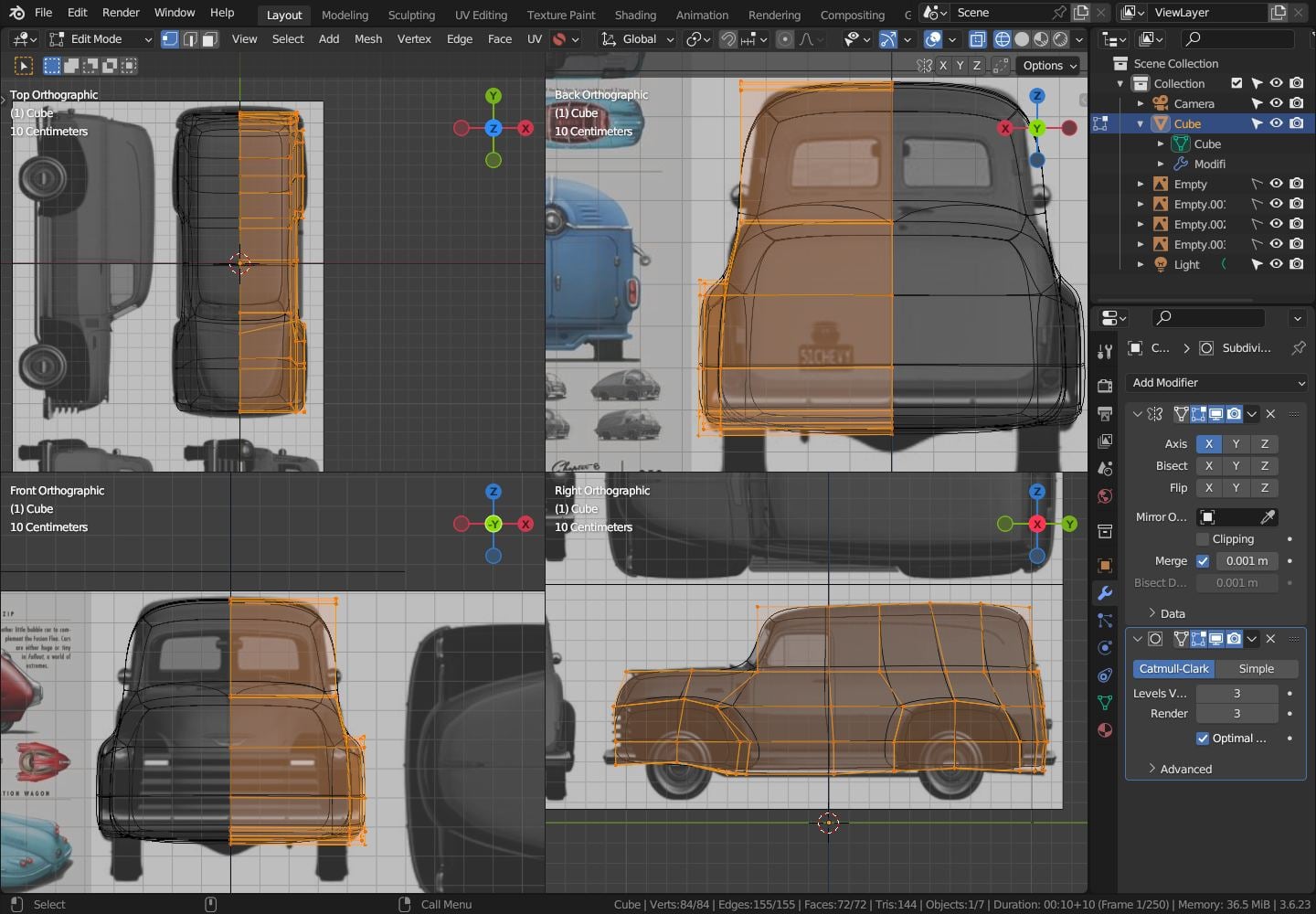 Well.. it's "the usuall": follow the reference.. here in 3.6.. :wink: using a slighly high subdiv here to "follow the form" a bit "better"; lower the subdiv to you needs
 -
Re: How The F*#% Do I Model This? - Reply for help with specific shapes - (Post attempt before asking)
 Well, for offline then nitpicking on amount of edge loops really doesn't matter, it's all about the end render(s). You will be rendering the same thing multiple times, daily after daily, client after client, etc. So some level of optimization helps a bit. But if it pushes you over budget, it's a waste of effort. So…
 -
Re: How The F*#% Do I Model This? - Reply for help with specific shapes - (Post attempt before asking)
None of them are problematic really. Any of these would be fine on today's hardware. If I was being super nit-picky, I would lean towards D, just because the corner triangles are evenly-sized. Some renderers don't like long thin triangles. Simon Schreibt explains a bit of the "why"… -
Re: How The F*#% Do I Model This? - Reply for help with specific shapes - (Post attempt before asking)
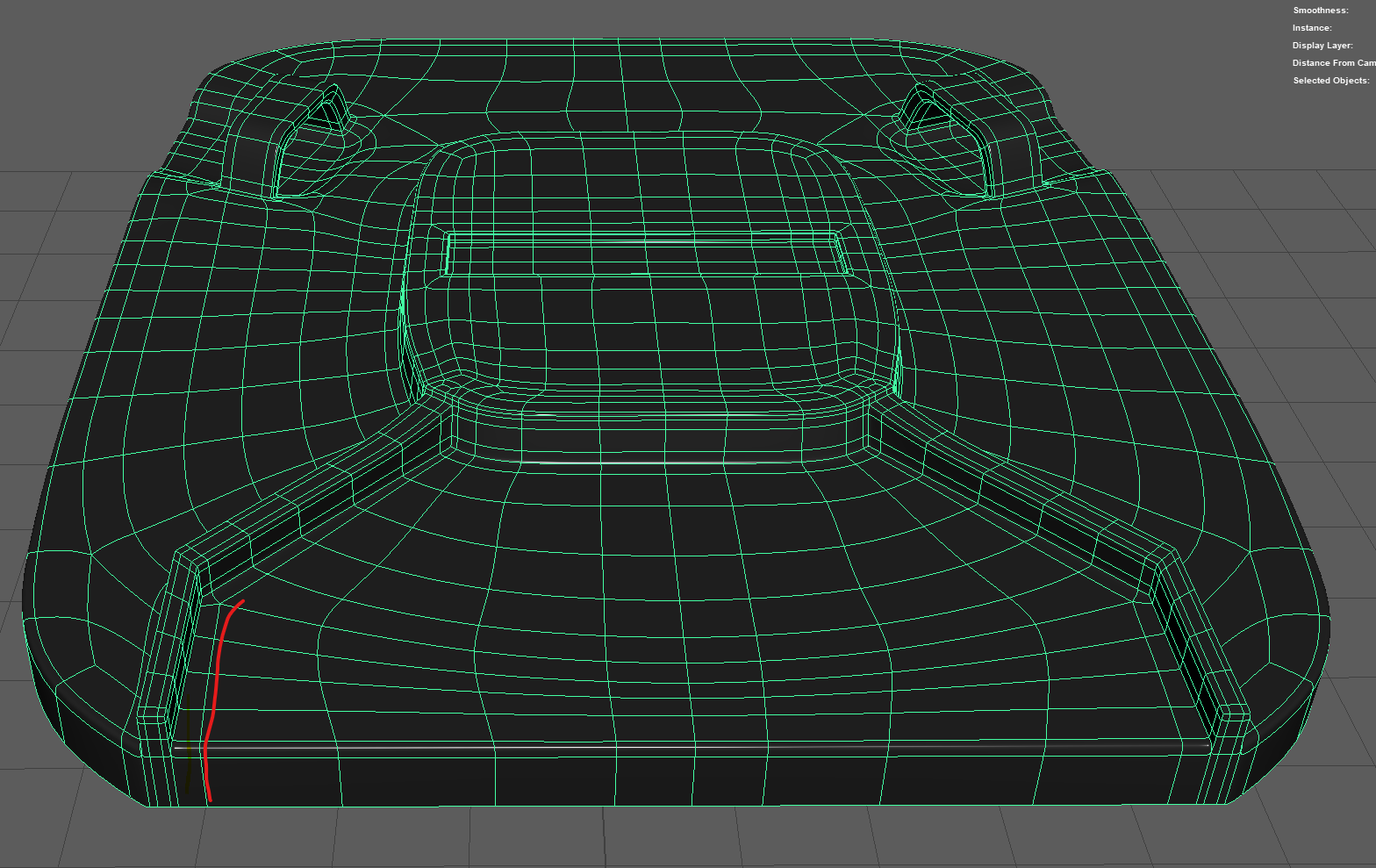 Hi everyone. I wanted to do a practice piece so I'm trying to model a wheely bin. It isn't glamourous in the slightest, but as it is moulded out of one piece I figured it would make for a challenge. I recently learned about sub-D corner topology so wanted to practice this too. I would imagine this as a film asset, but…
 -
Re: How The F*#% Do I Model This? - Reply for help with specific shapes - (Post attempt before asking)
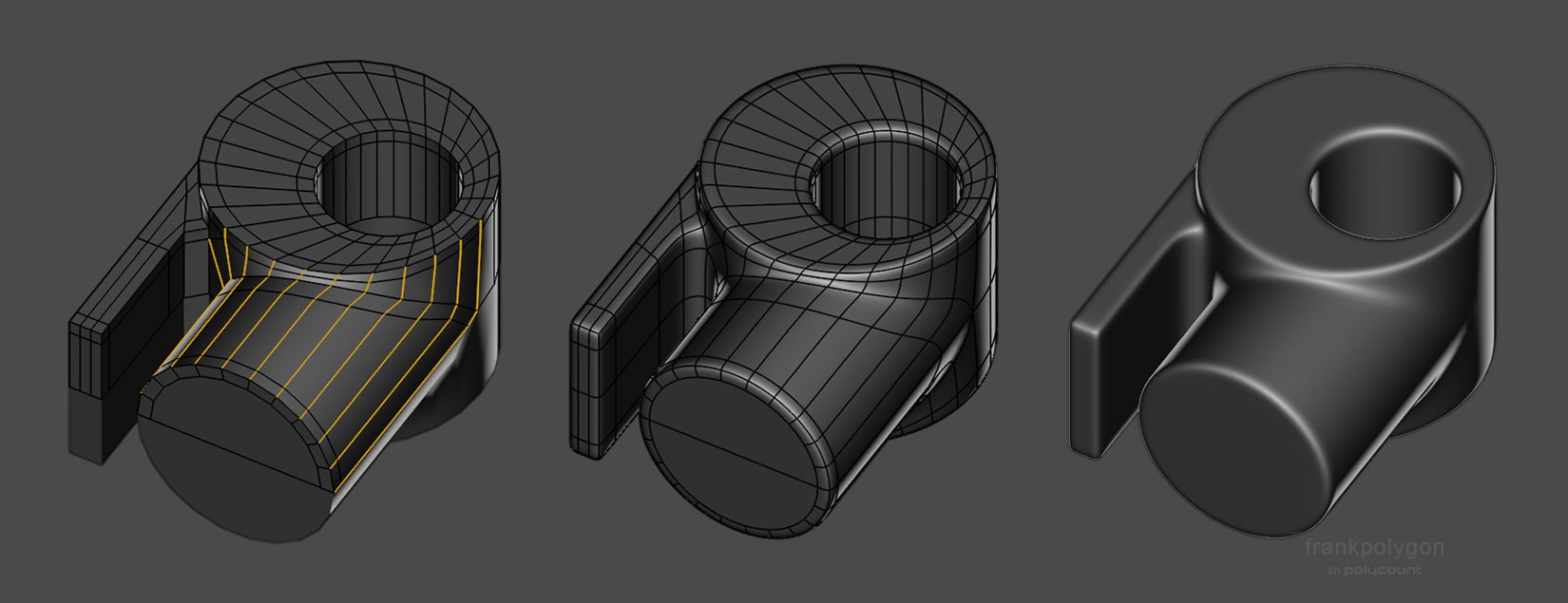 polska_krowa Welcome to Polycount. Consider checking out the forum information and introduction thread. It looks like you have a solid start with the block out and topology routing. How much geometry this model needs depends entirely on what it will be used for. If it's for up close product rendering or VFX work then the…
 -
Re: How The F*#% Do I Model This? - Reply for help with specific shapes - (Post attempt before asking)
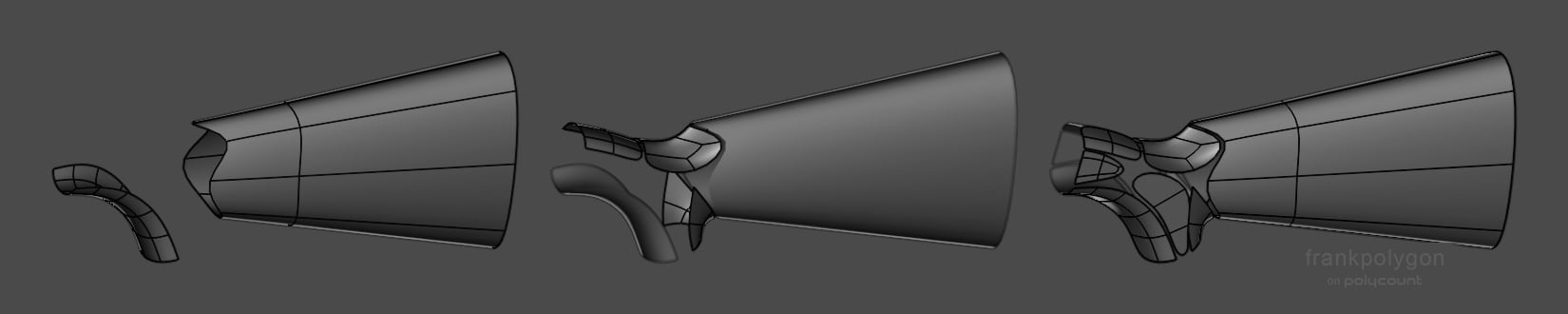 @Lemenus That approach of projecting the adjacent shapes could work, though most non-destructive or modifier based approaches tend to work best when each operation is naturally constrained by either the basic forms themselves or well defined breaks between adjacent surfaces. Since this stock is a collection of compound…
 -
Re: How The F*#% Do I Model This? - Reply for help with specific shapes - (Post attempt before asking)

 OK so there's multiple things going on here. What you have here is a cylinder. Call it a quasi-, compound-, or even pseudo-cylinder, but the same rules apply: If you want it to be cylindrical, you're not allowed to mess around with the edgeflow, or amount of edges connected to any vertex without consequence. The blue and…
 -
Re: How The F*#% Do I Model This? - Reply for help with specific shapes - (Post attempt before asking)
 @Daf57 The base geometry that's controlling the subdivision isn't dense enough to support the perforations. For that to work the mesh would have to be subdivided to an appropriate level before the perforations are added. There are several alternatives that will look better, work better and require less effort. If the model…
>1264 results