Search
-
Re: How The F*#% Do I Model This? - Reply for help with specific shapes - (Post attempt before asking)

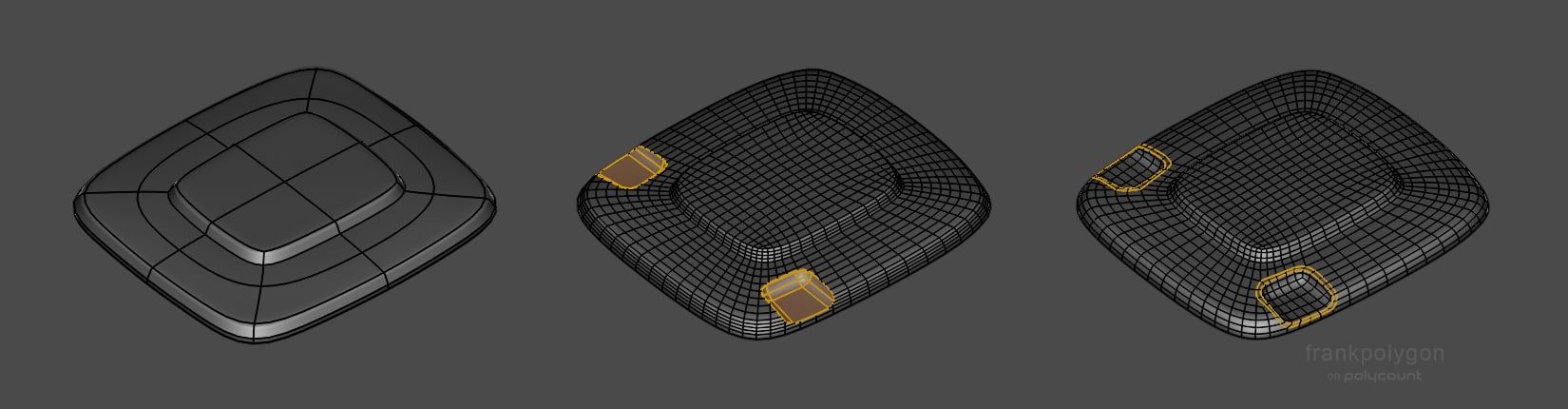 @christrom It looks like you're headed in the right direction. Like Eric already mentioned, what you have would be fine for baking in most high to low game art workflows. As far as a light technical critique of the model and topology: if the goal is to create accurate, detailed high poly assets with a relatively even…
 -
Re: How The F*#% Do I Model This? - Reply for help with specific shapes - (Post attempt before asking)
 @5rettski There's a few different ways to approach organic subdivision modeling but it's generally a good idea to start by establishing the proportions with a block out of the facial planes to create a base mesh. Part of this block out process usually involves creating basic loop paths around key facial features (eyes,…
 -
Re: How The F*#% Do I Model This? - Reply for help with specific shapes - (Post attempt before asking)
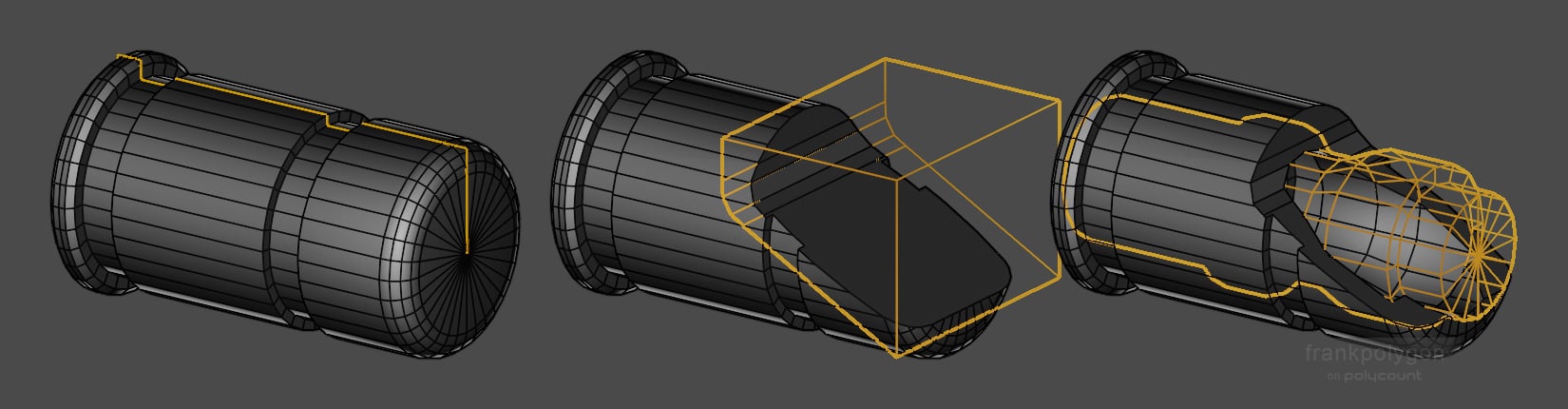 2300511685 Overall it looks like you're already on the right track. It really just depends on what the model is for. If it's for games: the brake has a very rough surface finish and it's a very small part that's typically further away from the player's main point of view. So the current high poly is more than passable…
 -
Re: How The F*#% Do I Model This? - Reply for help with specific shapes - (Post attempt before asking)
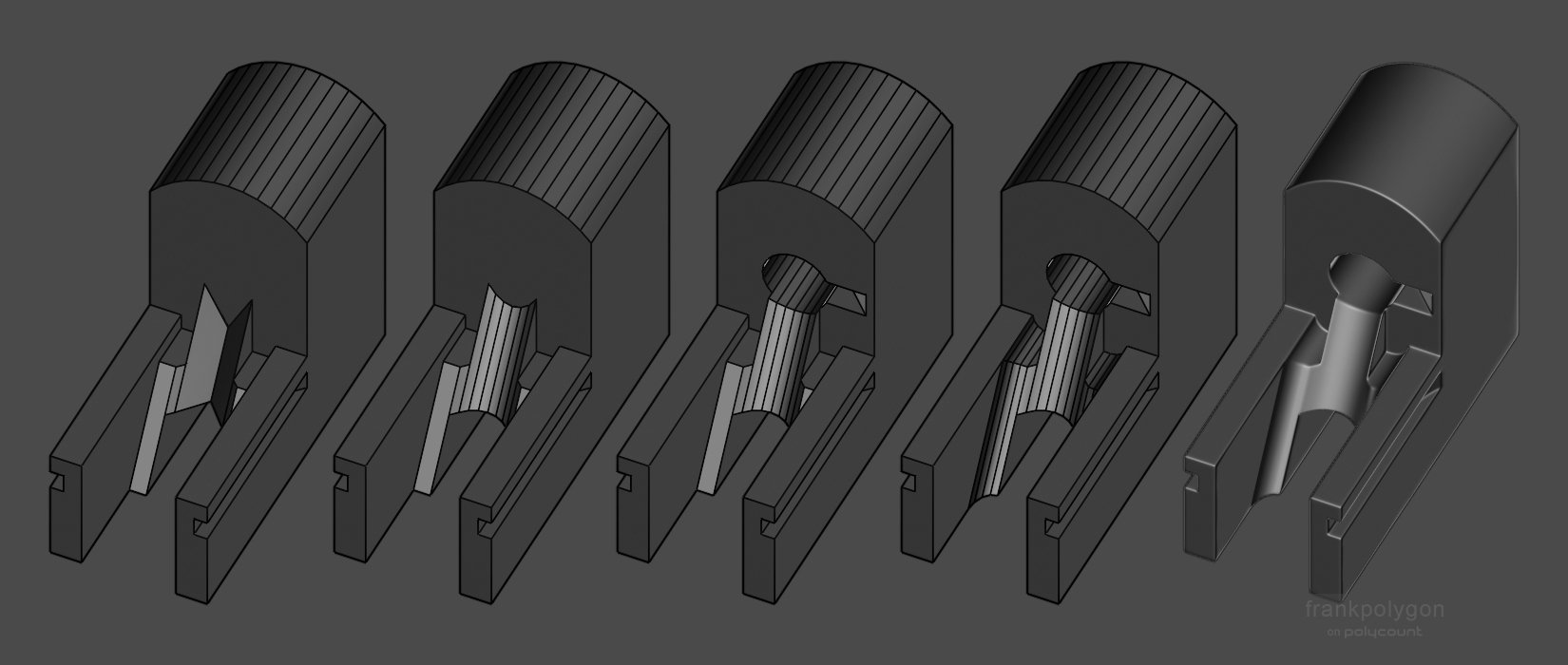 @WarriorOfOld There's a few different ways to approach modeling this shape but, whether using non-destructive modifier based booleans or basic poly modeling operations, it probably makes the most sense to start by defining the basic shape of the well and ramp then line all of that up with the other internal parts and key…
 -
Re: How The F*#% Do I Model This? - Reply for help with specific shapes - (Post attempt before asking)
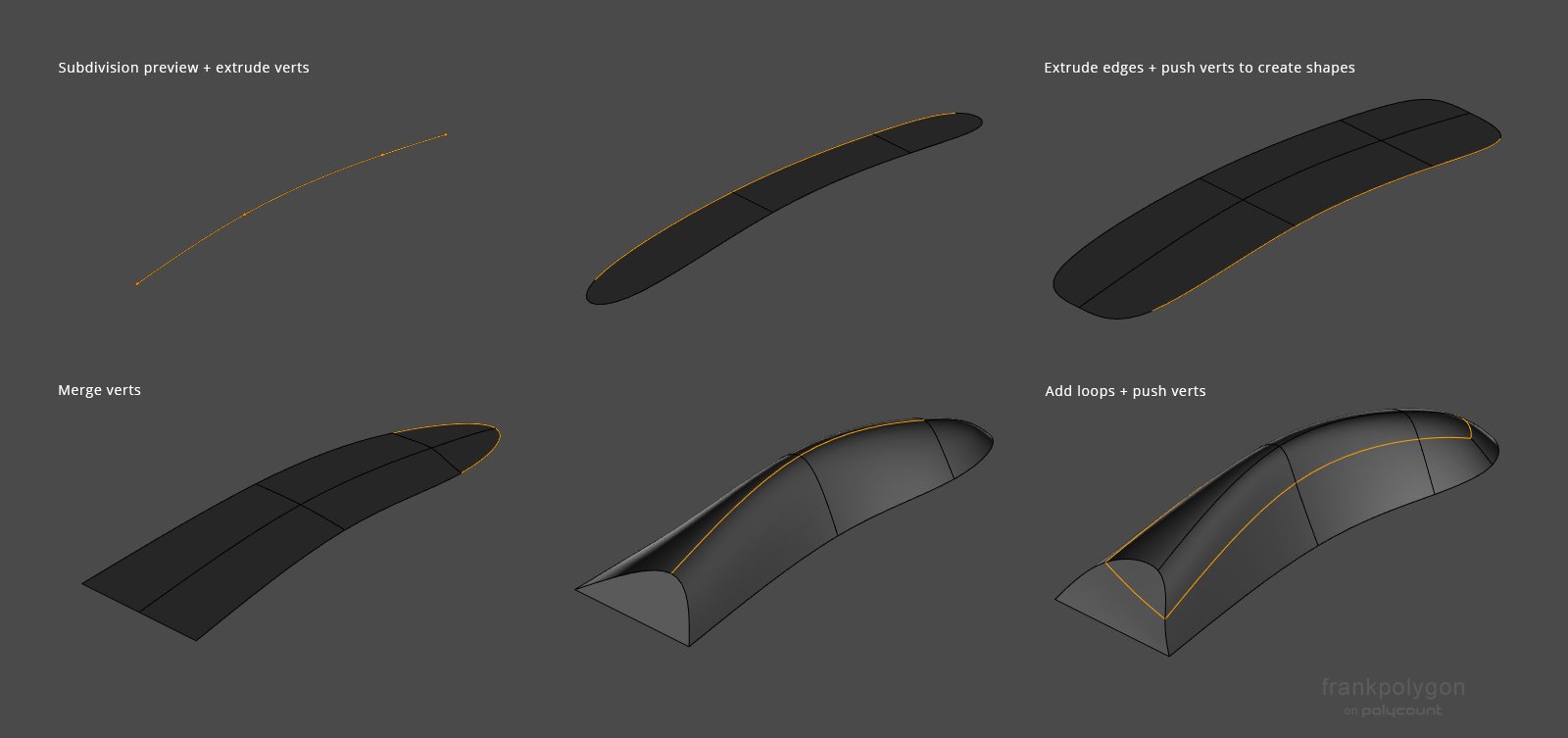 @Veer_P Not a problem. Like @sacboi pointed out, subdivision modeling tends to be an iterative process and there's a few different ways to establish the basic building blocks that define the shapes. The modeling approach used to create the very first shape in the previous example is usually called edge extrusion or point…
 -
Re: How The F*#% Do I Model This? - Reply for help with specific shapes - (Post attempt before asking)
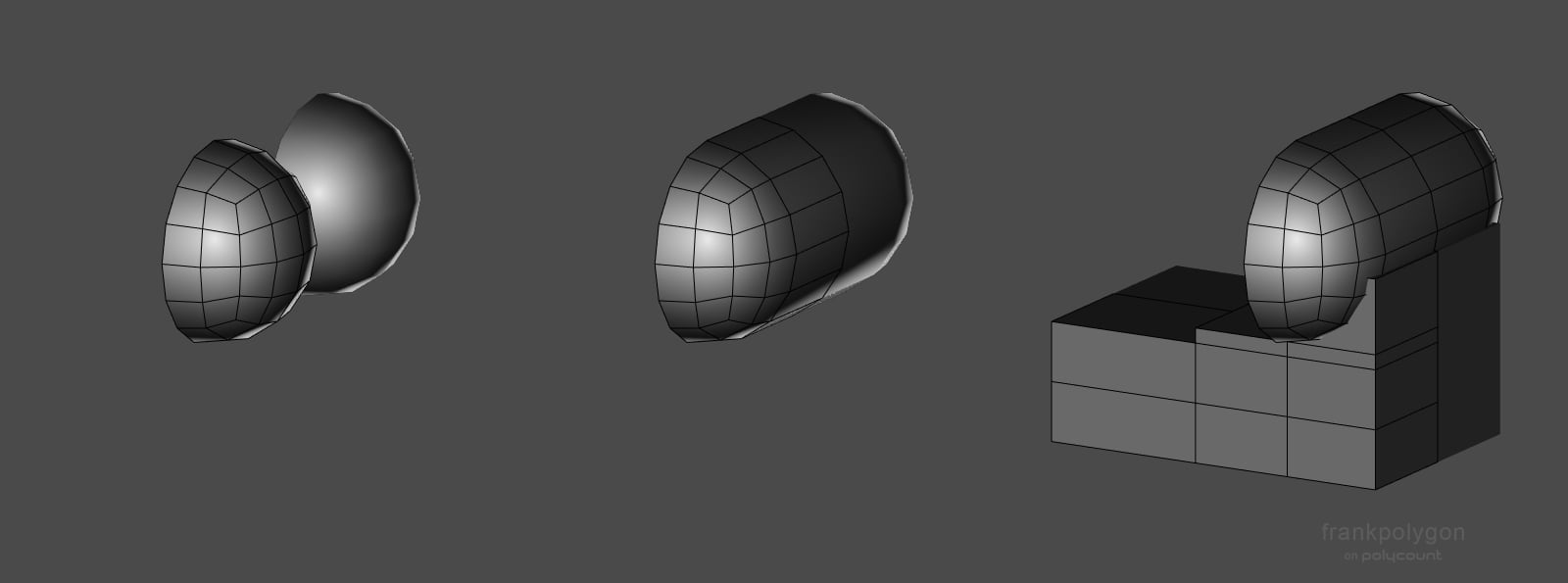 Osoramiru Welcome to Polycount. Consider checking out the forum information and introduction thread. Like Zac and Eric mentioned: try subdividing the mesh and see if there's any smoothing errors like pinching, stretching, or unintended surface deformation. The unsubdivided wireframe is great for clarity but it's easier to…
 -
Re: How The F*#% Do I Model This? - Reply for help with specific shapes - (Post attempt before asking)
 Well I was able to create such blocky siluette but that was it. Its got those curves and so and it needs to be connected together somehow I dont know how. I definitely look stupid as hell
 -
Re: How The F*#% Do I Model This? - Reply for help with specific shapes - (Post attempt before asking)
 @perandall Welcome to Polycount. Consider checking out the forum information and introduction thread. Looks like you have the primary forms. Just continue iterating on the block out to create the secondary forms. Below is an example of developing this shape with an iterative block out process. Create the basic shape of the…
 -
Re: How The F*#% Do I Model This? - Reply for help with specific shapes - (Post attempt before asking)
 @Veer_P It's generally considered best practice to block out the forms from largest to smallest. Keep things simple at first. This makes it easier to adjust the larger shapes and place geometry where it's needed to support smaller shapes and shape intersections. Work through the block out in stages and only add smaller…
 -
Re: How The F*#% Do I Model This? - Reply for help with specific shapes - (Post attempt before asking)
 If you're able, can you please post shaded with wireframe screencaps of what you currently have? As one possible alternative to define displacement detail using a base mesh, sculpting complex surface variation would certainly capture an intended result however I think at this stage, will hinder more than be in anyway…
288 results