Search
-
Re: How The F*#% Do I Model This? - Reply for help with specific shapes - (Post attempt before asking)
 As far as I know, it depends on the size of the model. If it’s a large mid-poly object, it’s often textured using tiling textures and masks instead of unique texture maps in order to achieve higher texel density. Another reason is VR projects, where it’s generally better to rely on actual geometry. I’ve also noticed that…
 -
Re: How The F*#% Do I Model This? - Reply for help with specific shapes - (Post attempt before asking)

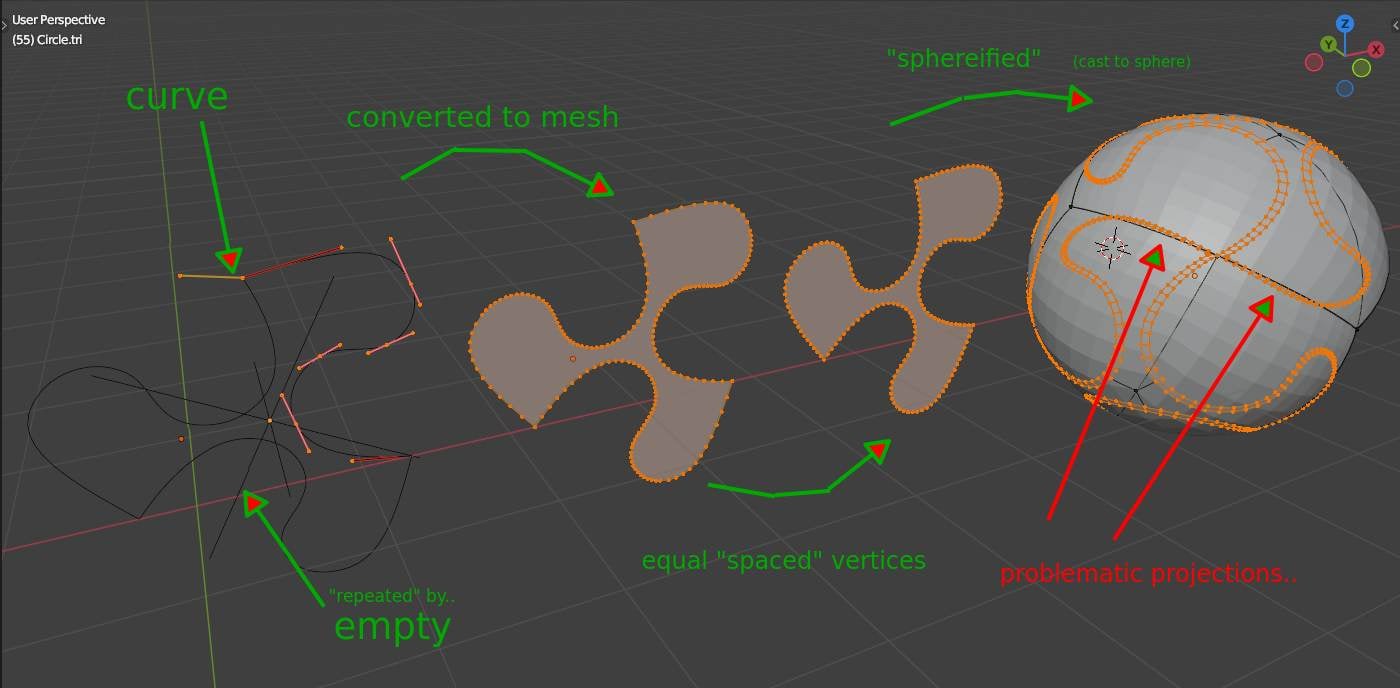 Yeah thats the same I am facing with projection in Max which I think will only work if we treat it as garment and stitch and spheriphy. However I want to keep it quad based for my own peace of mind. EDIT: Almost there, but in meantime if there is better way please do share
 -
Re: How The F*#% Do I Model This? - Reply for help with specific shapes - (Post attempt before asking)

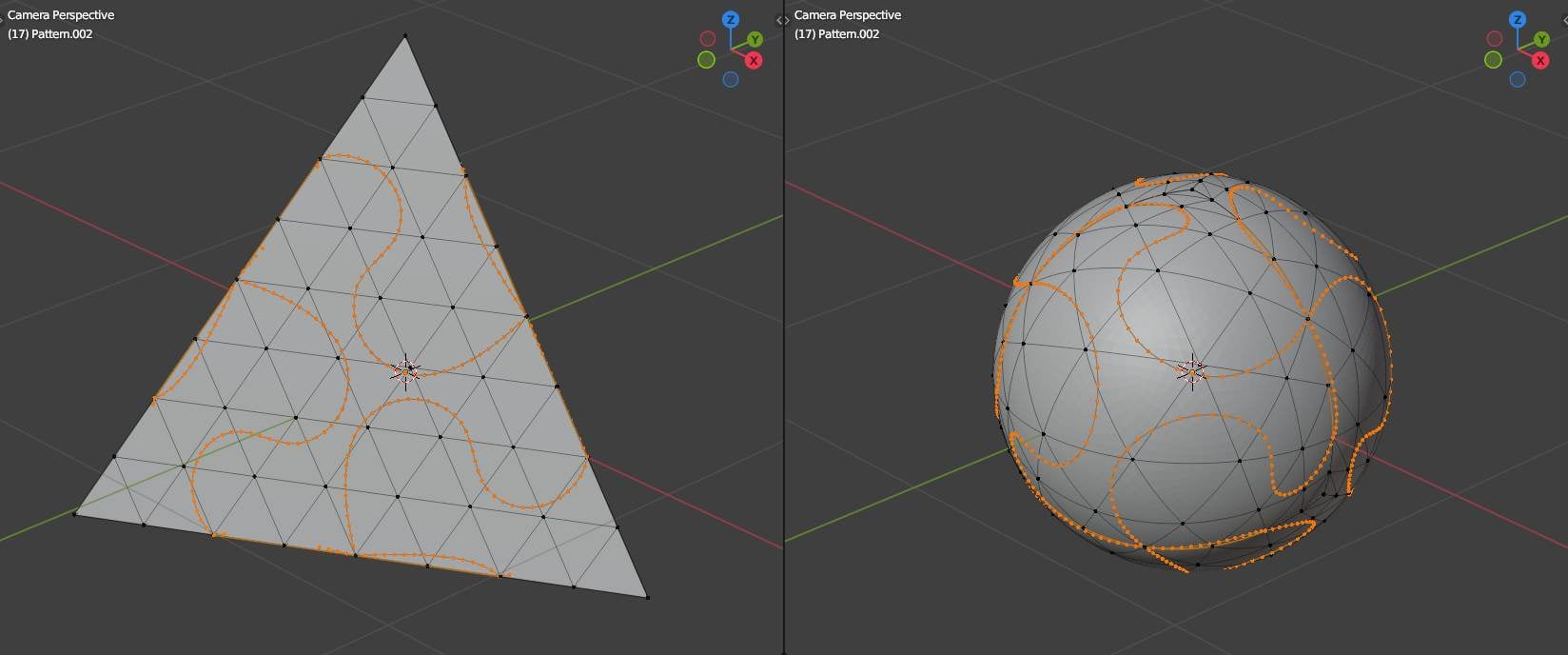 In fact when "repeating" the pattern in the three directions (120 segree "apart") and constraining onto the triangle like in case of pattern generation then the spherical projection does work and the "continuoes curves" does fit. Used the almost legaxy trick in blender to instance those pattern geometry on th faces of…
 -
Re: How The F*#% Do I Model This? - Reply for help with specific shapes - (Post attempt before asking)
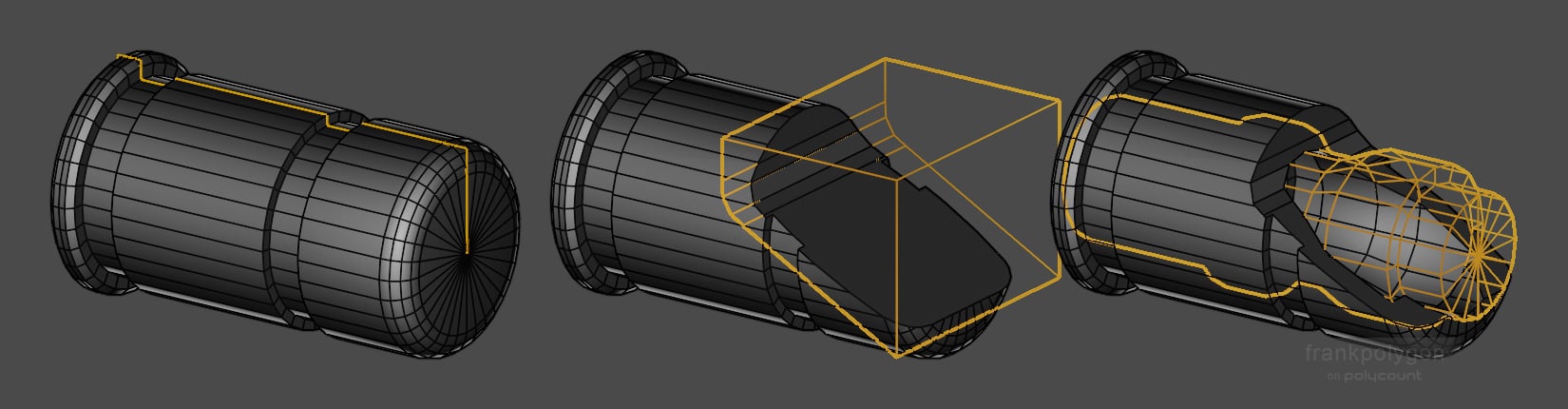 2300511685 Overall it looks like you're already on the right track. It really just depends on what the model is for. If it's for games: the brake has a very rough surface finish and it's a very small part that's typically further away from the player's main point of view. So the current high poly is more than passable…
 -
Re: How The F*#% Do I Model This? - Reply for help with specific shapes - (Post attempt before asking)
 Actually went back to the base mesh and built it again. This is the cleanest I managed to come up with so far. There are still ngons along the edge which I can't find a smart way to resolve, but the shading actually seems to be working regardless, so I'm just gonna leave them for now. Funny side note - I'm modeling this…
 -
Re: How The F*#% Do I Model This? - Reply for help with specific shapes - (Post attempt before asking)
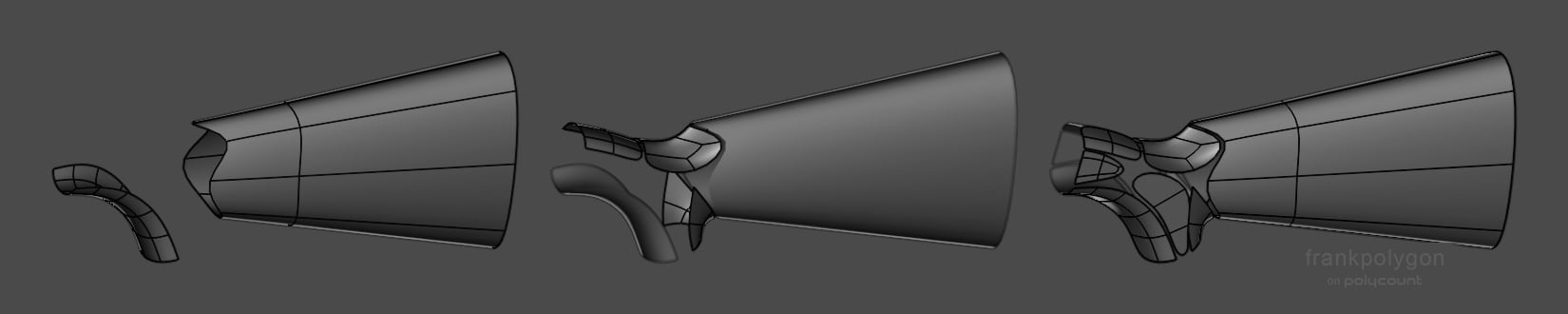 @Lemenus That approach of projecting the adjacent shapes could work, though most non-destructive or modifier based approaches tend to work best when each operation is naturally constrained by either the basic forms themselves or well defined breaks between adjacent surfaces. Since this stock is a collection of compound…
 -
Re: How The F*#% Do I Model This? - Reply for help with specific shapes - (Post attempt before asking)
 Welcome to Polycount! It’s not helpful to create duplicate posts in different places; I’ve deleted your post in here, and replied to your Topic instead. Best of luck with your project!
 -
Re: How The F*#% Do I Model This? - Reply for help with specific shapes - (Post attempt before asking)
To elaborate on that: Perfectly glossy reflections will amplify even the smallest changes in surface direction, because the angle of the reflection moves twice as much as the surface normal, and vertex interpolated normals/shading is prone to show gradients to begin with. So that's simply how it works. I agree that your… -
Re: How The F*#% Do I Model This? - Reply for help with specific shapes - (Post attempt before asking)
 @Dvids You got the shape of the decocking lever wrong, it's not rectangular at the top but rather one continuos curve. I've attached some references that might help. It's always good to get a lot of refs from different angles to get a better idea of the overall shape. I'd build the whole lever first and do the serrations…
 -
Re: How The F*#% Do I Model This? - Reply for help with specific shapes - (Post attempt before asking)
You are absolutely right that I misinterpreted the shape. Was doing this at 4am last night lol, think I got sleepy. I also didn't have reference showing the backside of the lever - may I ask where you found that? Just google or a specific source? I re-created the whole thing and started with the back transition using a…
224 results