Search
-
Re: Have anyone figured out how new Curvature Smooth node works in Designer?

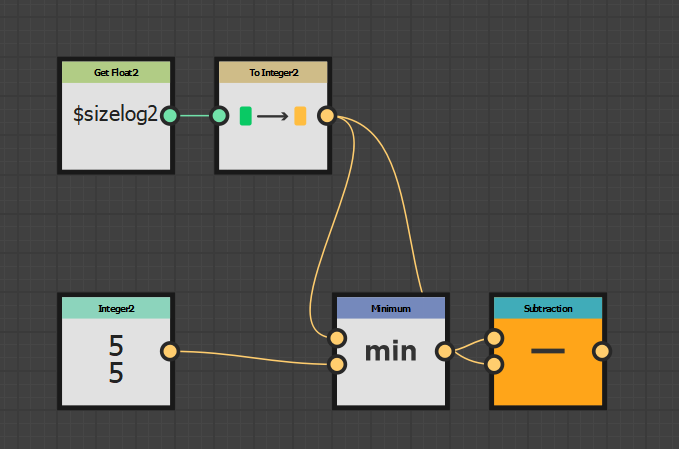 I (naively) assumed they'd done it properly Hacks like that explain why it breaks down under some circumstances edit: ok so I've had a look . Hopefully this helps with some of the weird bits The only variable they seem to be using is the builtin $sizelog2 -which is log2(pixel size of the input) == log2(512, 512) == (9, 9)…
 -
Re: Have anyone figured out how new Curvature Smooth node works in Designer?
poopipe From what I see in the node Designer just makes copies scaled down images till 2x2 pix where it perform roughly same and upscale back . Instead of doing blur or Sobel like . But it's extremely hard to read and figure out form their math nodes really as if they specifically tried to make it cryptic vs Blender for… -
Have anyone figured out how new Curvature Smooth node works in Designer?
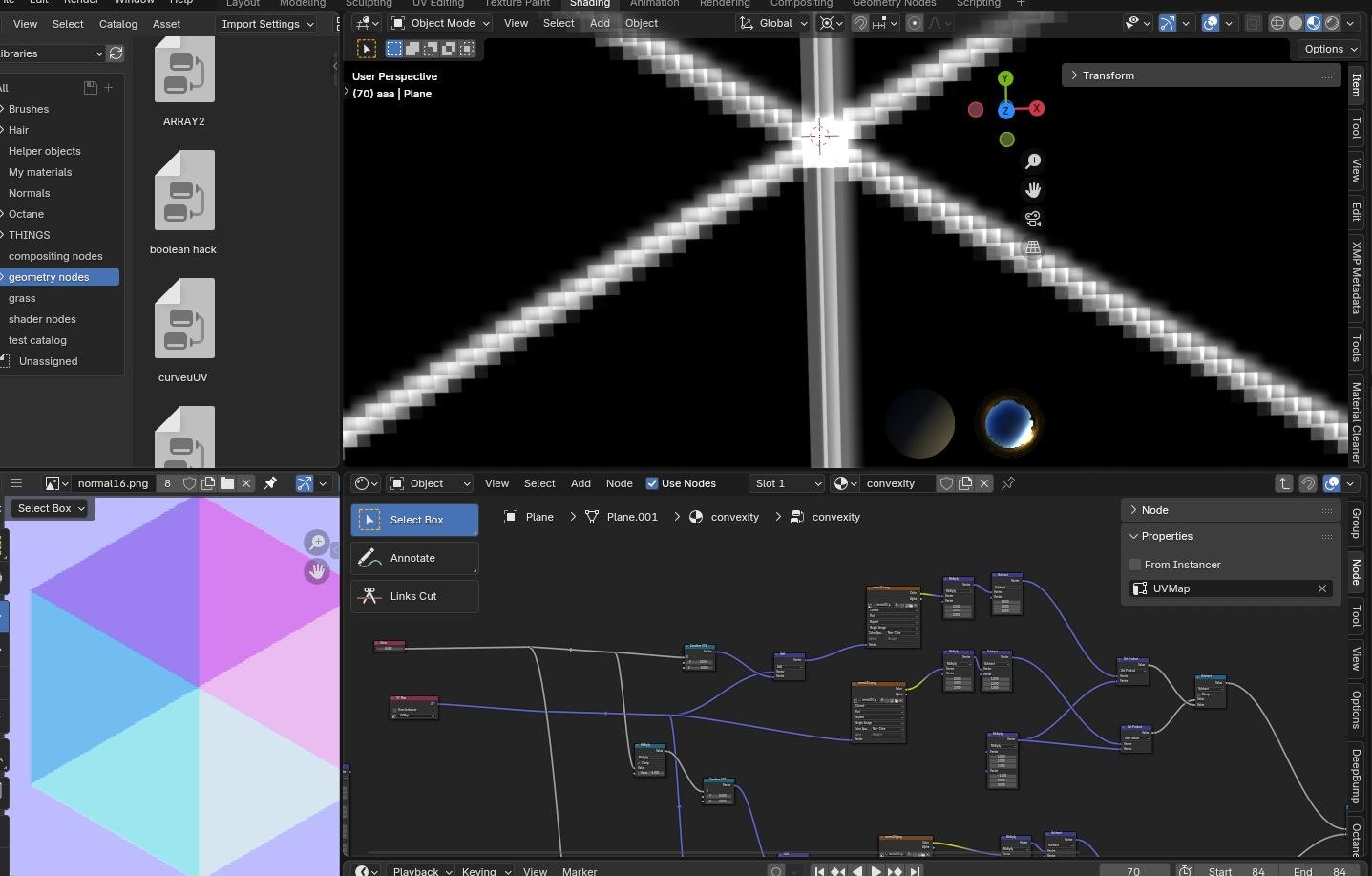 So far I find it best for doing various edge masks just on top of a final normal map . Tried to make it work in Painter but as always it's weird and never same , works only on square textures i.e a dead end. Want to recreate it for Blender shader editor. I see it sort of shift iteratively in x and y positive and negative…
 -
Re: Have anyone figured out how new Curvature Smooth node works in Designer?
Thanks a lot poopipe. Look like it still does a form of blur with while loop node . Something that would be hard to do in Blender shader editor. -
Re: Have anyone figured out how new Curvature Smooth node works in Designer?
it's a bit beyond what you can do with a stateless pixel shader effect afaik. standard curvature is doable with a sobel (like) filter but this needs to consider a much larger range if you want to mask by a specific normal direction though - just dot(normal, other normal) -
Re: Have anyone figured out how new Curvature Smooth node works in Designer?
The version I looked at wasn't on the latest designer and doesn't use a while loop. The progressive down-sampling takes the place of a loop. It may be hard to reproduce in blender. If this were a glsl/hlsl shader you'd need to render a texture for each downsample at least and possibly to handle some of the composition
6 results