Search
-
Re: Mini Tutorial: Baking seamless normal maps for glTF
 An offline equivalent would be Visual Studio Code, with the glTF Tools extension installed. Then you can load .glTF files to edit them, and use the 3d preview (four different offline renderers!). I give an introduction to the process here: https://github.khronos.org/glTF-Tutorials/AddingMaterialExtensions/
 -
Mini Tutorial: Baking seamless normal maps for glTF
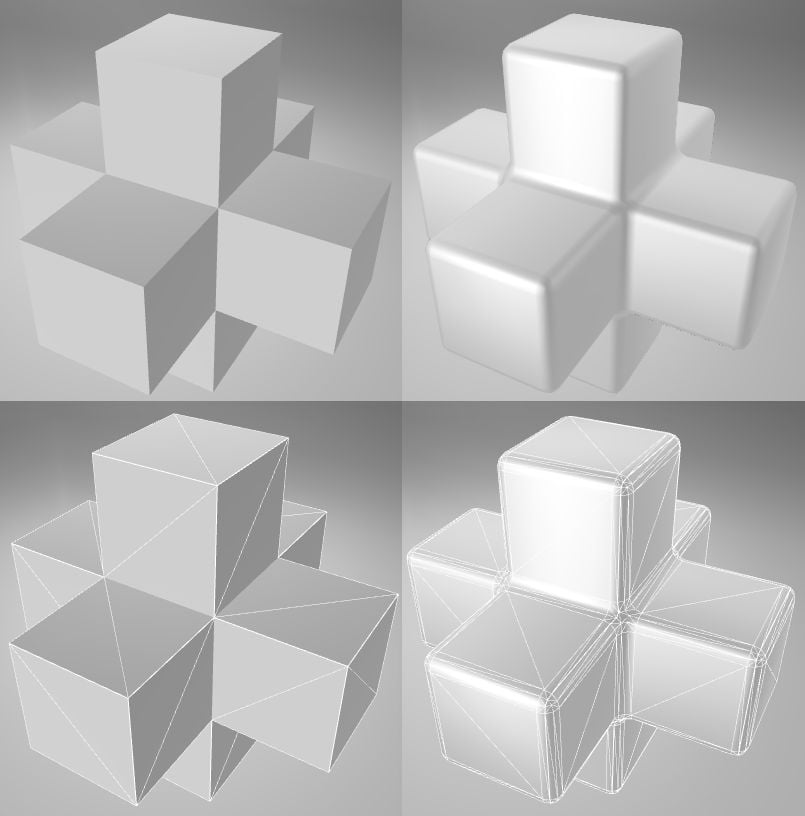 I made this for a client recently, and it's generic enough that I can share here. So, why not? Here are the source meshes, shaded and in wireframe: When I open hexcube-lowpoly.glb in Babylon.js Sandbox (https://sandbox.babylonjs.com/), the normal map does not represent the beveled high-poly shape from hexcube-highpoly.glb,…
 -
Re: Mini Tutorial: Baking seamless normal maps for glTF

 Excellent.. and in blender it's the Extrusion parameter under the back option.. here (diretcly imported) a simple 0.1 m will do to prevent the high/lowpoly "Z-fighting" ( but i'm not sure if this is called this while baking normals.. ) .
 -
Re: Mini Tutorial: Baking seamless normal maps for glTF
Yes it does increase the vertex count, because each vertex normal requires its own vertex to store the data, same with UV splits. So when you make hard edges you are duplicating vertices. But it’s not that big a deal these days; hardware can handle a lot of vertices. -
Re: Mini Tutorial: Baking seamless normal maps for glTF

 Someone on the forums once said vert count increase is "bad" does this : create that issue? obviously on a more complicated model, this is helpful though, this babylon... "live preview site thing", is there an offline equivalent? or can it be ran offline and still be tinkered with? thanks for blender info. (1day,1day..)
5 results