Search
-
Re: Texturing human skull or not ?

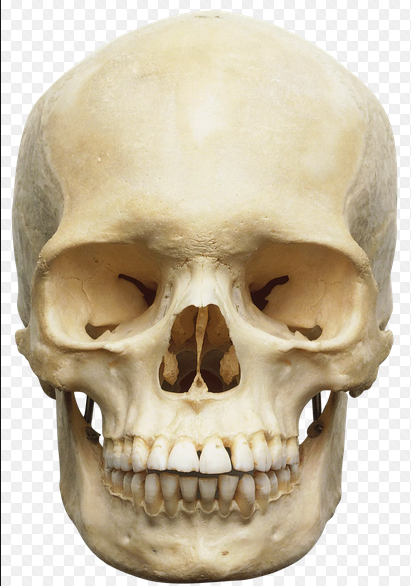 Realistic I think would include the surface level bumps and channels. Plus there is distinct color variation. I'd definitely texture it. The little bumps and surface noise I would probably apply as alpha's to the sculpt for normal map/AO map baking.
 -
Re: Hacky Normal Map Correction
 Okay, nice hack but you might as well cut out whole baking process and generate your normal from diffuse. Because resulting map doesn't have any big or medium surface definition left, just surface dents and noise.
 -
Re: Hardware question - tablets - which do you use
 Wacom Intuos CTH-680 It is essentially a Bamboo equivalent tablet. Works great. I bought a surface cover for like $10 because I didn't like the surface texture. Has the added benefit of keeping nibs from wearing down as fast.
 -
Re: Free Maya/max cgfx/fx Shader
[ QUOTE ] specular is a reflection, so spec map drives reflection... [/ QUOTE ] But a lot of surfaces (like some metals, and glossy wooden surfaces) are going to be a lot easier to make look realistic in a game engine if you have seperate env/spec masks. -
Re: Some Weapons
 textures look great :) Surface properties r also quite good as to me. I just noticed though that the mirrored texture on the back of shields is quite visible. That especially concerns the wooden shield. Folds of leather surface on its back are too symmetrical.
 -
Re: Hardsurface concept Presentation help [WIP]
Hey, it looks pretty good man to be honest. Sometimes when you have been working on an object, since you have worked on every little detail on it, you naturally see every tiny flaw in it. The perception from a fresh pair of eyes will always differ. With that said, I see you are using marmoset for rendering. Unless you are… -
Re: Subsurface Scattering Research and Experimentation
 I tried importing the head as a static mesh (ASE) but I couldn't get it to handle overlapping UV's so I ended up exporting the eyes as separate objects. Strangely enough it still thinks that either UV's are out of bounds or are overlapping for the head despite me triple checking in max. I deleted the eyes, applied a single…
 -
Re: [Finished] Japanese Town
 Look for reference of retaining walls. Pay attention to logical wear patterns. Sun and rain and human traffic will all leave telltale marks on town surfaces. Every surface has the chance to add to the environment's narrative, as the environment artist, it's your job to sell that story.
 -
Re: Uberren's Hand Painted Barracks
 Wood looks nice, floor seems very clay-like though. it doesn't have surface details besides cracks and as a result it doesn't read as stone. Also metal surfaces look a bit too white but i assume they're just not finished yet.
 -
Re: Mudbox or Zbrush?
 Must be my own perception ( as I don't recall anyone ever agreeing with similar experience ) But somehow brushing in Mudbox feels like manipulating a thin eggshell surface whereas Zbrush feels like building upon a solid surface. ( more clay like )
>18720 results