Home 3D Art Showcase & Critiques

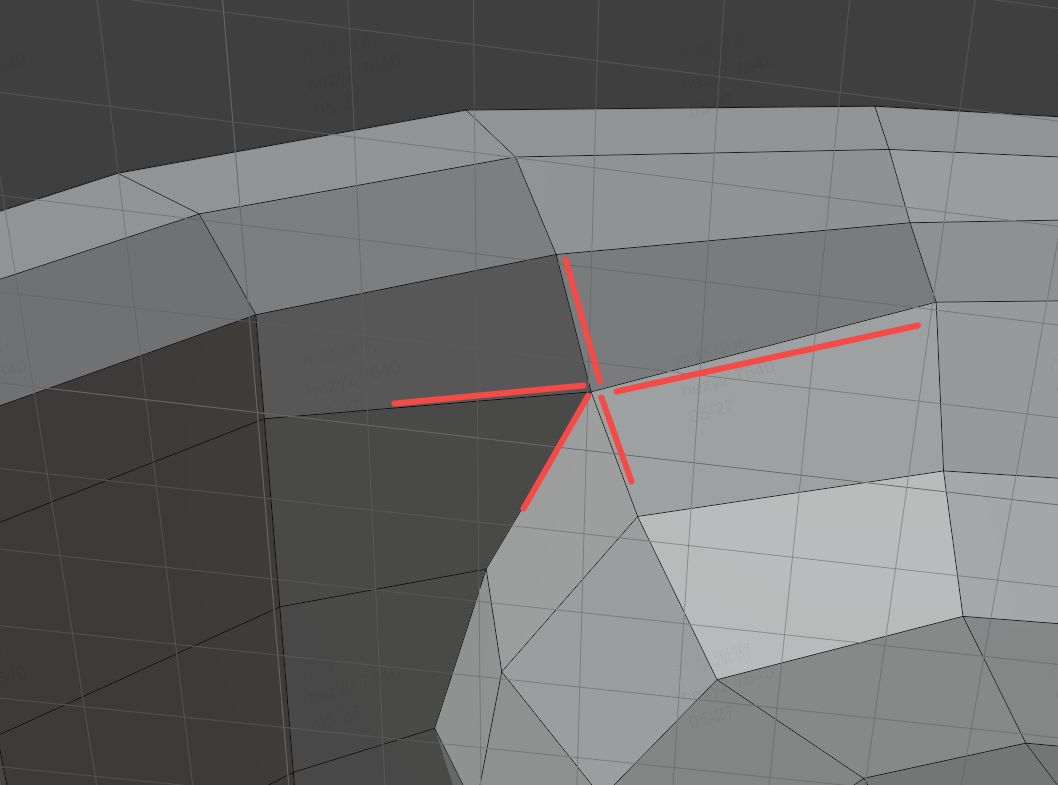
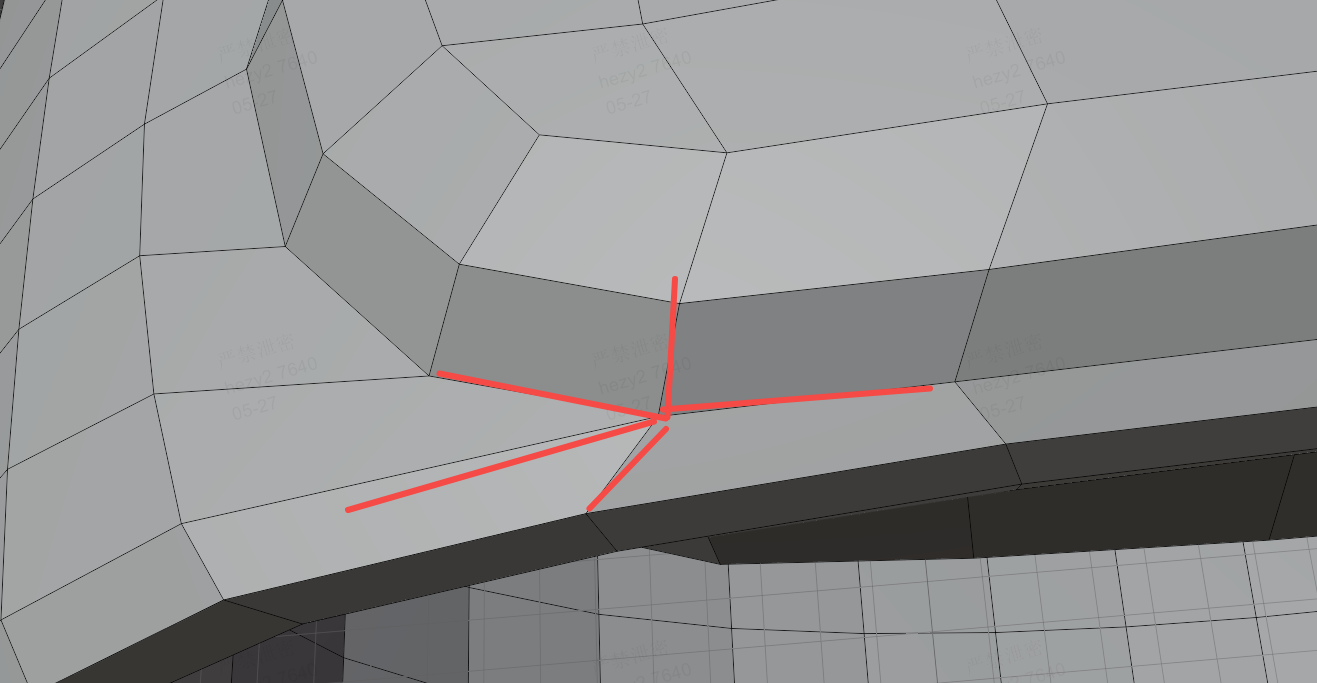
Does having five edges meet here work for this product? What’s a better alternative?

Offline / Send Message
Pinned
I'm building this surface in Blender and want the face division here to be more natural and reasonable. Could you tell me if my current topology is correct? Are there any better ways to split the faces? I can't share the full model since the product is still in progress. I’ve tried many solutions on my own but haven’t found an ideal approach. Any advice would be greatly appreciated. Thank you!
Replies

  • sacboi
    Offline / Send Message
    sacboi grand marshal polycounter
    Frankpolygon's perspective is what I'd think about plus the principles discussed relate too other shapes/subd processes as well  e.g.


    "Segment matching is a fundamental element of most subdivision modeling workflows."


    "A significant problem with trying to formulate a fixed rule set for a universal topology layout strategy (independent of constraints, experience, and goals) is a lot of the commonly parroted one line tidbits of subdivision modeling advice just ends up being absolutist, dogmatic, or reductive. Often in ways that feed into counterproductive habits like analysis paralysis or some form of box ticking perfectionism. Which, to be really honest, is often just an advanced form of procrastination through busy work."


    "As far as a light technical critique of the model and topology: if the goal is to create accurate, detailed high poly assets with a relatively even polygon distribution and all quad geometry, to both maintain the visual quality of surface reflections and minimize UV distortion, then try to minimize the number of poles on the curved surfaces or at least keep them as close as possible to the support loops, while also maintaining relatively consistent segment spacing between the edge loops that make up the underlying quad grid."


  • zylan
    sacboi said:
    Frankpolygon's perspective is what I'd think about plus the principles discussed relate too other shapes/subd processes as well  e.g.


    "Segment matching is a fundamental element of most subdivision modeling workflows."


    "A significant problem with trying to formulate a fixed rule set for a universal topology layout strategy (independent of constraints, experience, and goals) is a lot of the commonly parroted one line tidbits of subdivision modeling advice just ends up being absolutist, dogmatic, or reductive. Often in ways that feed into counterproductive habits like analysis paralysis or some form of box ticking perfectionism. Which, to be really honest, is often just an advanced form of procrastination through busy work."


    "As far as a light technical critique of the model and topology: if the goal is to create accurate, detailed high poly assets with a relatively even polygon distribution and all quad geometry, to both maintain the visual quality of surface reflections and minimize UV distortion, then try to minimize the number of poles on the curved surfaces or at least keep them as close as possible to the support loops, while also maintaining relatively consistent segment spacing between the edge loops that make up the underlying quad grid."


    Thanks for your guidance. Does the five-sided intersection point affect the curved surface? I guess this is unavoidable, right?
  • sacboi
    Offline / Send Message
    sacboi grand marshal polycounter
    Your 'Npole' (a vertex where 5 edges converge) in question is located on the transition boundary which will certainly throw shading artifacts once subd is applied so I would suggest a re-routing solution:


    For example:

    Hence your 5 vertex polygon is converted to a 4 vertices face that will enable smooth shading and obviously if required can adjust edge spacing via edge slide function shortcut (GG) as applicable.
  • zylan
    Is it a necessary compromise that multiple lines converge on the arc at these two positions?
  • sacboi
    Offline / Send Message
    sacboi grand marshal polycounter
    I'd highly recommend that you read those linked resources I had posted then likewise test iterations of your particular object, therefore putting into practice the 'How and Why' behind the fundamental reasoning described by @FrankPolygon

    Now for the highlighted areas above, they're intersecting control or support loops and as the term suggests are implemented to localize smoothing behavior too specific region/s of the mesh, in order to harden or soften a continuous edge radius accordance with the degree of complexity once the subdivision surface algorithm is applied so yes npoles can be unavoidable although dependent on use case, as well. Also important to keep in mind, shading is averaged 4x across each successive subd level.   
  • FrankPolygon
    Offline / Send Message
    FrankPolygon grand marshal polycounter
    @zylan Determining if a high poly mesh is acceptable really boils down to how closely the shapes in the model match the shapes in the references and whether or not the topology subdivides cleanly, without generating any noticeable smoothing artifacts or other surface quality issues. If the shapes and surface quality checks look good at the desired view distance then the model will generally be considered passable.

    @sacboi has already done a good job identifying the major technical issues, summarizing potential solutions, and linking back to relevant examples.

    To briefly add to what's already been covered: Poles typically appear wherever the topology changes direction or merges.

    As shown below, a simple extrusion operation will generate at least one five sided E pole and one three sided N pole. Even on a mesh that's a pure quad grid. Doesn't mater if it's flat or curved. Insetting the shape produces a support loop that sharpens the area around the shape intersection and moves the pole further away from the extruded geometry.

    Poles can be moved by adding, subtracting, or merging adjacent vertices and edge loops but beyond that they're kind of unavoidable and an organic part of the modeling process. So there's nothing inherently wrong with having poles on a mesh. Especially in an area that's flat or well supported.


    Poles can cause surface quality issues when they're poorly supported, on compound curves, or clustered together in areas that deform during animations. Avoid these problems by maintaining consistent segment spacing on curved surfaces, using the existing geometry in a surface as part of the support loops around shape intersections, matching the segments on intersecting shapes, and minimizing the number of poles in areas with complex shape transitions.

    Here's an example that shows how keeping the e pole close to the base of the shape intersection and support loops helps prevent unwanted surface deformation and smoothing artifacts. On more complex parts it may be necessary to combine or split loops on flat areas or in the space between the support loops around the shape intersections, so the geometry is evenly distributed across curved areas.

    Note that adding support loops to change the sharpness of the shapes doesn't really affect the pole and vice versa. This is because the consistent segment spacing in the curves constrains any potential smoothing stresses originating from the edges attached to the pole. Same for potential surface deformation caused by changes in segment spacing in each shape.


    Not shown here but also worth mentioning: most six sided star poles can be resolved to a quad grid with a bit of re-routing but that's usually something to work on after establishing the primary and secondary forms. Otherwise it's way too easy to get bogged down chasing topology that's likely going to change as additional shapes are added.

  • zylan
    Thank you for your guidance. I think I’ve got the general idea. When poles appear at corners, the corresponding arcs will be larger. Conversely, adding supporting geometry shifts the poles to other positions to achieve tighter arcs. The exact location of the poles is not critical. What matters most is whether the light and shadow transition is smooth and if the final shape meets our requirements. As long as the transition looks natural, the result is acceptable. Am I understanding this correctly? So in certain special cases, are triangles and n-gons acceptable? We don't necessarily have to stick to quads, right ?
  • zylan

    There are a few triangular faces here. I’d like to preserve this large curved surface as much as possible and keep smooth transitions at the corners. How should I retopologize this?
  • Eric Chadwick
    Check how it looks when materials are applied, and it’s put in a scene with lighting and camera angle. Many of these tiny issues become essentially invisible, in situ.

    But yes, triangles and ngons are ok, as long as they don’t adversely affect the shading. Usually fine on flatter areas.
Sign In or Register to comment.