Home Technical Talk

Thickness for clothing in "Game Ready" models

Hi all, first post on the forum. 

I'm looking for advice regarding thickness and double-siding (interior plane, exterior plane) retopology meshes for models to be used in various game engines (and renders). 

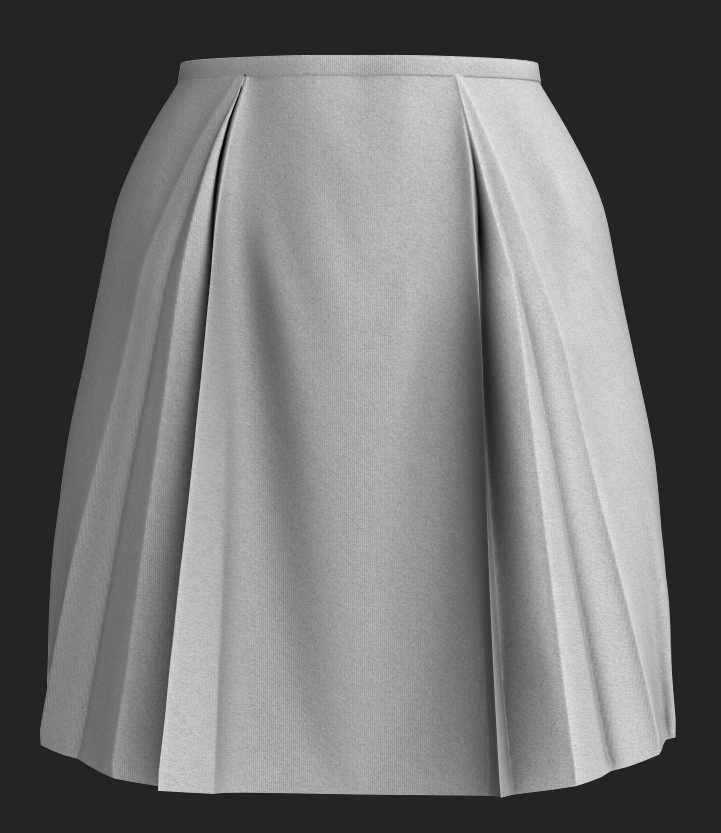
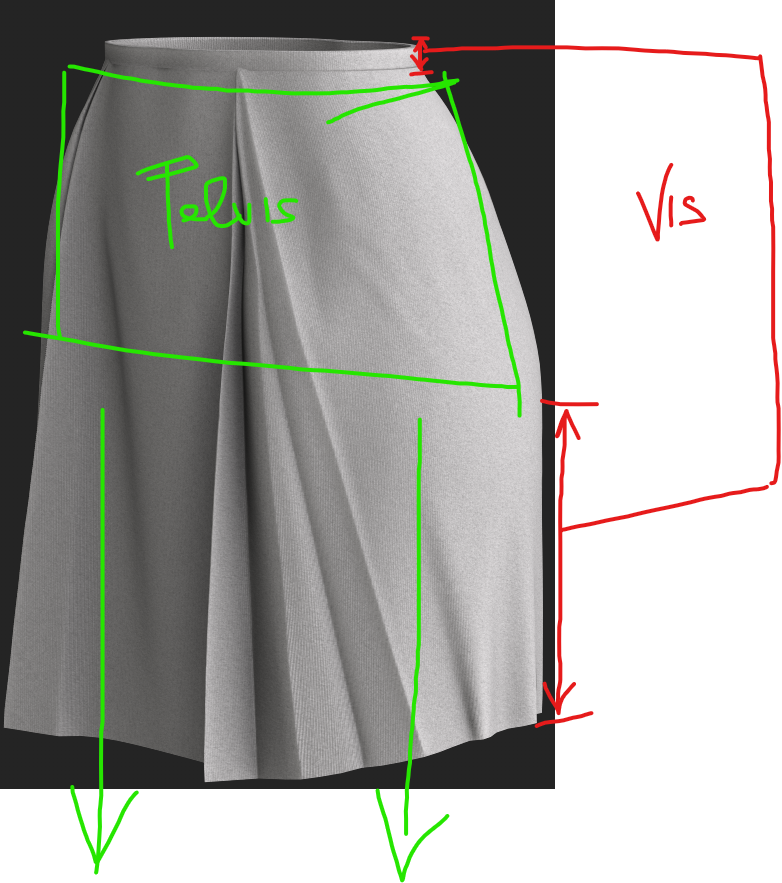
For example, if I have a skirt or a dress sculpt I've retopologized, baked the details, et cetera; my concern is related to if the skirt / dress / clothing object of choice looks paper-thin in both game and render scenarios versus considerations like UV space (islands + texel density), polygon count (another shell layer will double, but we'll optimize it so we get rid of the vertices you can't see and cap it off at a certain point) and so on.

What would be the proper practice? Thanks in advance!

EDIT: Attached an image as a sort of reference point, not the best retopology (around 4.7k vertices, will shave off / clean-up even more -- a solidify interior layer would double it to almost 10k, which would then again be shaved off to get rid of the ones you will not be able to see at all)

Replies

  • Eric Chadwick
    Often these will simply get a shader setting to disable backface culling. But it really depends on the usage, some games use explicit hems with some inner triangles if they could be seen by the player. Depends on what other meshes there are to interfere with. Generally you discard any triangles that are never seen. A shell also makes bone-weighting more difficult. 

    Oh, and welcome to Polycount!
  • Almahr
    Thanks for the welcome and thanks for answering! I find that interesting. What of say a tabard / loincloth? I'm guessing it's the same process as applying a hem or just leaving it be if it isn't ever possible to look at it from the side?

    In my case the players (multiplayer) can get up close (essentially up to the bounding box / hitbox of the full player model), can zoom in, there's also a free-floating camera mode (mostly for editing).
  • Eric Chadwick
    It sounds like you're lacking fundamental understanding of how clothing works in an actual game. The easiest and best way to learn about this is to mod an existing game. There are lots of tools and guides for making your own custom clothing for various games. This will give you a clearer idea of what's needed to make it work, and what's expected from a visual standpoint. Totally worth it! And really fun to do at the same time!
  • Almahr
    Yeah, that's fair, haha. I've been looking at multiple models (clothing types, games, styles, et cetera) across a period of time and I wasn't fully sure myself what was recommended -- for posterity's sake, some of the titles I 'studied' were Cyberpunk 2077, Witcher 3, Rogue Company. Some of the cloth meshes had double siding, others didn't (even within the same game and for the same style of clothing, iirc). Safe to say I might've gotten the gist of it, once again appreciate the advice a lot.
  • Eric Chadwick
    Yeah it depends a ton on what the player’s most common viewing angle needs, what the total memory and frame rate budget is, and frankly what the milestones are (sometimes you get crazy timelines to finish things by, and some issues like backfaces disappearing, are just not important enough). Anyhow, studying how models are delivered in real games will help a lot.
  • buzzkill
    Offline / Send Message
    buzzkill polycounter lvl 10
    I also had this question recently. I took some models from modern games (PUBG, MK11) and pretty much all of them do have thickness on "hanging" parts of their clothing - even if a tiny amount. Which seems like it's bound to have inter-penetrations when it's simulated. I guess I'm just thinking in terms of Unity cloth sim - those higher end AAA titles probably use more complicated simulation systems that allow for example for the inner polys to just copy the outer ones' movement.

  • Neox
    Offline / Send Message
    Neox grand marshal polycounter
    buzzkill said:
    I also had this question recently. I took some models from modern games (PUBG, MK11) and pretty much all of them do have thickness on "hanging" parts of their clothing - even if a tiny amount. Which seems like it's bound to have inter-penetrations when it's simulated. I guess I'm just thinking in terms of Unity cloth sim - those higher end AAA titles probably use more complicated simulation systems that allow for example for the inner polys to just copy the outer ones' movement.


    they likely sim a simpler/planar mesh and bind this mesh to the sim or use a bone sim, inside and outside clipping into each other is a non issue in a case like this. different layers clipping into each other... yeah very common in games
  • pior
    Offline / Send Message
    pior grand marshal polycounter
    "[...] Which seems like it's bound to have inter-penetrations when it's simulated"

    One side might penetrate the other with such thick cloth, but these small interpenetration are a non-issue if the material isn't rendered as 2-sided  (outside of perhaps some faint shadow artefacts). You could probably test this out by attempting to clip the camera into these PUBG models in game.
Sign In or Register to comment.