I'm looking for advice regarding thickness and double-siding (interior plane, exterior plane) retopology meshes for models to be used in various game engines (and renders).
For example, if I have a skirt or a dress sculpt I've retopologized, baked the details, et cetera; my concern is related to if the skirt / dress / clothing object of choice looks paper-thin in both game and render scenarios versus considerations like UV space (islands + texel density), polygon count (another shell layer will double, but we'll optimize it so we get rid of the vertices you can't see and cap it off at a certain point) and so on.
What would be the proper practice? Thanks in advance!
EDIT: Attached an image as a sort of reference point, not the best retopology (around 4.7k vertices, will shave off / clean-up even more -- a solidify interior layer would double it to almost 10k, which would then again be shaved off to get rid of the ones you will not be able to see at all)
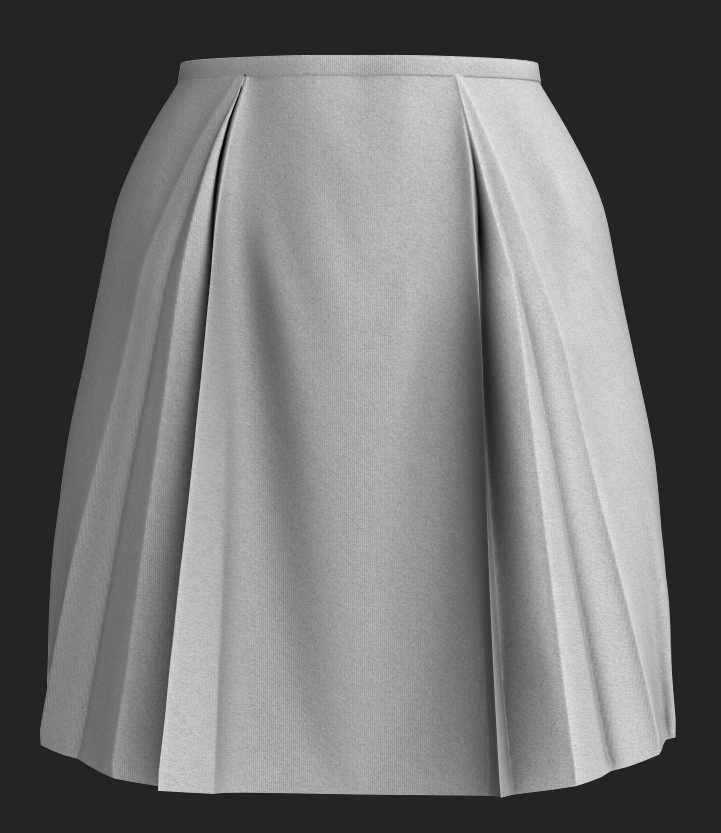
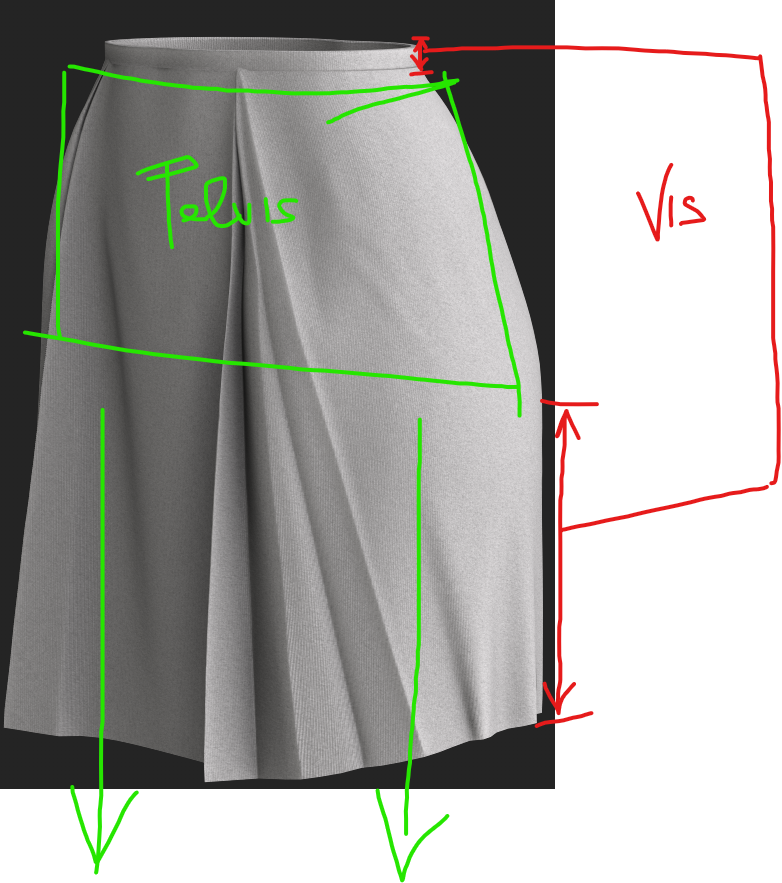

Replies
Oh, and welcome to Polycount!
In my case the players (multiplayer) can get up close (essentially up to the bounding box / hitbox of the full player model), can zoom in, there's also a free-floating camera mode (mostly for editing).
they likely sim a simpler/planar mesh and bind this mesh to the sim or use a bone sim, inside and outside clipping into each other is a non issue in a case like this. different layers clipping into each other... yeah very common in games
One side might penetrate the other with such thick cloth, but these small interpenetration are a non-issue if the material isn't rendered as 2-sided (outside of perhaps some faint shadow artefacts). You could probably test this out by attempting to clip the camera into these PUBG models in game.