Search
-
Re: How The F*#% Do I Model This? - Reply for help with specific shapes - (Post attempt before asking)

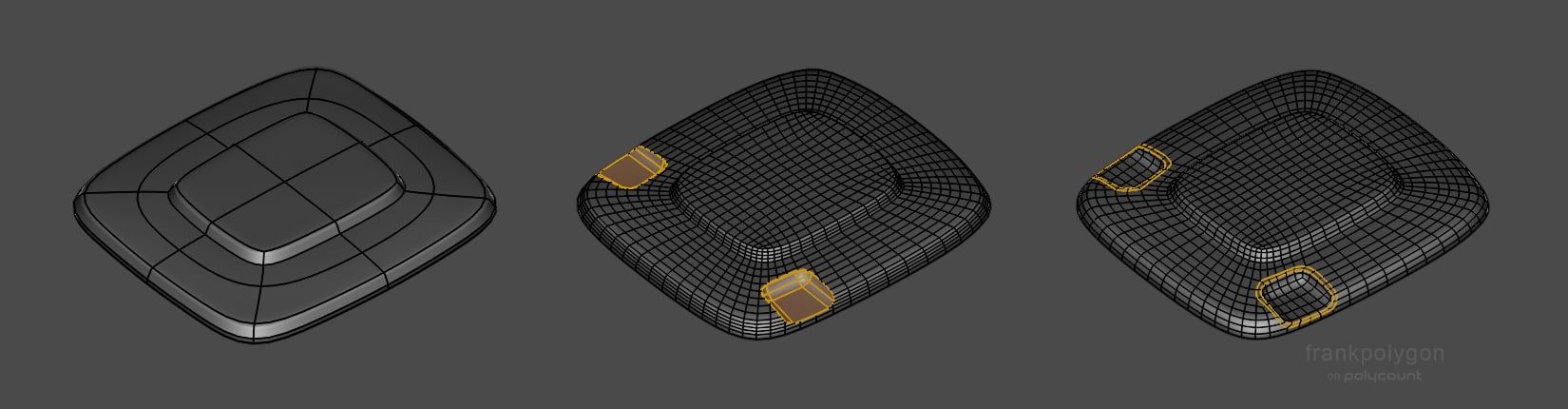 @christrom It looks like you're headed in the right direction. Like Eric already mentioned, what you have would be fine for baking in most high to low game art workflows. As far as a light technical critique of the model and topology: if the goal is to create accurate, detailed high poly assets with a relatively even…
 -
Re: How The F*#% Do I Model This? - Reply for help with specific shapes - (Post attempt before asking)
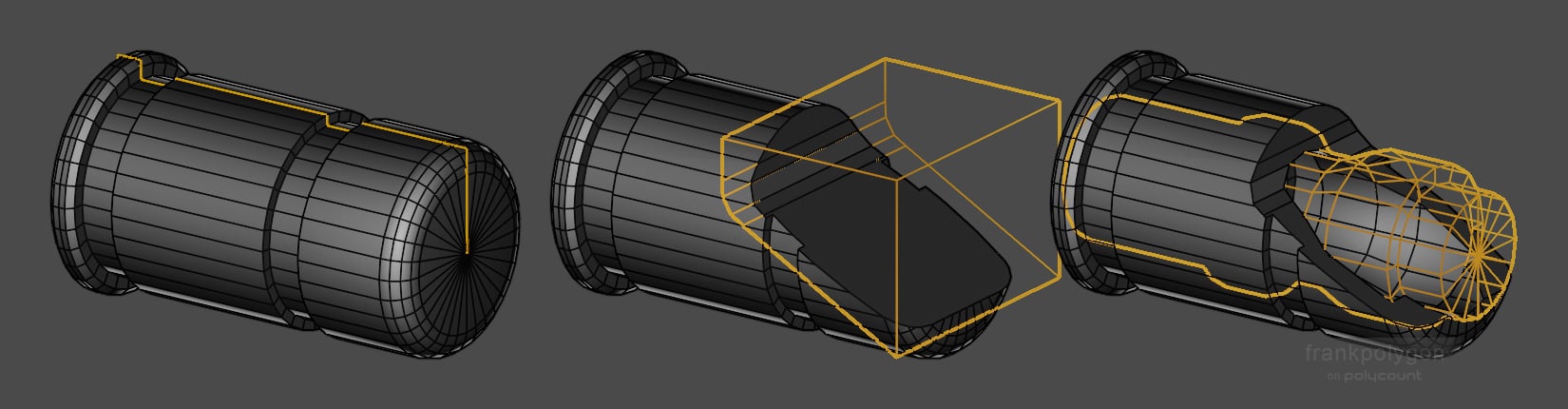 2300511685 Overall it looks like you're already on the right track. It really just depends on what the model is for. If it's for games: the brake has a very rough surface finish and it's a very small part that's typically further away from the player's main point of view. So the current high poly is more than passable…
 -
Re: How The F*#% Do I Model This? - Reply for help with specific shapes - (Post attempt before asking)
 @5rettski There's a few different ways to approach organic subdivision modeling but it's generally a good idea to start by establishing the proportions with a block out of the facial planes to create a base mesh. Part of this block out process usually involves creating basic loop paths around key facial features (eyes,…
 -
Re: How The F*#% Do I Model This? - Reply for help with specific shapes - (Post attempt before asking)
 @Veer_P It's generally considered best practice to block out the forms from largest to smallest. Keep things simple at first. This makes it easier to adjust the larger shapes and place geometry where it's needed to support smaller shapes and shape intersections. Work through the block out in stages and only add smaller…
 -
Re: How The F*#% Do I Model This? - Reply for help with specific shapes - (Post attempt before asking)
 If you dont want the texture to be stretched you need to Unwrap it with an application that supports the creation of SubD-UVs. UVlayout for example does it.
 -
Re: How The F*#% Do I Model This? - Reply for help with specific shapes - (Post attempt before asking)
 @SkinnyM Both topology layouts are generally acceptable for most hard surface models. While the quad grid corner is a more conventional choice, the triangular quad corner tends to produce more appealing results for this type of shape transition. Something that can be verified by previewing the subdivision and looking at…
 -
Re: How The F*#% Do I Model This? - Reply for help with specific shapes - (Post attempt before asking)
 @rogi92 Which approach is best will often depend on the specifics of a project's technical requirements. There's a lot of ways to approach modeling this part but there's also a lot of different factors that can influence modeling strategy decisions. Broad, open ended questions lack the context required to provide…
 -
Re: How The F*#% Do I Model This? - Reply for help with specific shapes - (Post attempt before asking)
 @AntBay If the manually placed edge loops need to wrap around the bottom of the shapes then the topology structure of the base mesh will need to be changed so it redirects the edge loop around all of the corners and down along the bottom edge. Below is an example of what this process could look like. Here's a simplified…
 -
Re: How The F*#% Do I Model This? - Reply for help with specific shapes - (Post attempt before asking)
 @PixelMagic It's difficult to provide more focused feedback without seeing any specific examples of the topology layout's you've tried and the smoothing errors you've encountered. Most of the advice that's been provided should get you close to some kind of usable result but there's no real way around the fact that it will…
 -
Re: How The F*#% Do I Model This? - Reply for help with specific shapes - (Post attempt before asking)
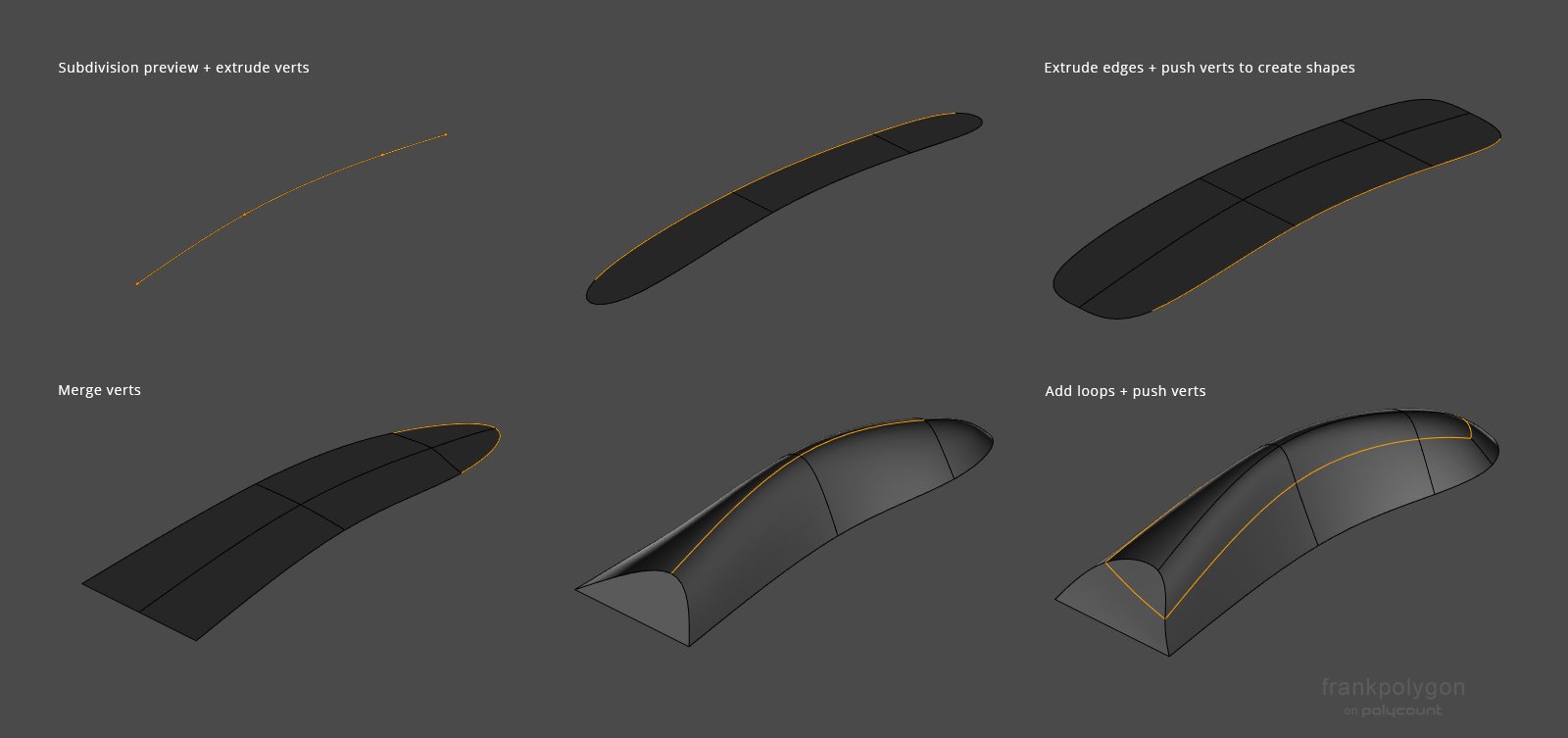 @Veer_P Not a problem. Like @sacboi pointed out, subdivision modeling tends to be an iterative process and there's a few different ways to establish the basic building blocks that define the shapes. The modeling approach used to create the very first shape in the previous example is usually called edge extrusion or point…
67 results