Search
-
Re: Early-Late 2000s CGI/Game Models
 I think you got it all mixed up a little... ;) Mirai, Nendo and Max 4 all came out around the same time - 1999-2000. Nichimen's Mirai was the 'next-gen' version of N-World, a 3D package associated with 90's console development - especially Nintendo - which itself originated from an early 3D package developed for a hardware…
 -
Re: Early-Late 2000s CGI/Game Models

 Heya - About this new handle : IMHO it's really just a matter of looking at the reference in a more investigative manner. "How would this be built in the real world ?" Obviously this would be achieved by carving details over a smooth wooden handle. Meaning that the surfaces that are not carved in will have continuity since…
 -
Re: Early-Late 2000s CGI/Game Models
 Well, that's precisely why I was mentionning earlier that some of the confusion in this thread might be coming from where you are in your learning of polygon modeling in general. This (and the weird question about the ears) 100% confirms it. And again none of this relates to "old" or "new" models (beyond the fact that…
 -
Re: Early-Late 2000s CGI/Game Models
 They did sculpt, especially when it comes to films, just in actual clay. Either as a reference for early decision making or to transfer the final agreed on model into 3d. That would still likely have been only the general shapes, finer details would have to have been surface level / texture detail for models like Gollum,…
 -
Re: Early-Late 2000s CGI/Game Models
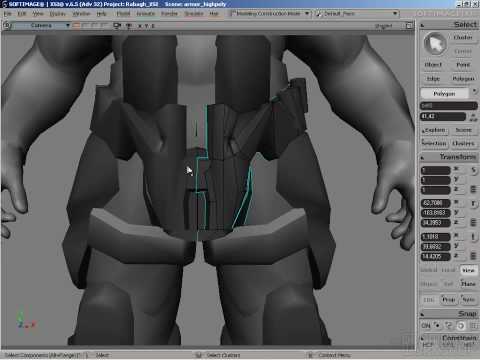
Hi there @5rettski , Your question seems to imply a difference between "then" and "now" ; yet there is nothing special about the screenshots you show. As mentionned above these models were built then the same way they would be built now - the software of choice might differ, but the toolsets and processes are the same, ie… -
Re: Early-Late 2000s CGI/Game Models
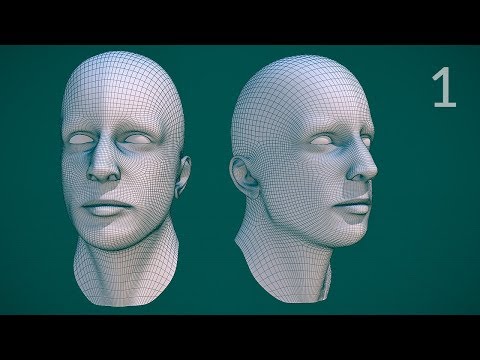 Johnathan Williams still has some public videos of his edge modeling and facial topology series from the late 2000's and early 2010's. This is fairly representative of how things were typically done prior to digital sculpting. At least for those using open source tools from the period. Tool sets do vary but a lot of the…
6 results