Search
-
Re: Best practices when creating assets specifically for Nanite

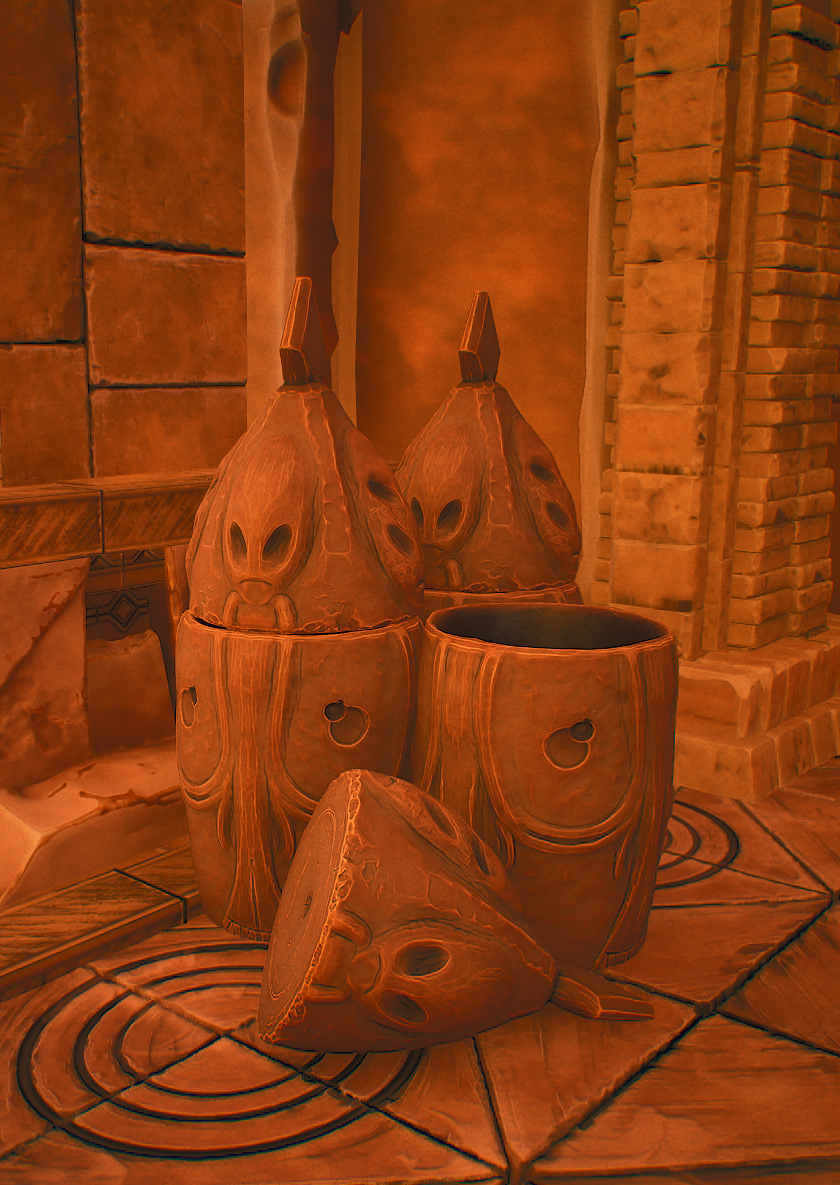 Hi guys, thanks for all the information, it`s a bit hard to find practical information that its reliable right now... I am currently trying to build a small, stylized, ancient sci-fi environment with nanite workflow, I'm still trying to give the first pass on everything. The idea is to have a dense environment, with more…
 -
Re: Best practices when creating assets specifically for Nanite
 - I like to keep meshes 1 million or less just because much larger slows down iteration and import times. -Try to use mostly continuous meshes and avoiding really large polygons is ideal. If you have a pile of small rocks for example, your better off booleaning it together or shrink wrapping a grid on top of it. Culling is…
 -
Re: Best practices when creating assets specifically for Nanite
 Interesting about continuous meshes. That might actually be very relevant to some of the kitbashed models we're doing, I'll make sure to look into that. Re: large polygons, let's say I have a large flat plane as the floor of a building, for example, is there a chance it'd be beneficial to add otherwise unnecessary loops…
 -
Re: Best practices when creating assets specifically for Nanite
 Baking itself is still pretty much required for texturing in Painter for example, mask generators, edge effects etc require curvature, ao, world space normals, position, thickness etc. If you have modular sci fi walls as nanite and you want vert paint (which is not an option) you may want to bring in masks and via…
 -
Re: Best practices when creating assets specifically for Nanite
 Under a million tris without long thin triangles is better. You can have 1-2 mil tri meshes too but UV ing those is a nightmare. You have two bake options, one is to bake the nanite mesh with itself or have one mesh under million tris and bake high on top of it. Above million its going to be an issue with file size…
 -
Best practices when creating assets specifically for Nanite
We've been asked to use Nanite for a project (just a blanket order to enable Nanite on every mesh that even remotely supports it). Whatever one might think of that, I need to make sure we cause as little trouble for ourselves on the asset creation side of things, and I feel like Nanite throws out most of what I know about…
6 results