Search
-
Re: Sketchbook: Frank Polygon

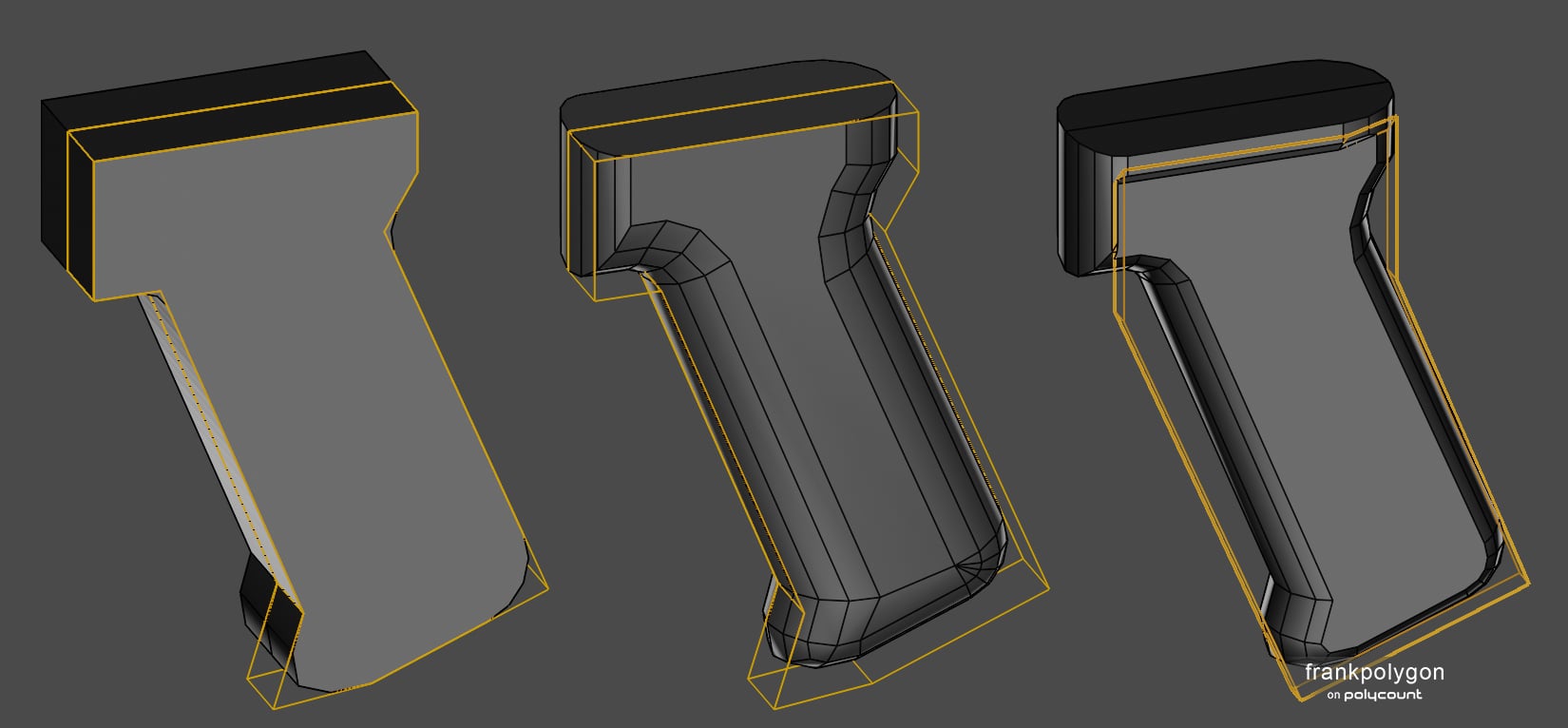 @2300511685 Correct, the round over in the third step was added with a non-destructive bevel / chamfer modifier that uses edge weights to control the width. If edge weights aren't an option then a simple loop path could also be used to constrain the round over. There's a few different ways to approach modeling lofted…
 -
Re: Sketchbook: Frank Polygon
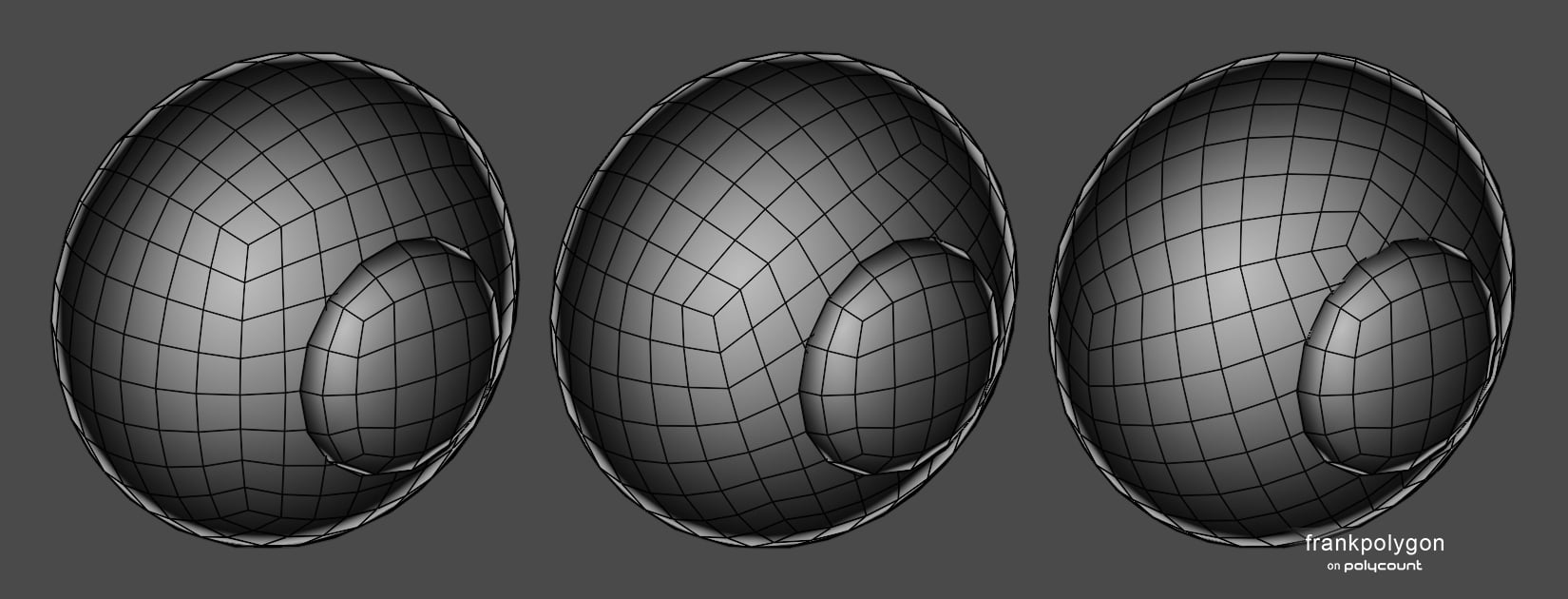 Subdivision sketch: Hemispherical helmet. This is a brief look at a few basic strategies for routing topology around cut outs and panel lines on spherical [and ellipsoid] surfaces. Note: there's several different ways to structure spherical geometry. Since this write-up is specific to basic subdivision modeling only basic…
 -
Re: Sketchbook: Frank Polygon
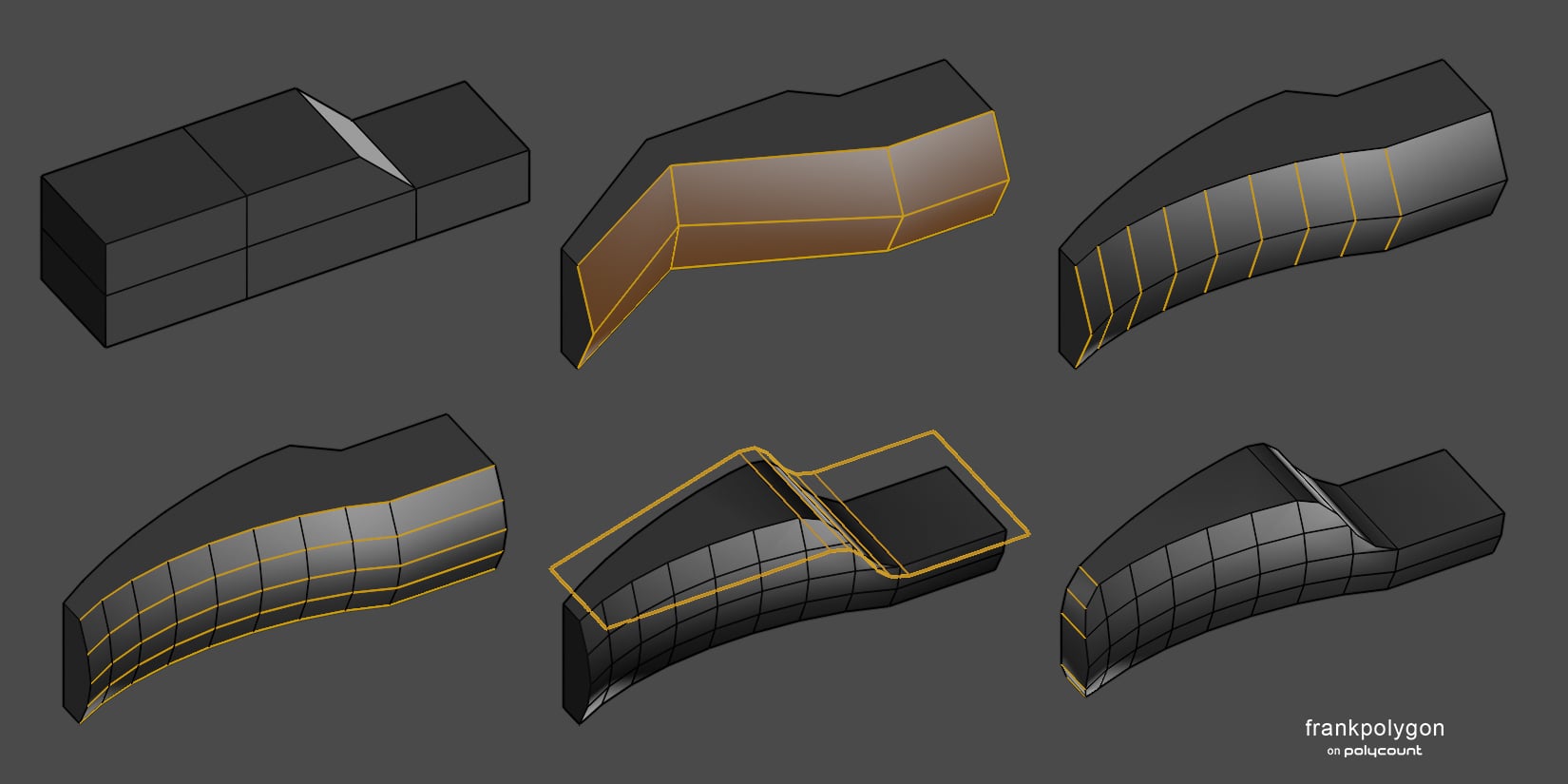 Subdivision sketch: Charging handle. A quick look at a shape first approach to modeling something with complex compound curves. Start by blocking out the overall volume of the part and use that mesh to figure out a basic loop routing pattern for the rest of the forms. Continue developing the block out by outlining the…
 -
Re: Sketchbook: Frank Polygon
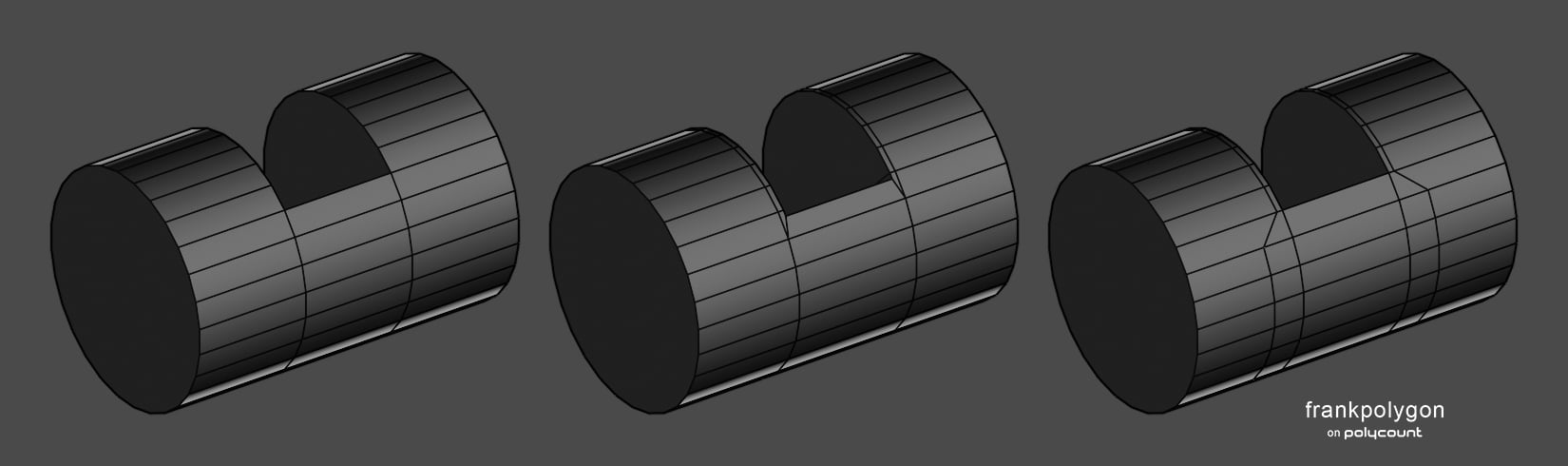 Subdivision sketch: On segments or between segments? This is a quick visual comparison of a few different ways to structure the topology around cut outs on curved surfaces. Placing a cut out on an existing edge segment and reducing the corner support loops into a triangular quad tends to spread out smoothing distortions…
 -
Re: Sketchbook: Frank Polygon
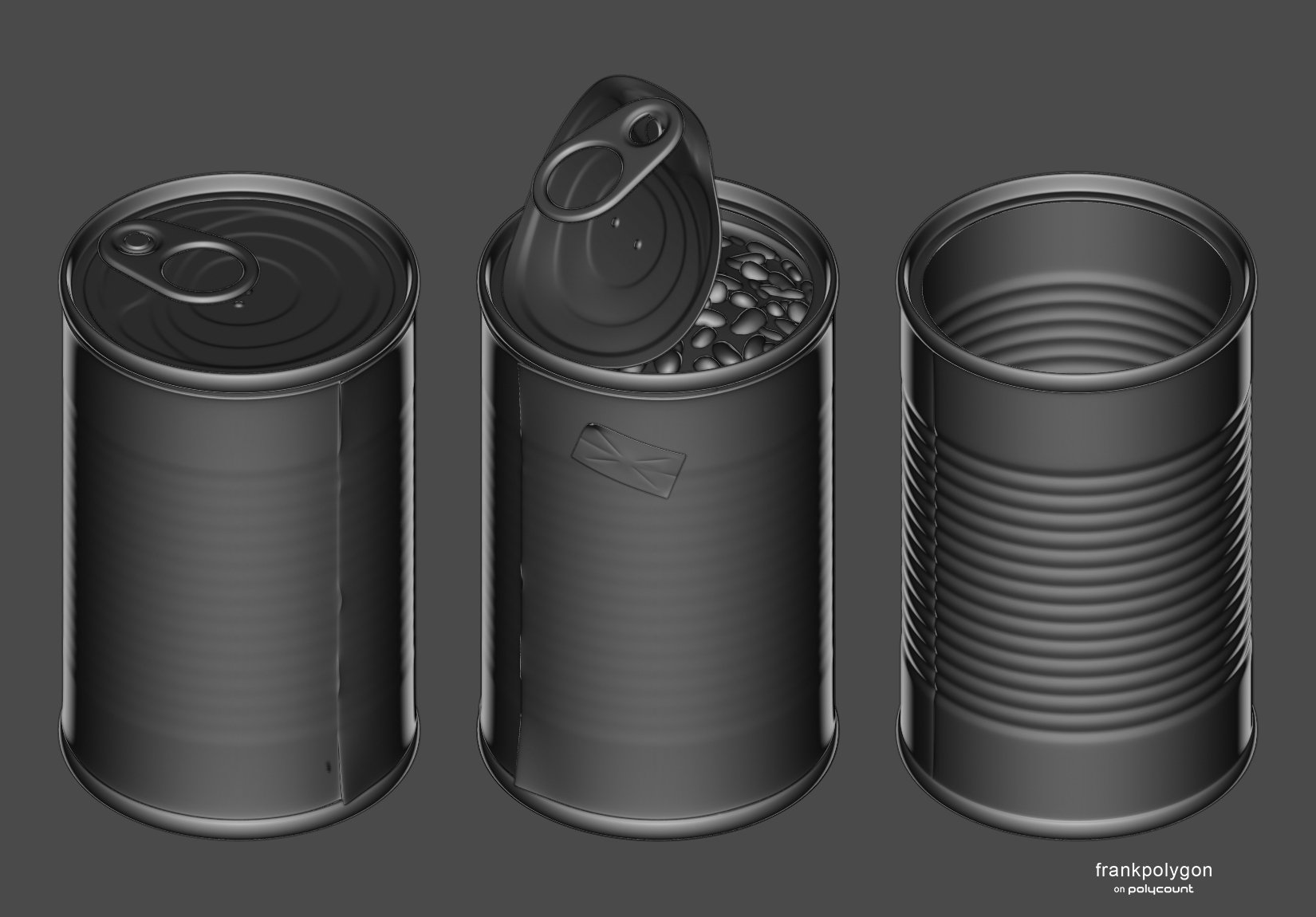 Thanks @Eric Chadwick , @sacboi ! Call me anything but late for dinner. Also, that Dagwood looks like a giant corn dog. Artery clogging indeed... Subdivision sketch: Tin can. Another food related one. The goal here was to use fairly simple meshes, mostly generated by modifiers, to capture the subtle details using only…
 -
Re: Sketchbook: Frank Polygon
 Subdivision sketch: Basic stocks. A quick visual overview of modeling simple furniture that has compound curves. Block out. Start by defining the basic volume and proportions then develop the primary shapes and surface profiles. Rely on tools and subdivision smoothing to generate the final curved surface whenever possible.…
 -
Re: Sketchbook: Frank Polygon
 To anyone just starting out in game art. Learning a game asset creation pipeline requires commitment and repetition. It can be tempting to rush through projects but it's important to remember that it's often less about how fast the work is done and more about what is learned along the way. Actively participating in the…
 -
Re: Sketchbook: Frank Polygon
 Subdivision modeling: corner topology edge flow. Topology layouts for sharp, angled corners are fairly simple but often overlooked. This is why it's important to build a solid understanding of how different corner topology layouts impact edge flow, mesh complexity and smoothing behavior. Most corner topology can generally…
 -
Re: Sketchbook: Frank Polygon
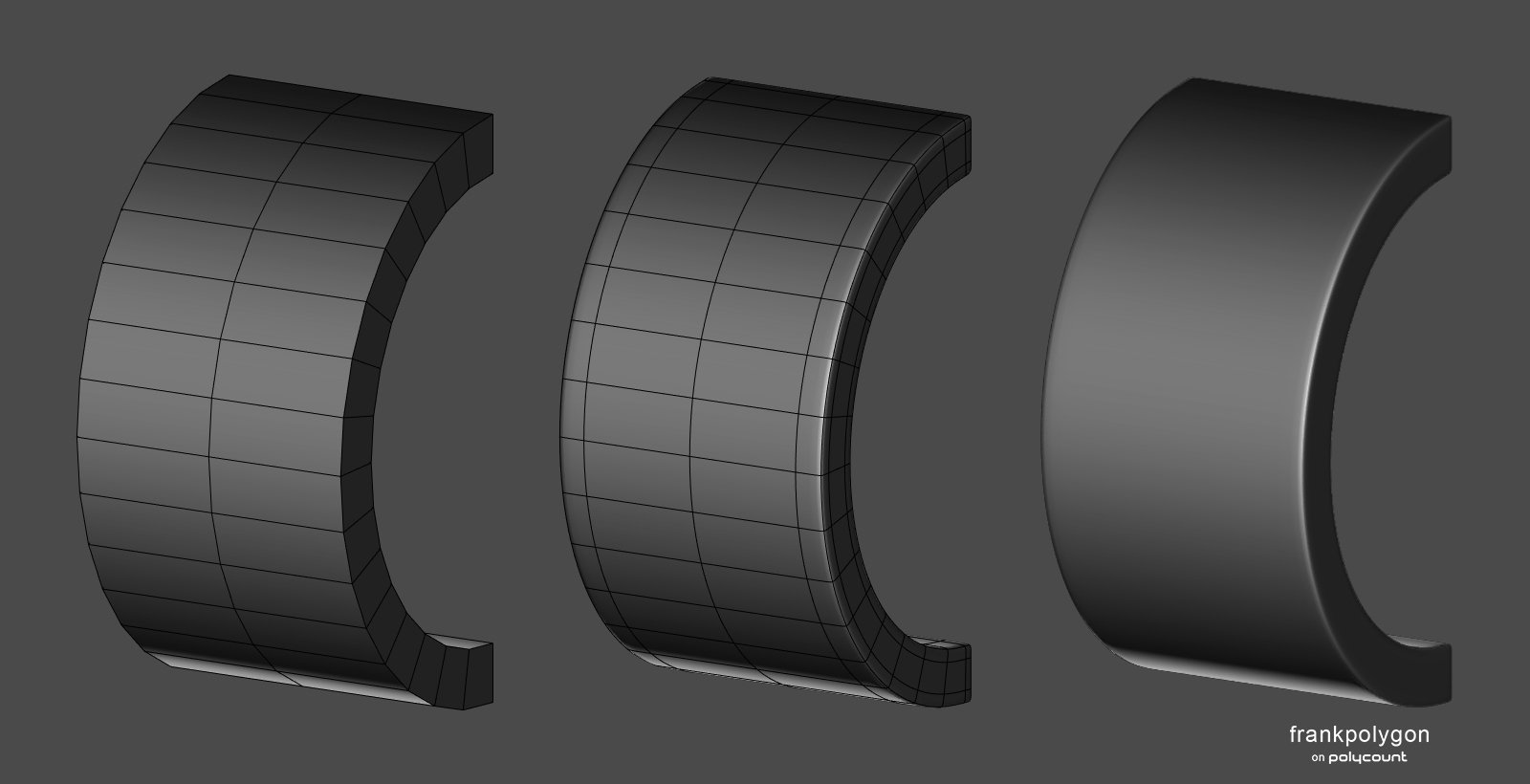 Subdivision sketch: it's all about flow. This is a really quick visual primer on curves, loop flow, and basic subdivision modeling concepts. Here's what a curved segment looks like. Notice how each of the edges that makes up the curve is evenly spaced around the central axis. That even spacing is why the mesh smooths…
 -
Re: Sketchbook: Frank Polygon
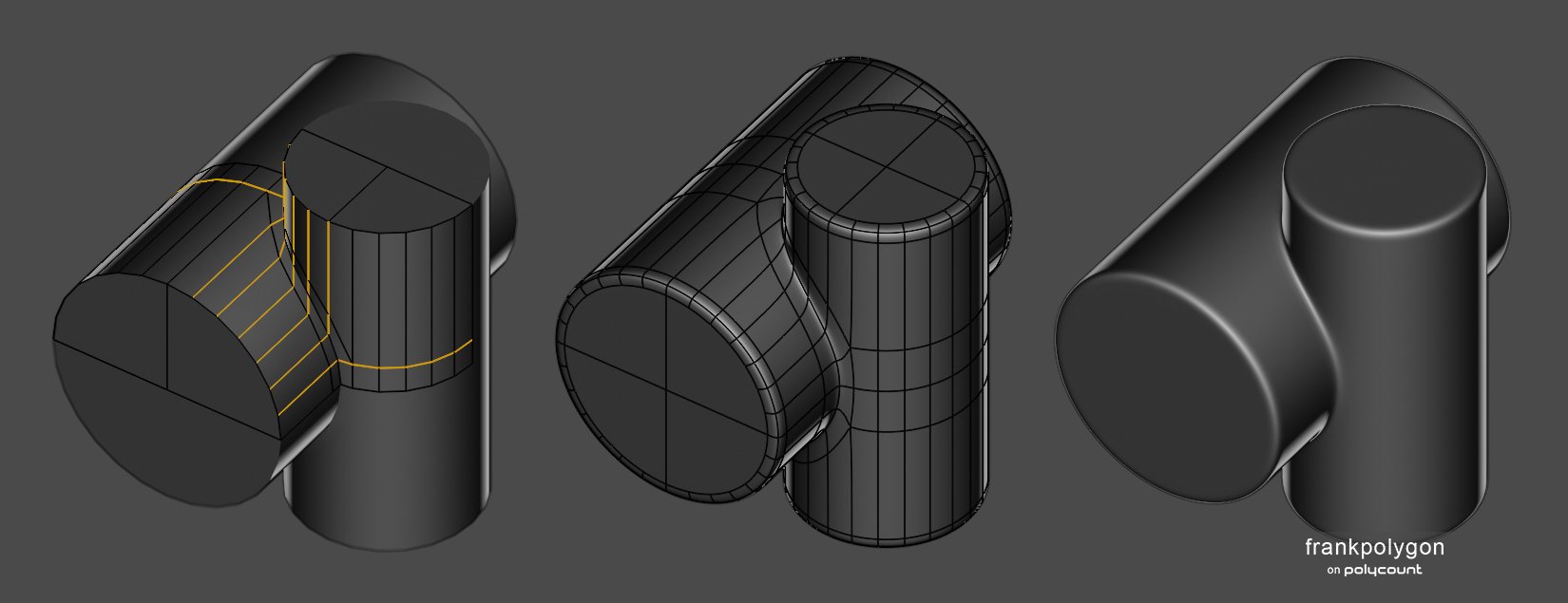 Subdivision sketch: Basic tubular frame intersections. This is a visual quick reference for segment matching when joining offset cylinders. The cylinders in this example have different diameters but it still works when the diameters are the same. Note the subtle changes in segment count and loop routing as the cylinders…
67 results