Search
-
Re: Sketchbook: Frank Polygon

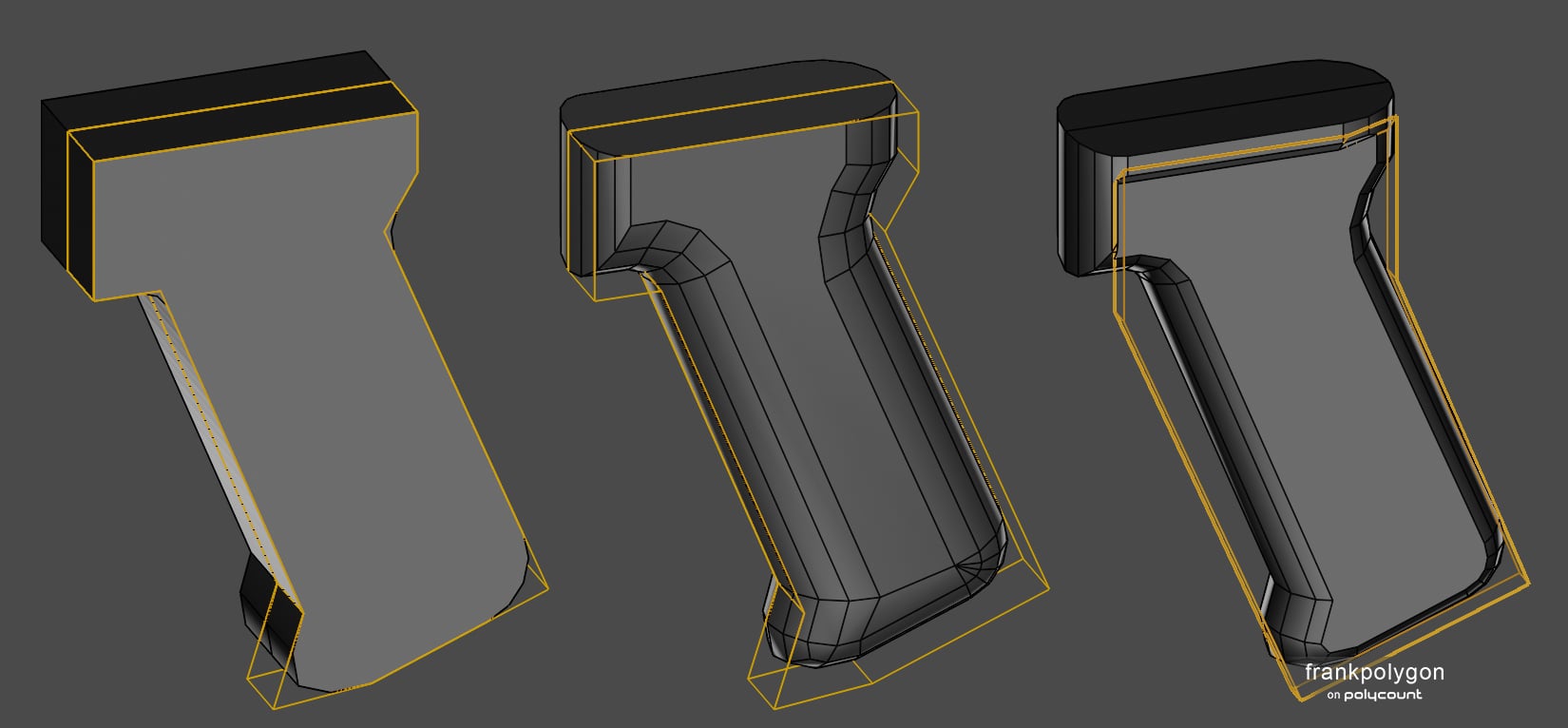 @2300511685 Correct, the round over in the third step was added with a non-destructive bevel / chamfer modifier that uses edge weights to control the width. If edge weights aren't an option then a simple loop path could also be used to constrain the round over. There's a few different ways to approach modeling lofted…
 -
Re: Sketchbook: Frank Polygon
 Subdivision sketch: Basic stocks. A quick visual overview of modeling simple furniture that has compound curves. Block out. Start by defining the basic volume and proportions then develop the primary shapes and surface profiles. Rely on tools and subdivision smoothing to generate the final curved surface whenever possible.…
 -
Re: Sketchbook: Frank Polygon
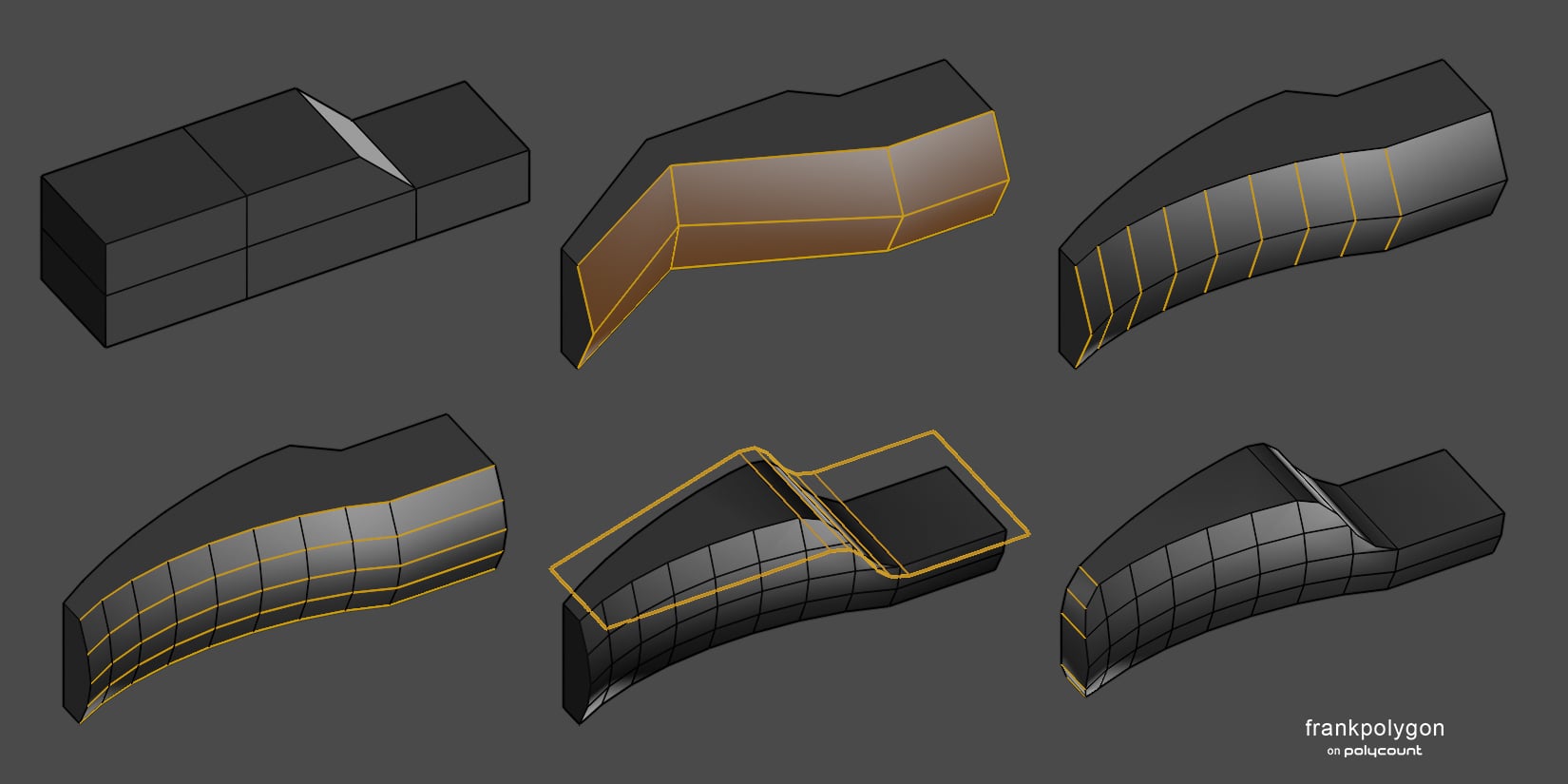 Subdivision sketch: Charging handle. A quick look at a shape first approach to modeling something with complex compound curves. Start by blocking out the overall volume of the part and use that mesh to figure out a basic loop routing pattern for the rest of the forms. Continue developing the block out by outlining the…
 -
Re: Sketchbook: Frank Polygon
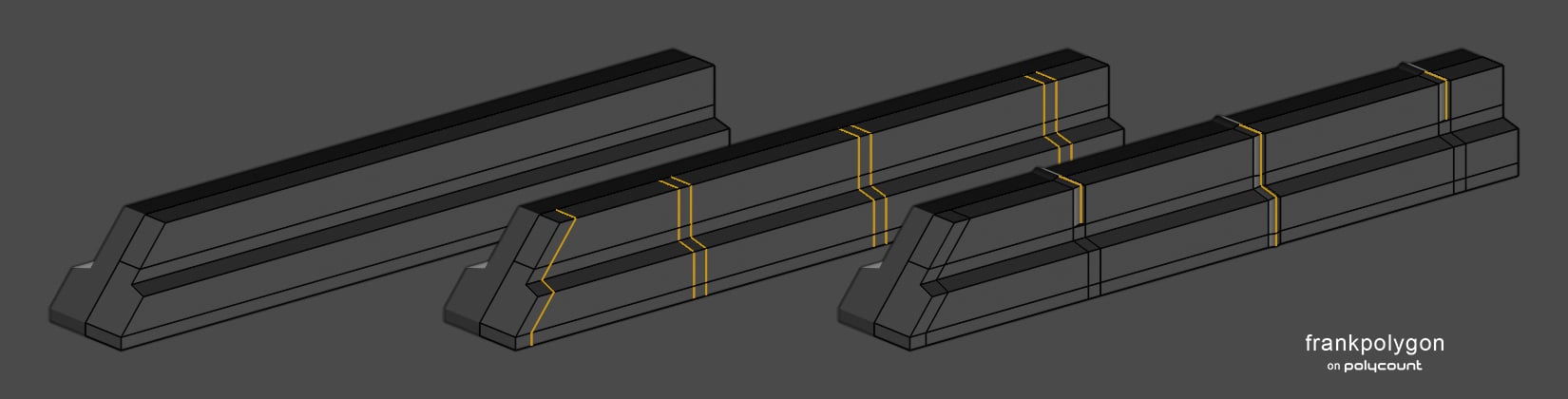 Subdivision sketch: Dust cover. Another quick look at a more streamlined approach to shape first block outs and subdivision modeling. Create the basic shapes and cut in the basic loop routing for secondary forms that interact with the curvature on the primary forms. Keep everything relatively simple and focus on creating…
 -
Re: Sketchbook: Frank Polygon
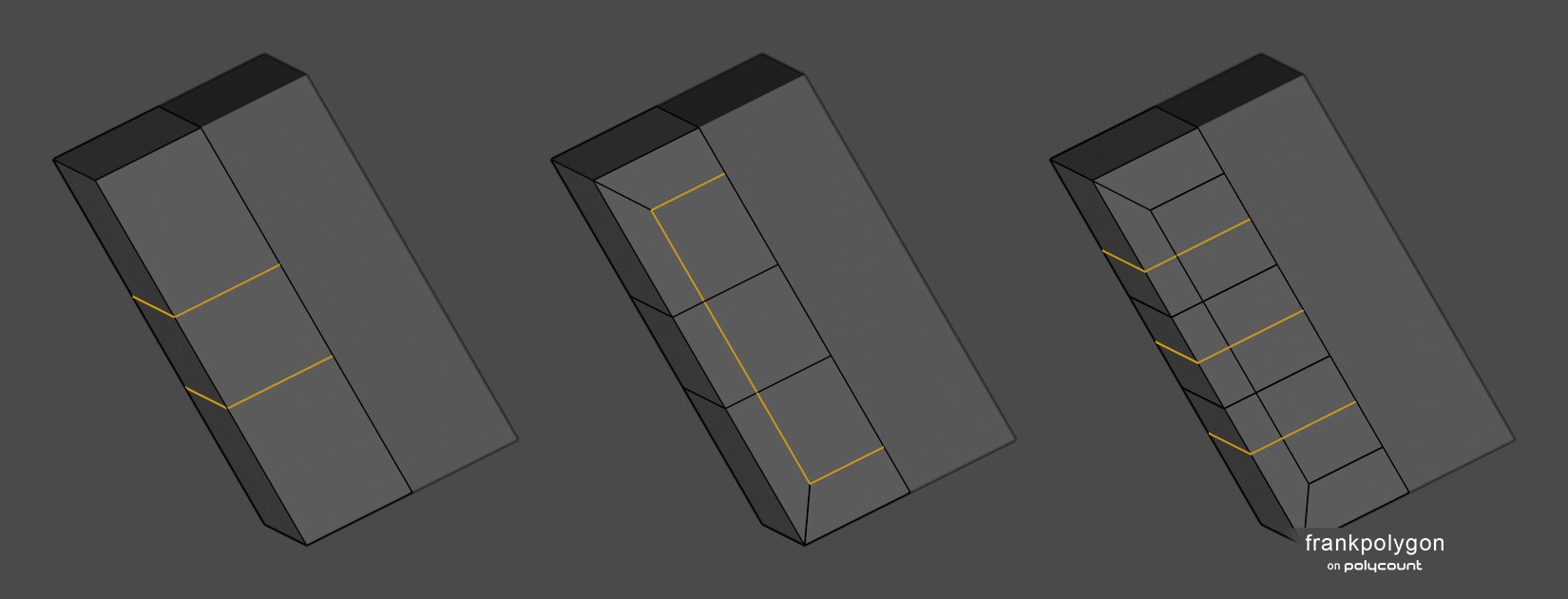 Subdivision sketch: Stacked recessed bosses. This is a brief look at a shape first approach to subdivision modeling that combines destructive editing and non-destructive modifiers in a streamlined yet flexible poly modeling workflow. While there's a lot of different ways to approach modeling complex and repetitive shape…
 -
Re: Sketchbook: Frank Polygon
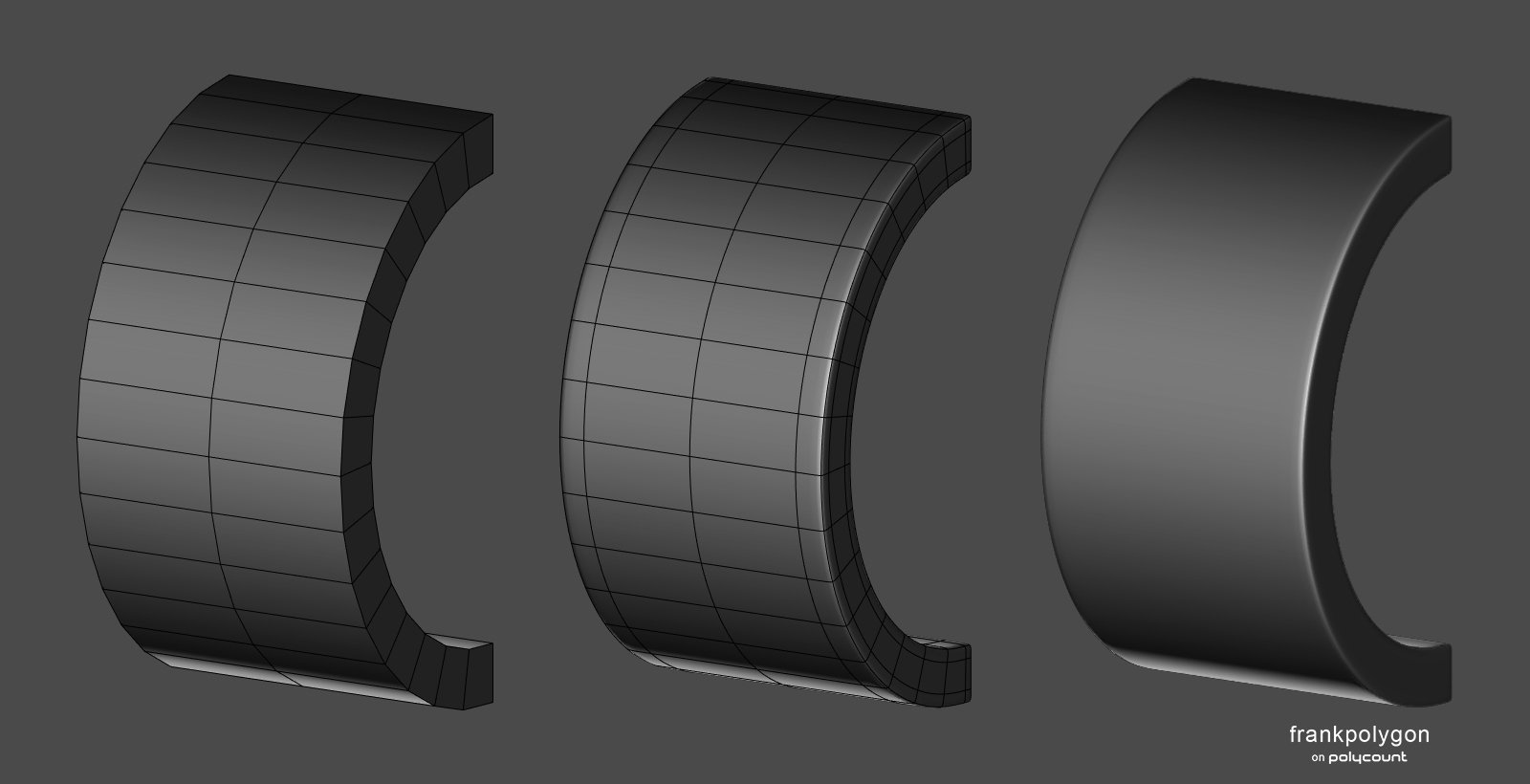 Subdivision sketch: it's all about flow. This is a really quick visual primer on curves, loop flow, and basic subdivision modeling concepts. Here's what a curved segment looks like. Notice how each of the edges that makes up the curve is evenly spaced around the central axis. That even spacing is why the mesh smooths…
 -
Re: Sketchbook: Frank Polygon
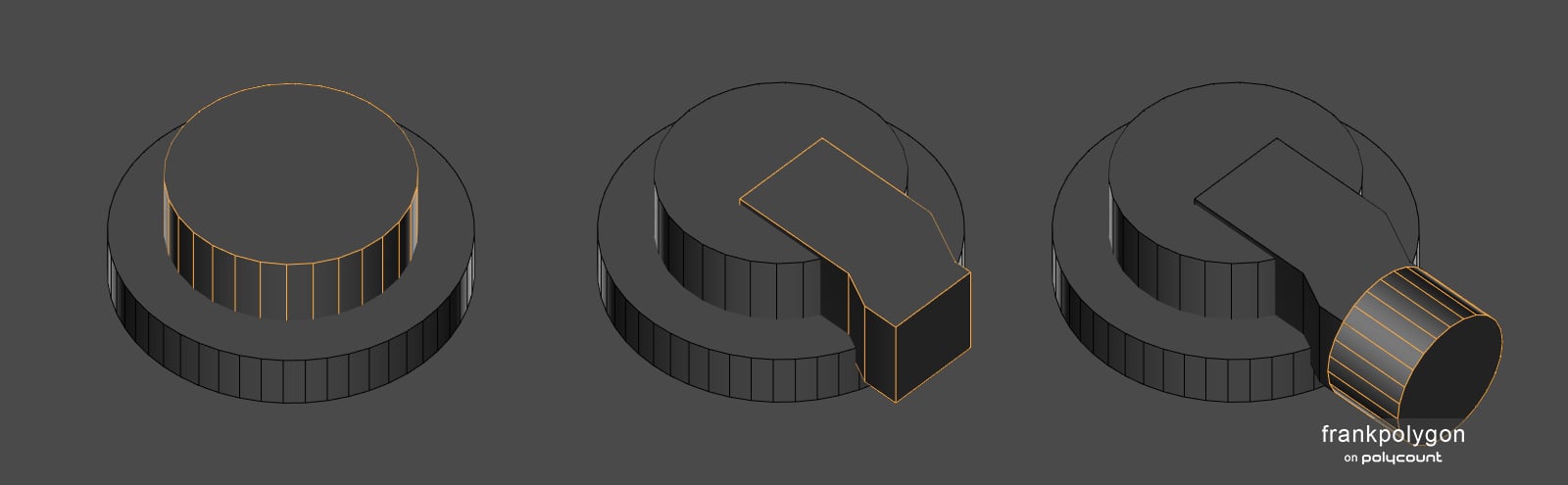 Subdivision sketch: throttle position sensor. This is a brief visual overview of an iterative block out process and streamlined subdivision modeling workflow. The write-up portion of the post also covers some questions to think about when it comes to workflow decisions and time. Simplified proportion block out. It all…
 -
Re: Sketchbook: Frank Polygon
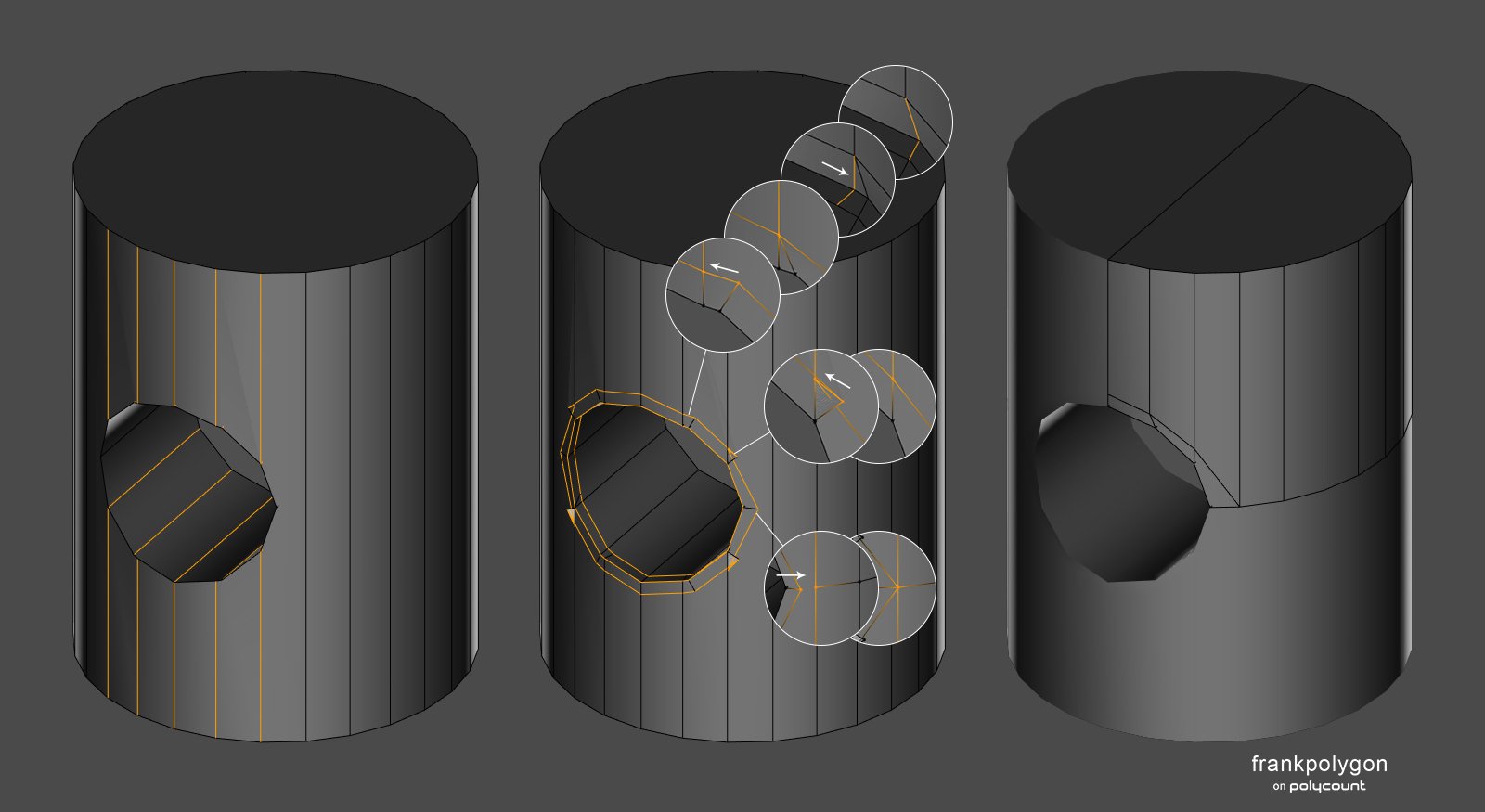 Subdivision sketch: it's all the same. This is a slightly less serious continuation of the previous posts about subdivision modeling and attaching shapes to curves. Only with more pictures and less text. The same basic approach can be used to connect different shapes to curves:-Keep things relatively simple and solve major…
 -
Re: Sketchbook: Frank Polygon
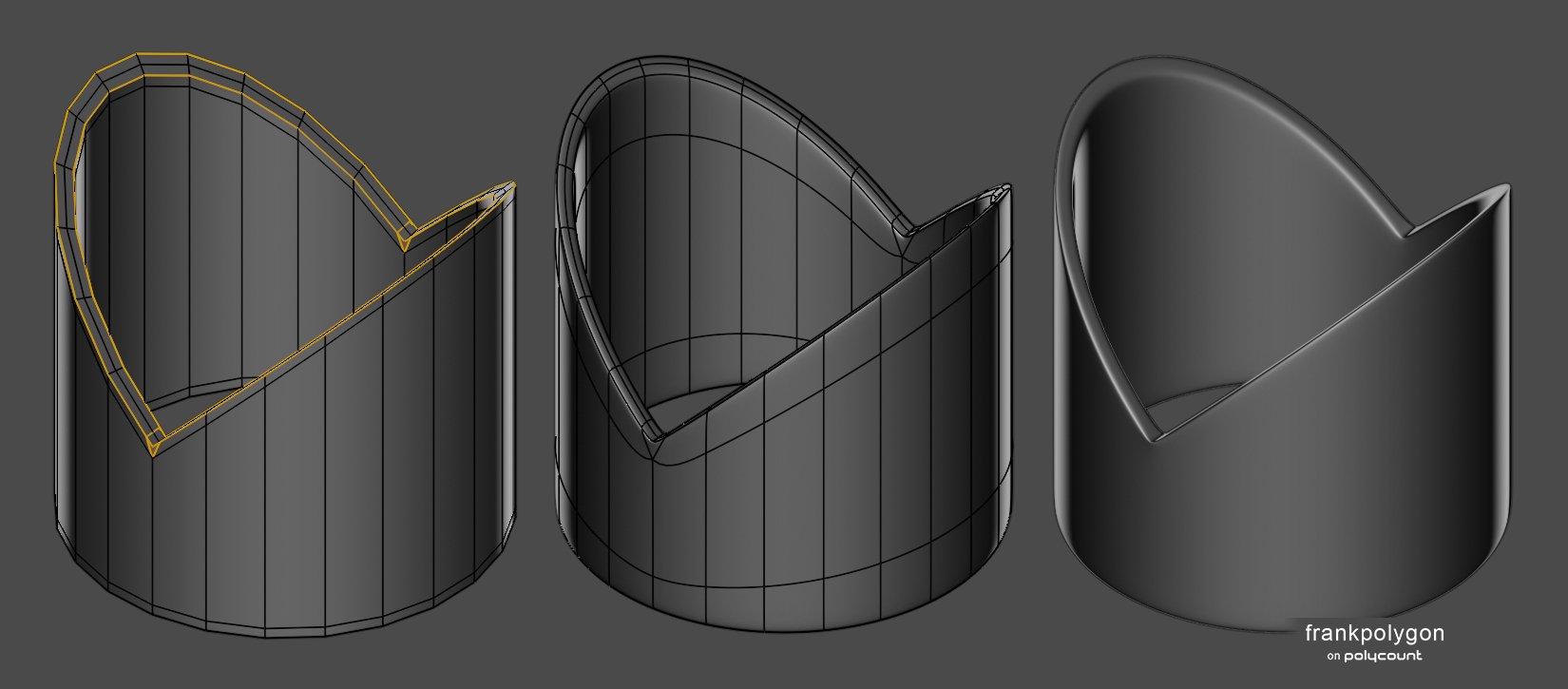 Subdivision sketch: Diagonal corners, diamond quads, and dealing with deformation. Here's a quick look at a few different topology layouts for sharpening the corners of diagonal edges on curved surfaces and a demonstration of how to manually compensate for unwanted surface deformation that's caused by inserting edges…
 -
Re: Sketchbook: Frank Polygon
 Subdivision sketch: hemispherical headgear. This is just a quick look at a simple modeling process and topology layout for common helmet shapes. Start with a quad sphere [or a UV sphere with 8 segments and a quad cap] that uses the minimum amount of geometry required to define the largest shapes. Work through all of the…
43 results