Search
-
Re: Sketchbook: Frank Polygon
 Some thoughts about learning, problem solving, and feedback. Answer this question honestly when it feels like you're falling behind on a project or stuck on a particular problem: how much are you learning and how much are you getting done? Each project has it's own unique challenges. Sometimes it takes more time to learn…
 -
Re: Sketchbook: Frank Polygon
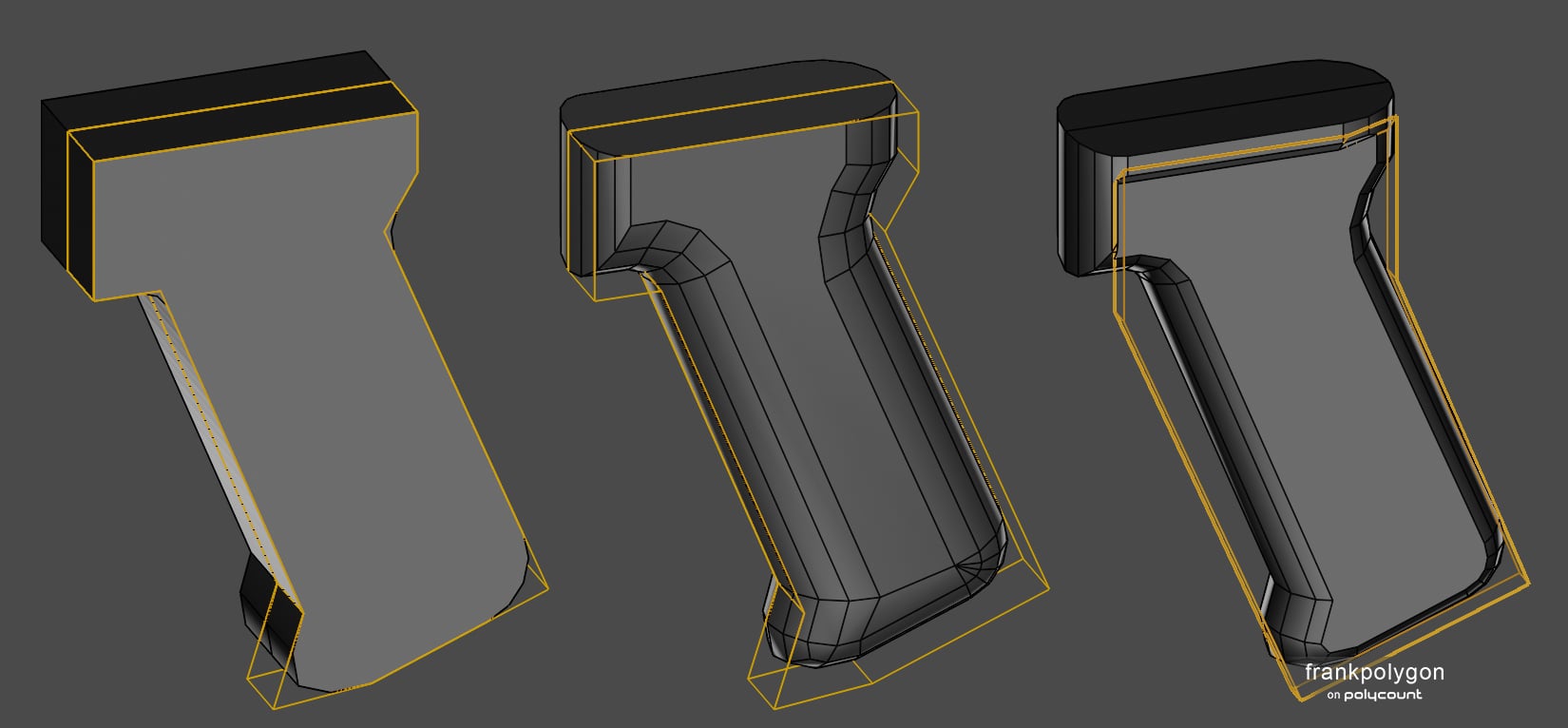 @2300511685 Correct, the round over in the third step was added with a non-destructive bevel / chamfer modifier that uses edge weights to control the width. If edge weights aren't an option then a simple loop path could also be used to constrain the round over. There's a few different ways to approach modeling lofted…
 -
Re: Sketchbook: Frank Polygon
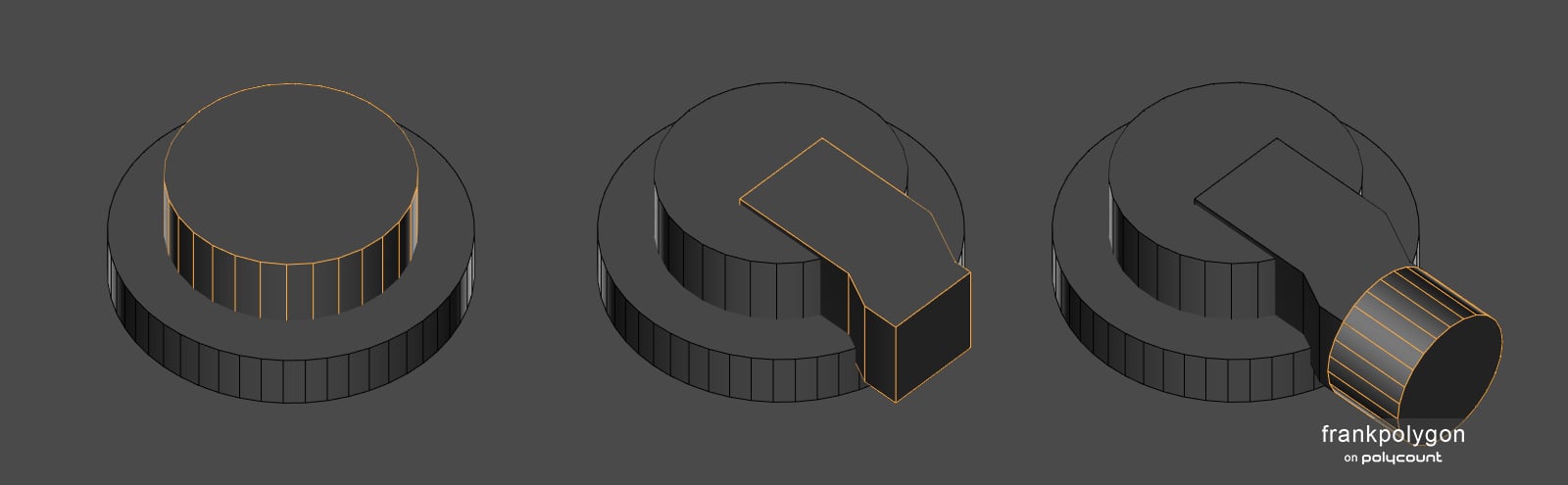 Subdivision sketch: throttle position sensor. This is a brief visual overview of an iterative block out process and streamlined subdivision modeling workflow. The write-up portion of the post also covers some questions to think about when it comes to workflow decisions and time. Simplified proportion block out. It all…
 -
Re: Sketchbook: Frank Polygon
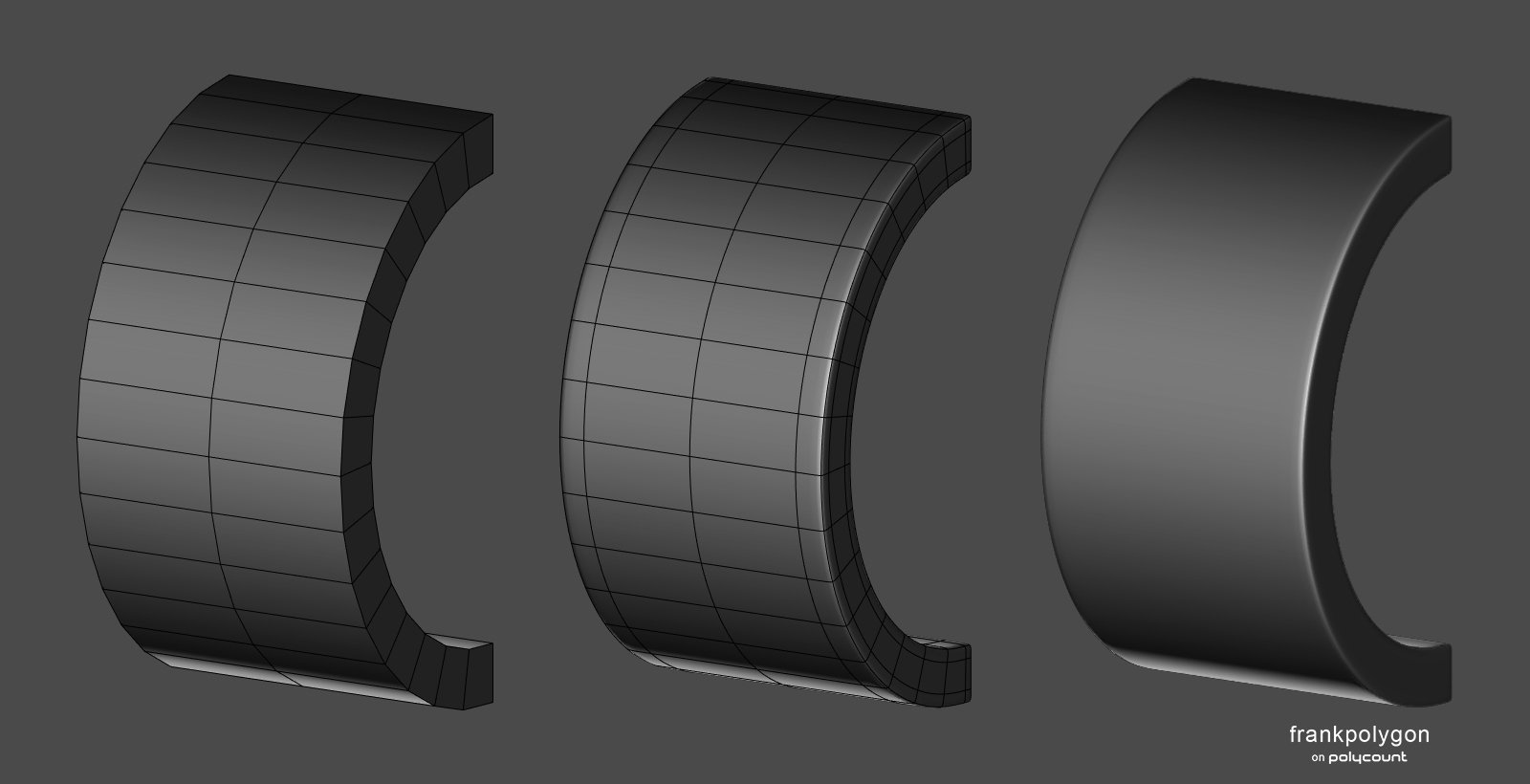 Subdivision sketch: it's all about flow. This is a really quick visual primer on curves, loop flow, and basic subdivision modeling concepts. Here's what a curved segment looks like. Notice how each of the edges that makes up the curve is evenly spaced around the central axis. That even spacing is why the mesh smooths…
 -
Re: Sketchbook: Frank Polygon
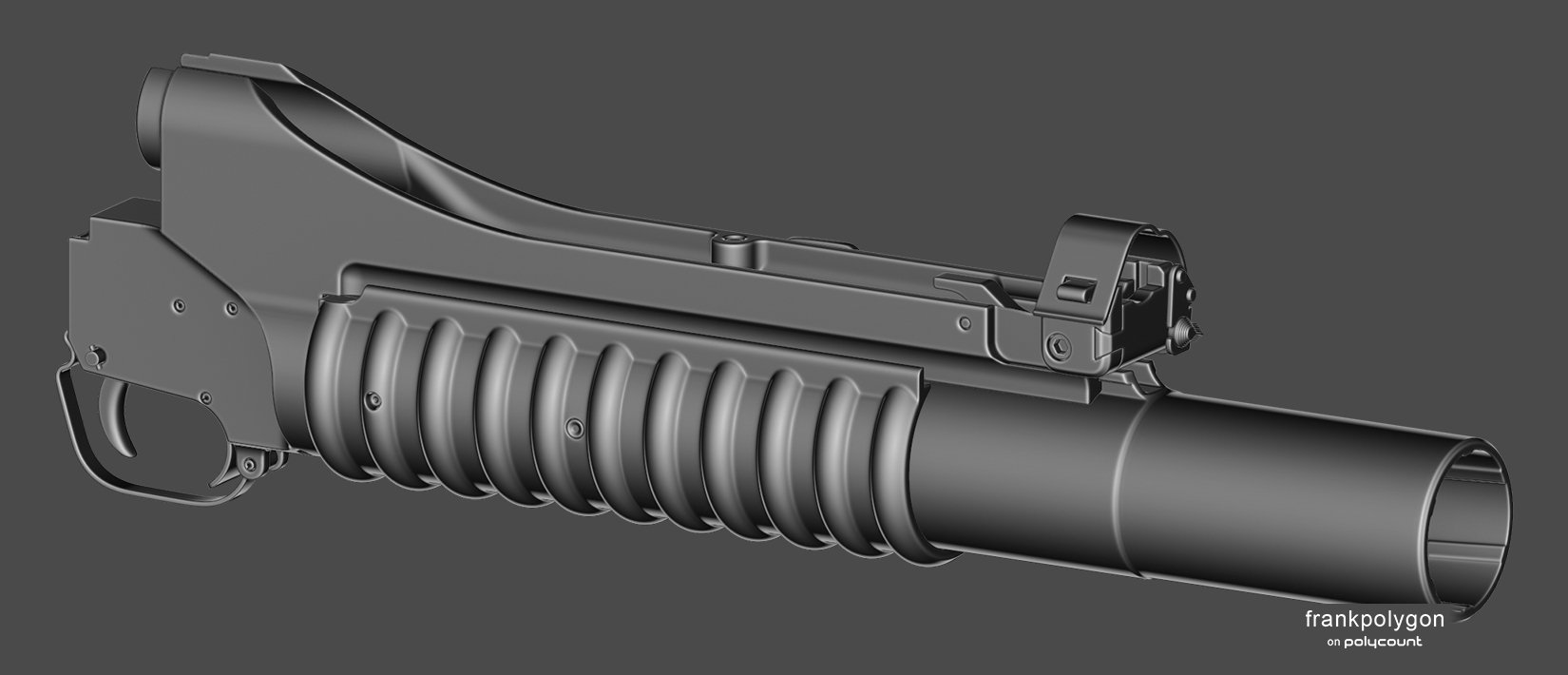 Subdivision sketch: M2O3 A quick visual overview of some easy ways to streamline [subdivision] modeling and a continuation of the previous posts about iterative block outs, booleans, modifiers, and parametric primitives. Less explanations. More practical demonstrations. Start with the block out. Focus on creating accurate…
 -
Re: Sketchbook: Frank Polygon
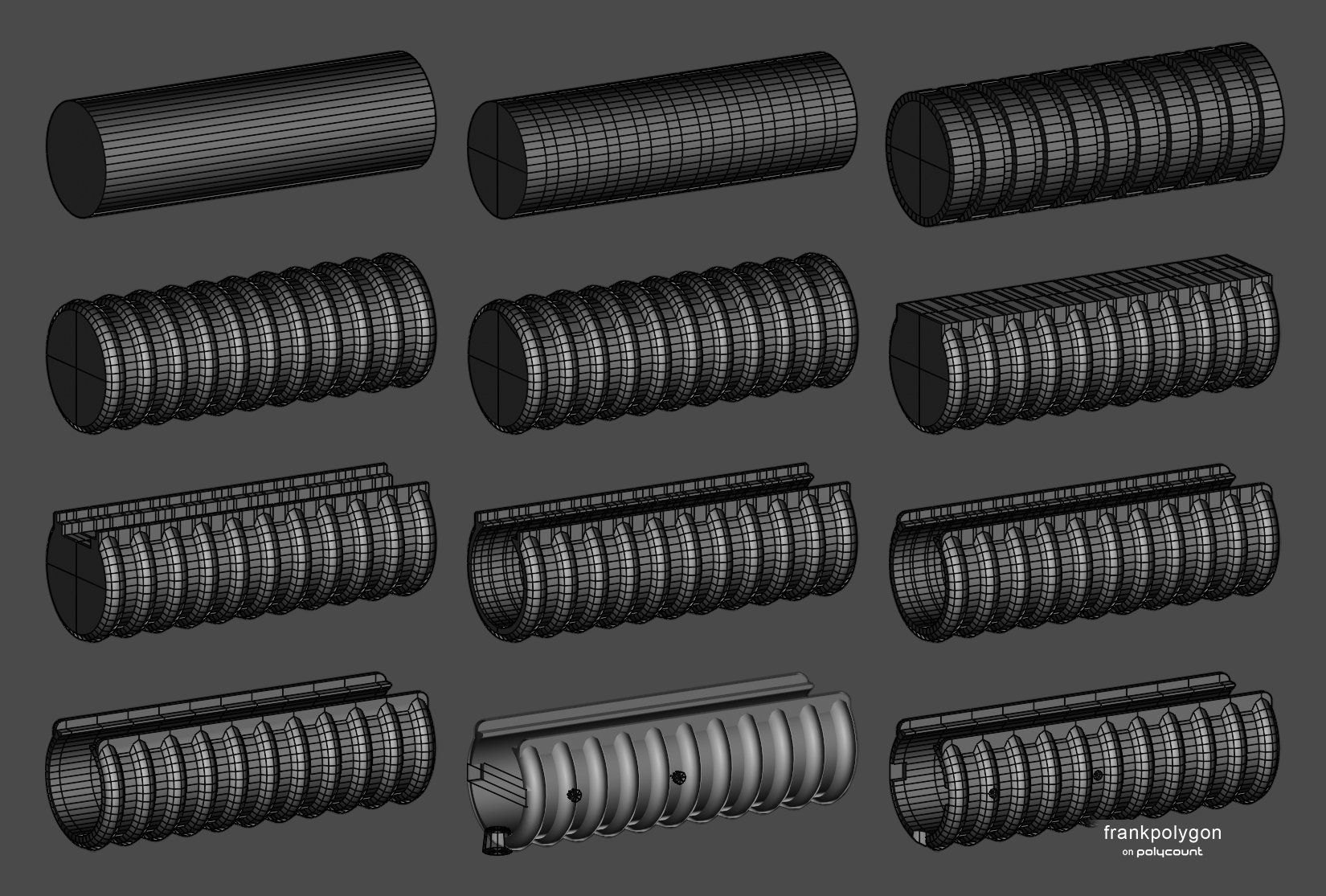 Subdivision sketch: cylindrical grip. This is a brief overview of a couple ways to streamline poly modeling and a quick visual comparison of a few high poly workflows. There's a lot of different ways to approach poly modeling but most artists usually start out with the basics: inserting primitives, cutting in edges, then…
 -
Re: Sketchbook: Frank Polygon
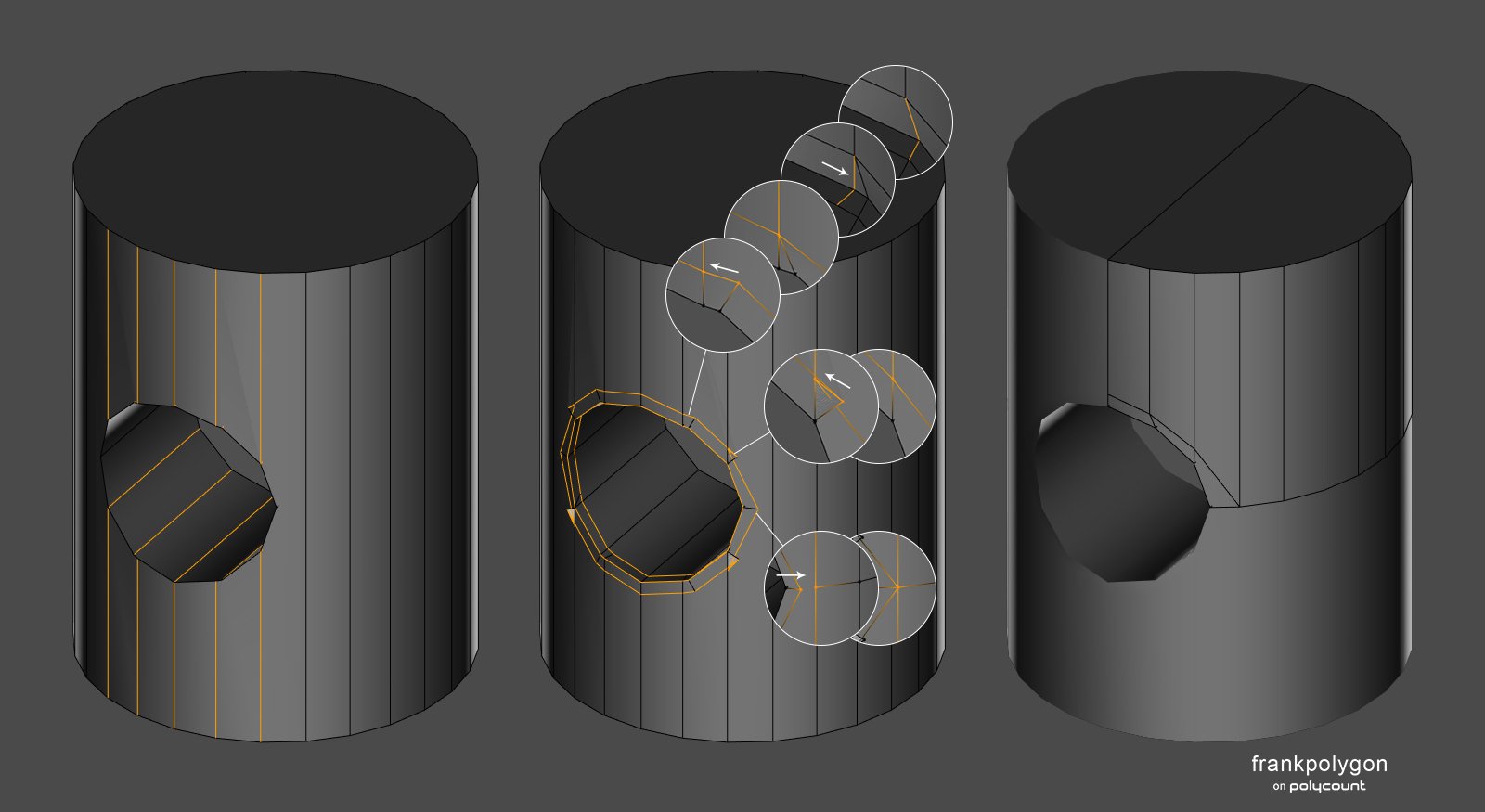 Subdivision sketch: it's all the same. This is a slightly less serious continuation of the previous posts about subdivision modeling and attaching shapes to curves. Only with more pictures and less text. The same basic approach can be used to connect different shapes to curves:-Keep things relatively simple and solve major…
 -
Re: Sketchbook: Frank Polygon
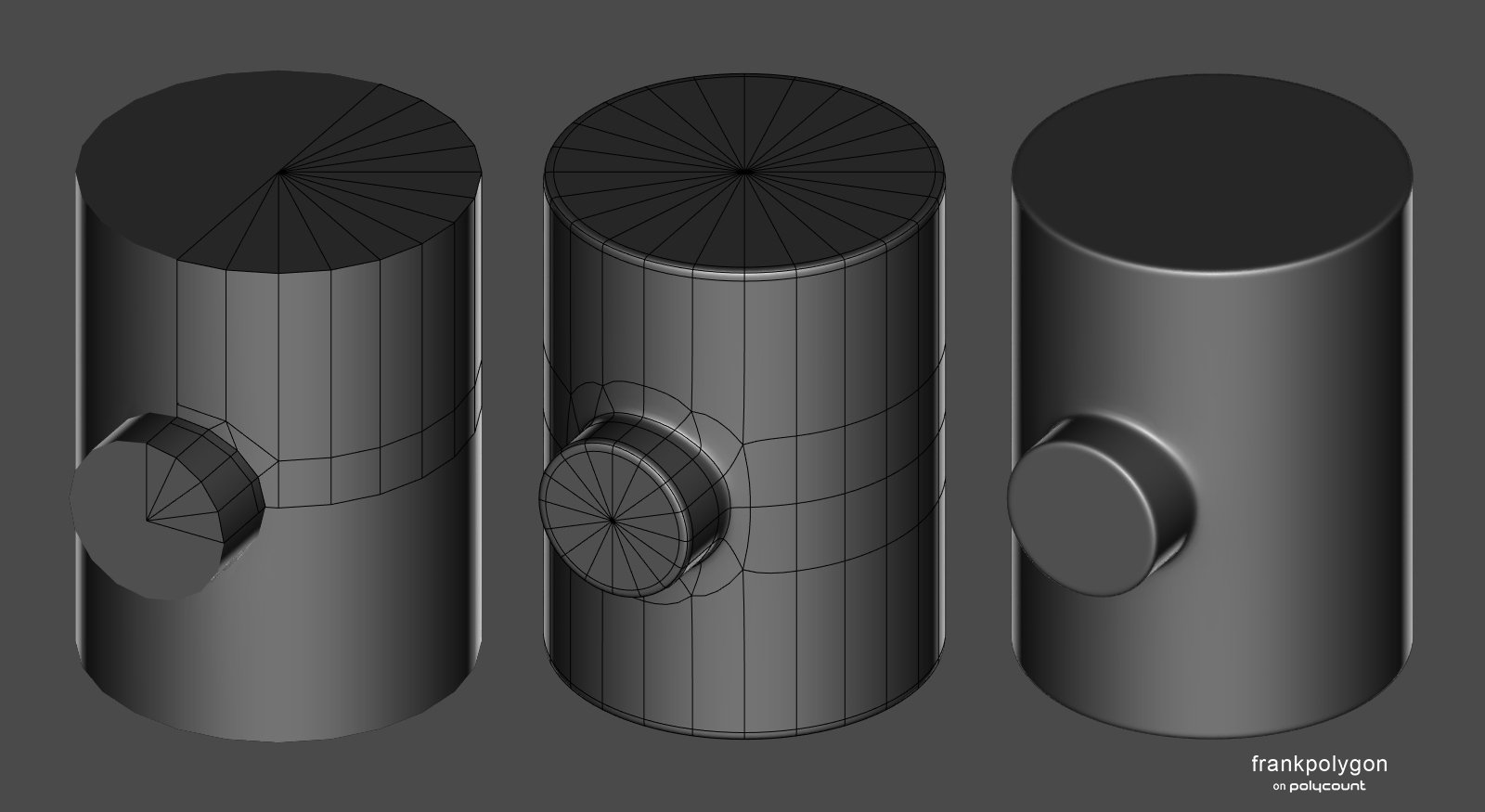 Subdivision sketch: it's not the topology. One question that's asked over and over is: "How can this shape be attached to a curved surface?" At some point, often when just learning how to model, most artists end up asking this question in one way or another. The short answer is: just match the segments when possible and…
 -
Re: Sketchbook: Frank Polygon
 To anyone just starting out in game art. Learning a game asset creation pipeline requires commitment and repetition. It can be tempting to rush through projects but it's important to remember that it's often less about how fast the work is done and more about what is learned along the way. Actively participating in the…
 -
Re: Sketchbook: Frank Polygon
 Subdivision sketch: cylinder details and radial tiling. This write-up looks at matching a cylinder's segment count to radially tiled details. While there are different ways to approach adding these details, the focus here is less about specific modeling operations and more about planning during the block out stage.…
38 results