Search
-
Re: Sketchbook: Frank Polygon

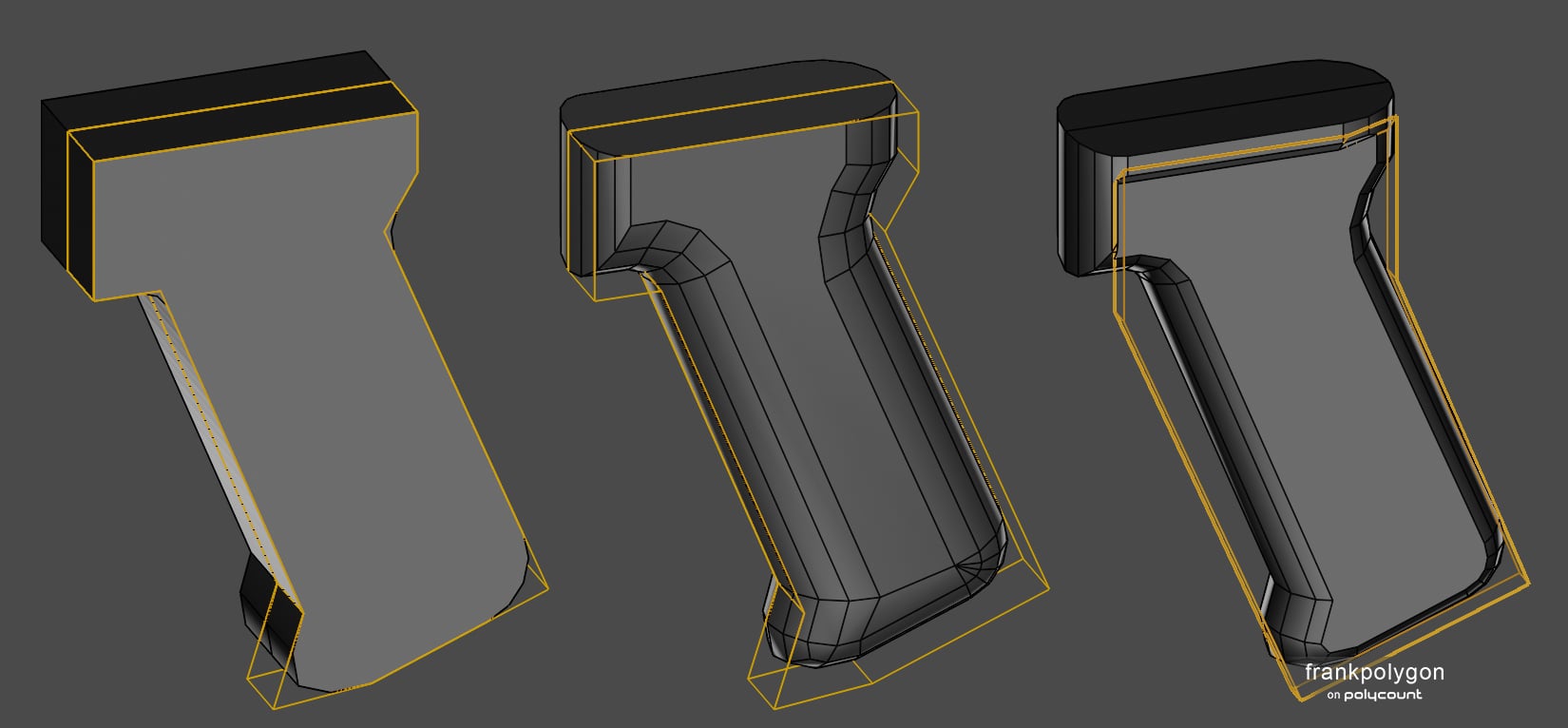 @2300511685 Correct, the round over in the third step was added with a non-destructive bevel / chamfer modifier that uses edge weights to control the width. If edge weights aren't an option then a simple loop path could also be used to constrain the round over. There's a few different ways to approach modeling lofted…
 -
Re: Sketchbook: Frank Polygon
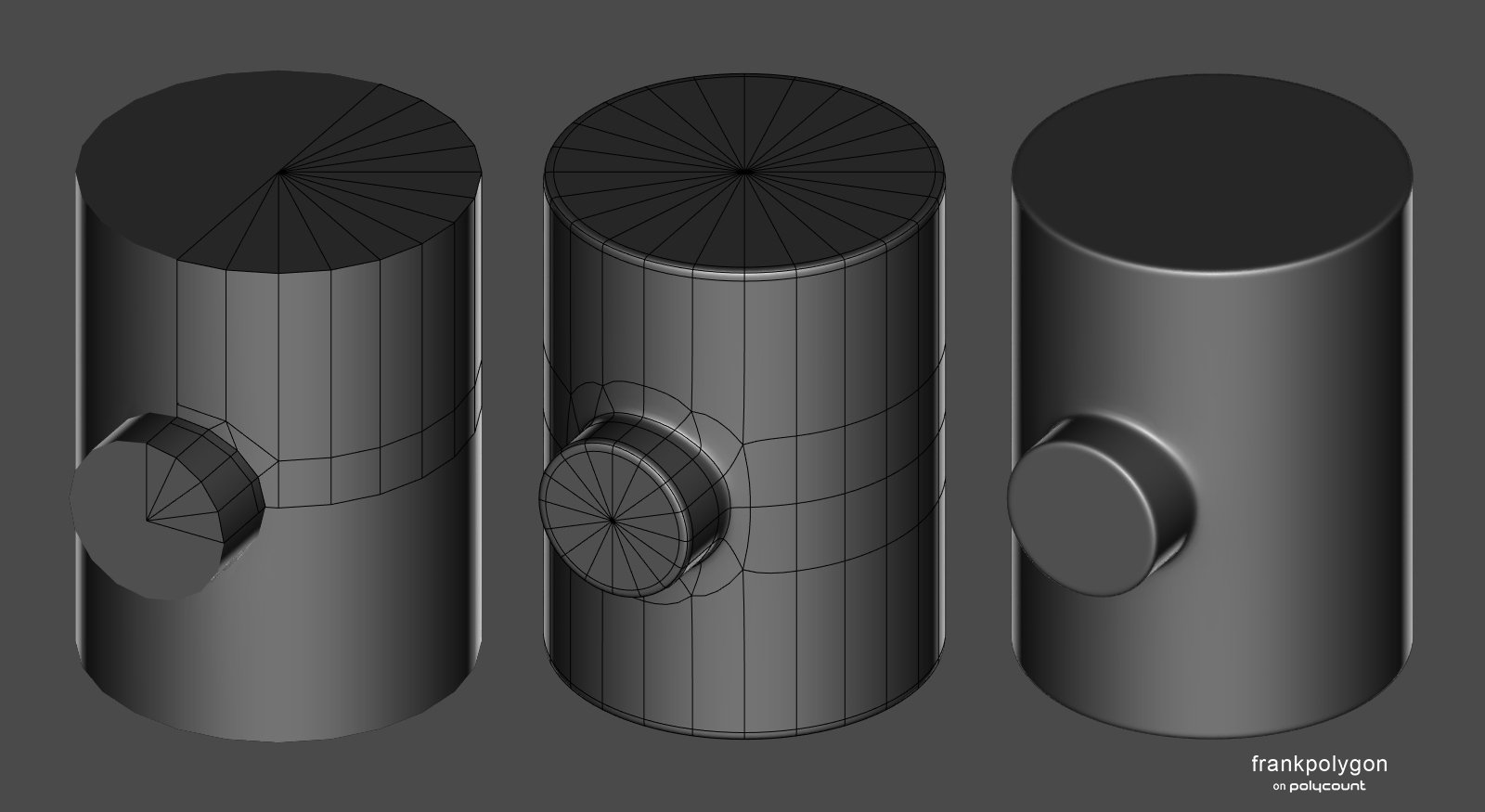 Subdivision sketch: it's not the topology. One question that's asked over and over is: "How can this shape be attached to a curved surface?" At some point, often when just learning how to model, most artists end up asking this question in one way or another. The short answer is: just match the segments when possible and…
 -
Re: Sketchbook: Frank Polygon
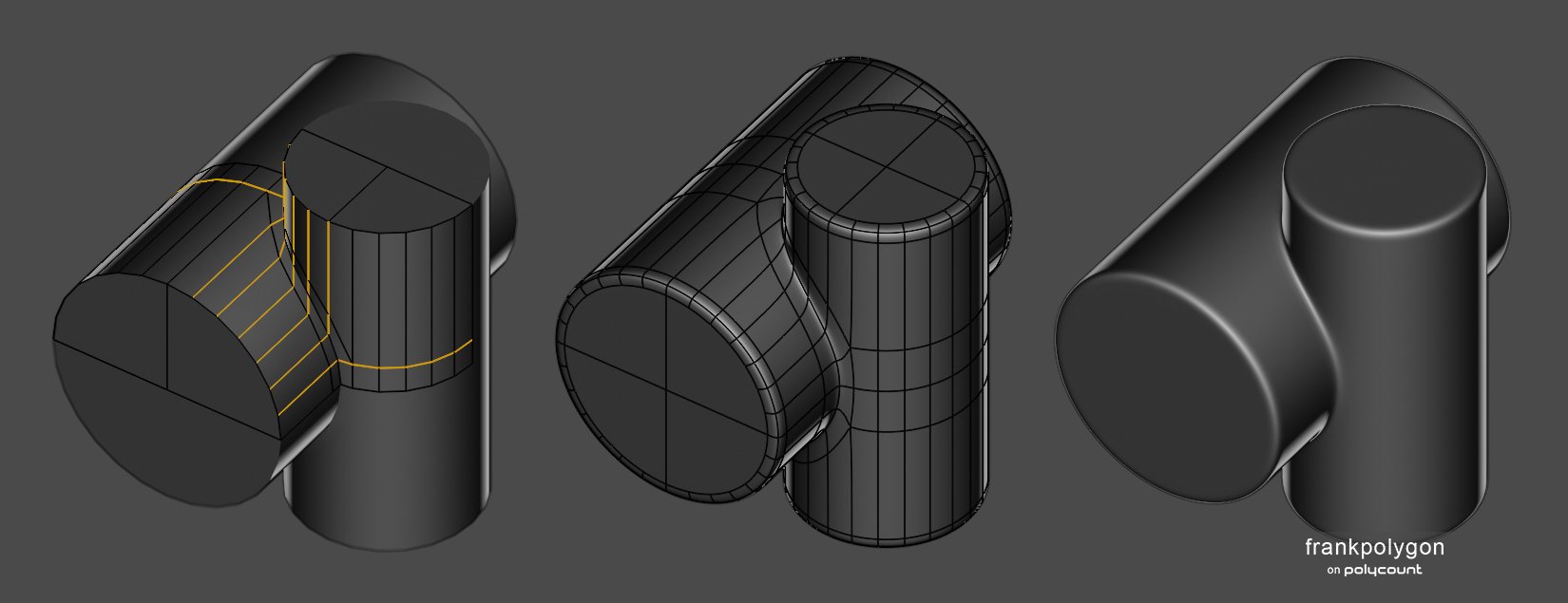 Subdivision sketch: Basic tubular frame intersections. This is a visual quick reference for segment matching when joining offset cylinders. The cylinders in this example have different diameters but it still works when the diameters are the same. Note the subtle changes in segment count and loop routing as the cylinders…
 -
Re: Sketchbook: Frank Polygon
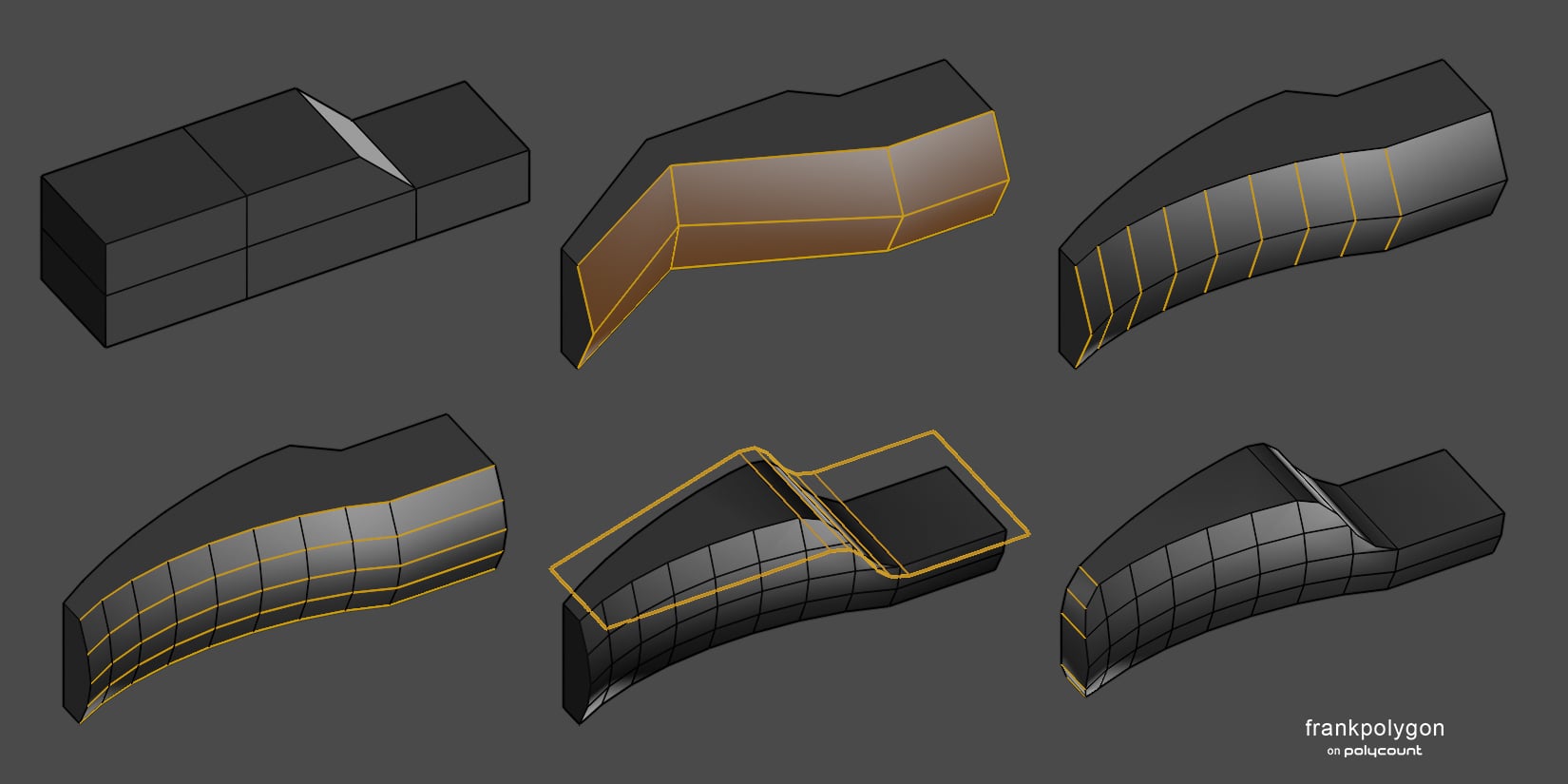 Subdivision sketch: Charging handle. A quick look at a shape first approach to modeling something with complex compound curves. Start by blocking out the overall volume of the part and use that mesh to figure out a basic loop routing pattern for the rest of the forms. Continue developing the block out by outlining the…
 -
Re: Sketchbook: Frank Polygon
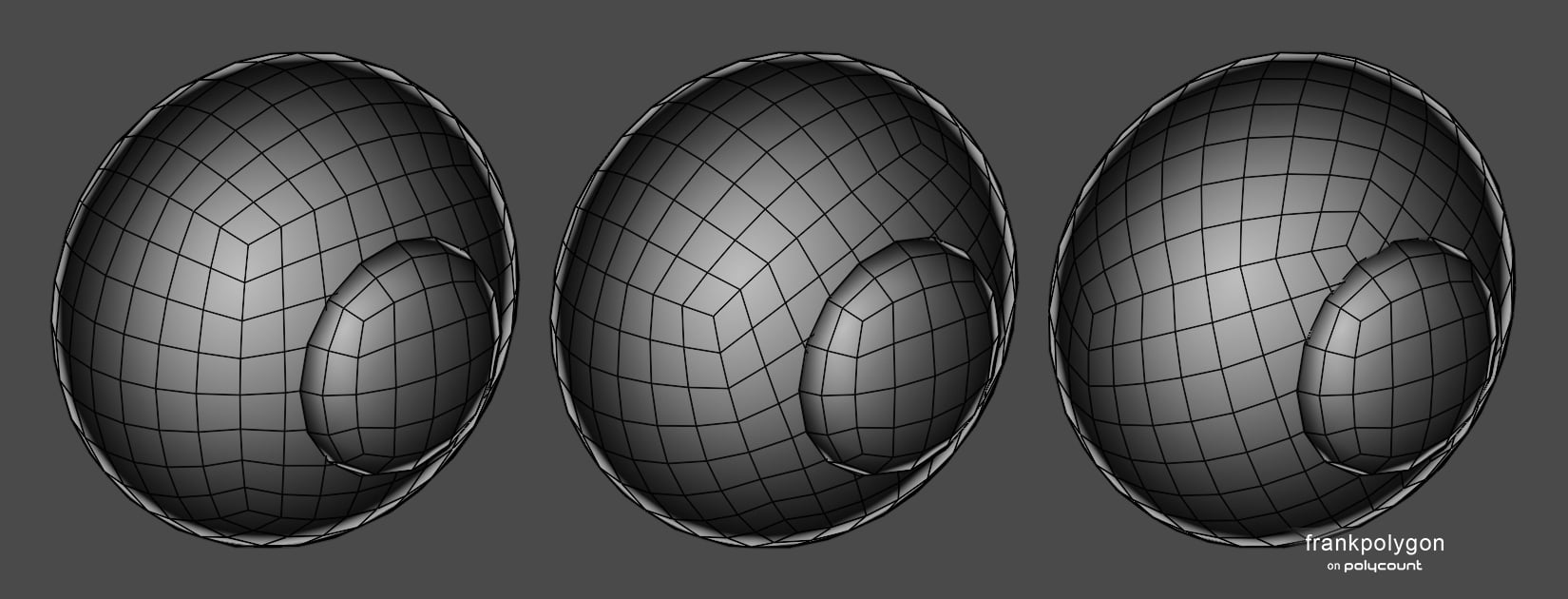 Subdivision sketch: Hemispherical helmet. This is a brief look at a few basic strategies for routing topology around cut outs and panel lines on spherical [and ellipsoid] surfaces. Note: there's several different ways to structure spherical geometry. Since this write-up is specific to basic subdivision modeling only basic…
 -
Re: Sketchbook: Frank Polygon
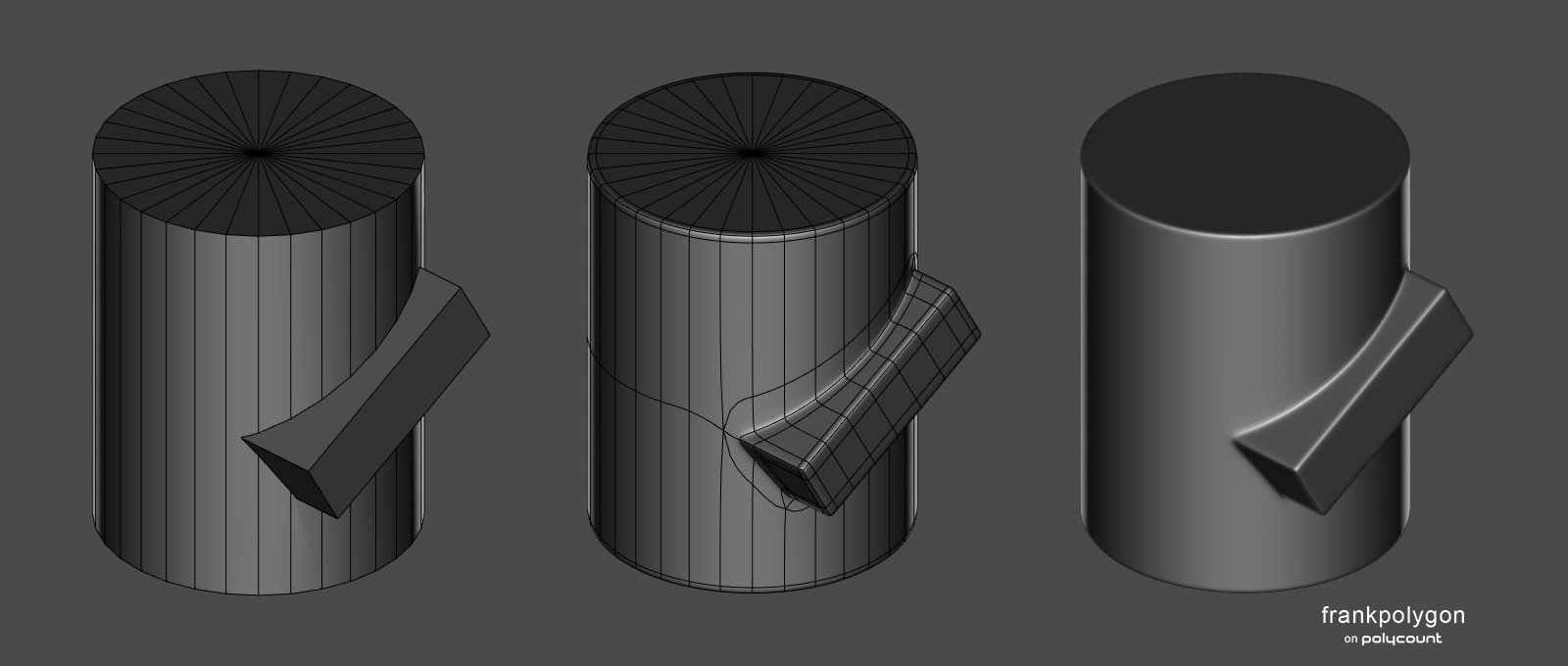 Subdivision sketch: No. Really, it's all the same. In some ways angular shape intersections are just curved intersections without curves and curved shape intersections are just angular intersections without corners. Both curved and square shapes can be joined to curved surfaces using the same basic loop routing strategies.…
 -
Re: Sketchbook: Frank Polygon
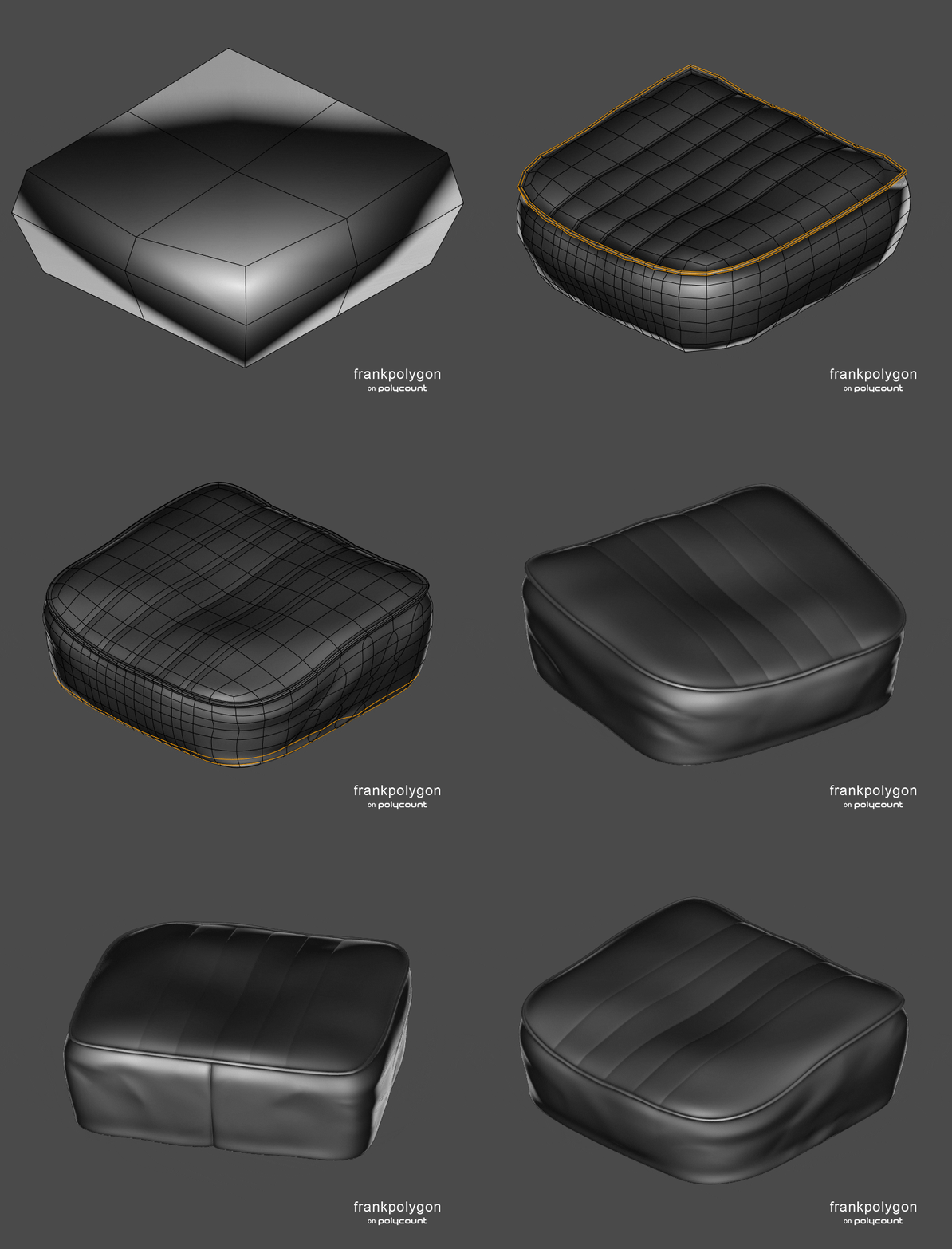 Subdivision sketch: softer, hard softgoods. This is an animated overview of a subdivision modeling process for softgoods. Complex hard surface modeling projects often have smaller softgood components that are typically made from stiffer sewn textiles or formed technical textiles. While there are specialized applications…
 -
Re: Sketchbook: Frank Polygon
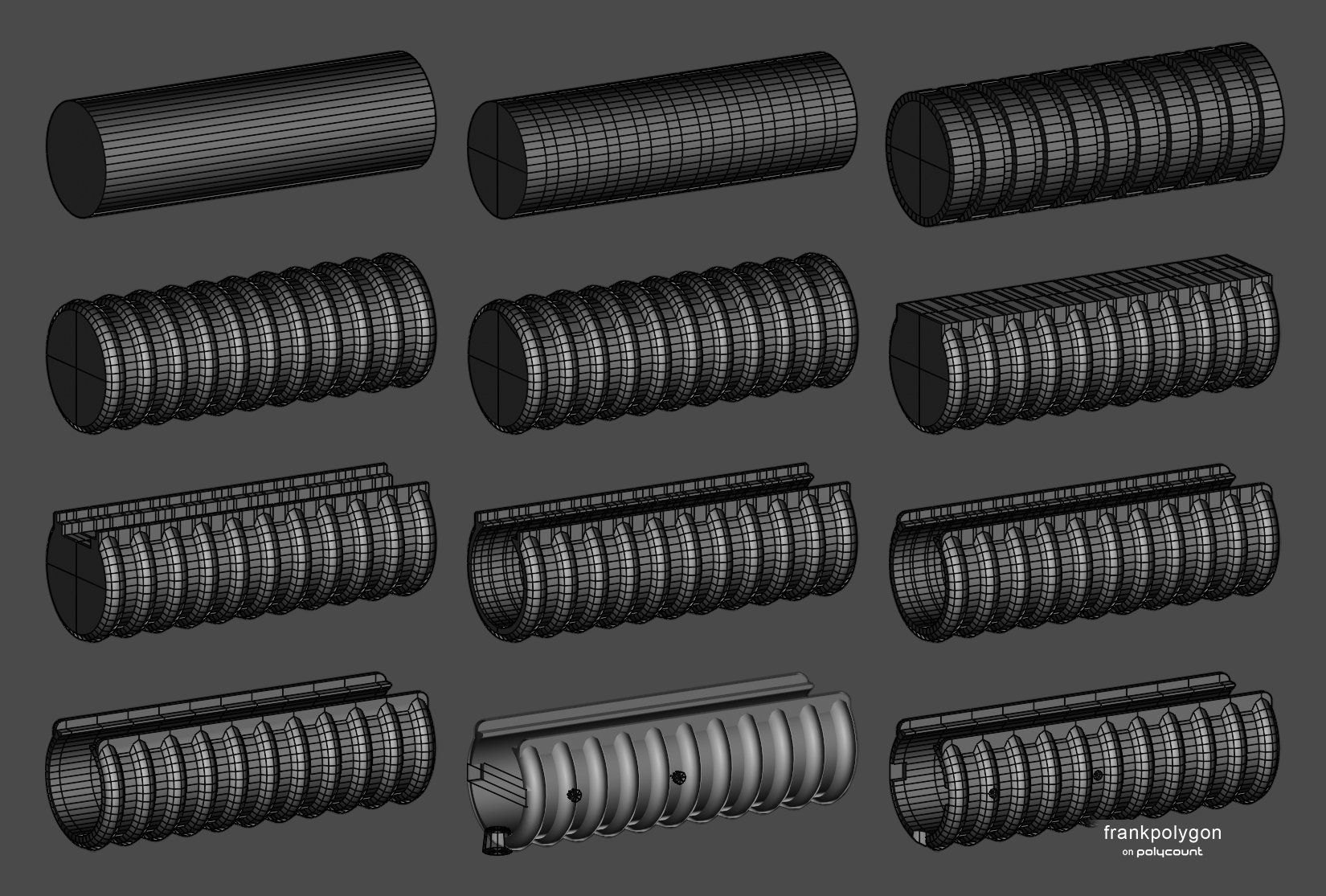 Subdivision sketch: cylindrical grip. This is a brief overview of a couple ways to streamline poly modeling and a quick visual comparison of a few high poly workflows. There's a lot of different ways to approach poly modeling but most artists usually start out with the basics: inserting primitives, cutting in edges, then…
 -
Re: Sketchbook: Frank Polygon
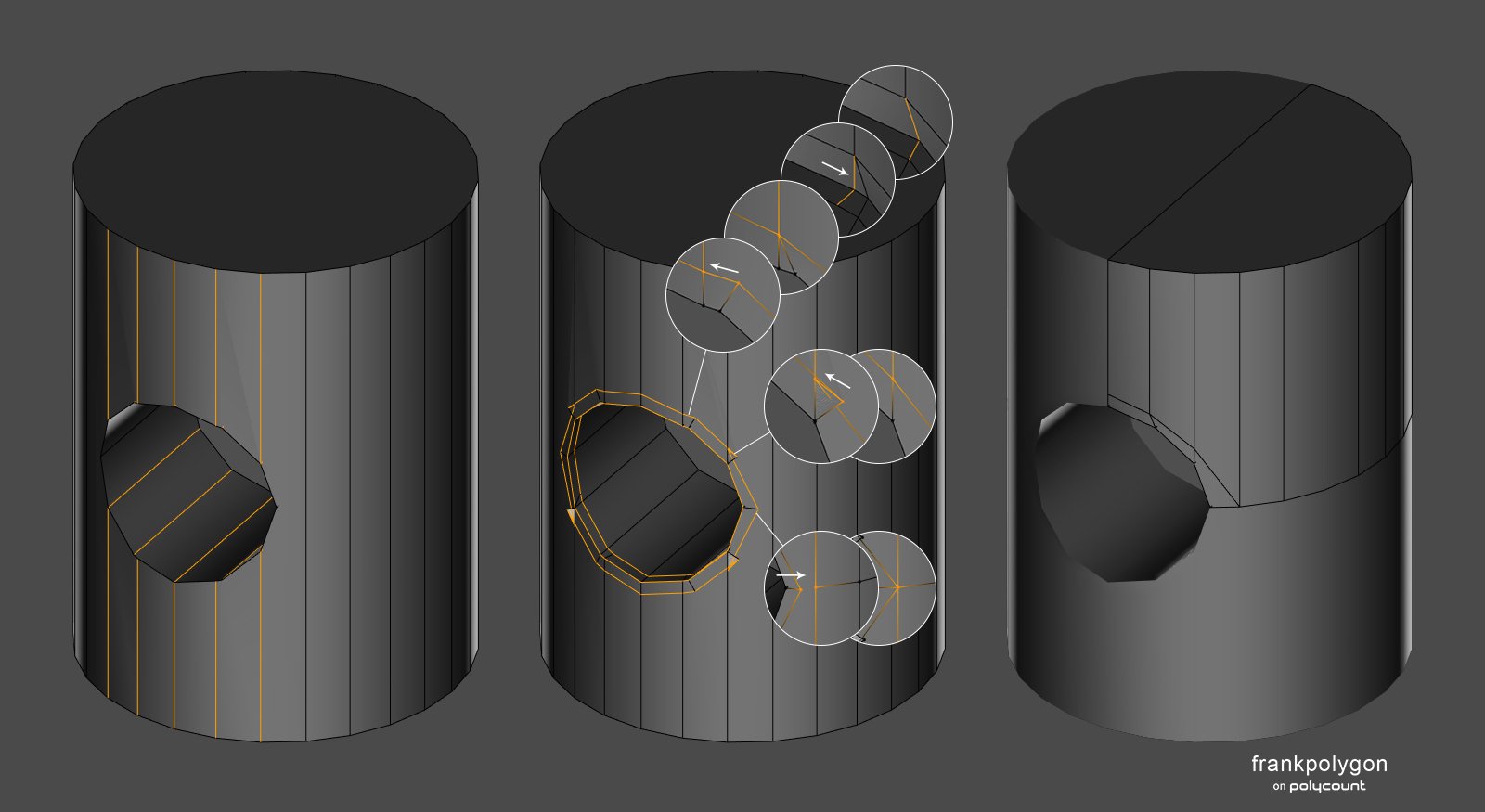 Subdivision sketch: it's all the same. This is a slightly less serious continuation of the previous posts about subdivision modeling and attaching shapes to curves. Only with more pictures and less text. The same basic approach can be used to connect different shapes to curves:-Keep things relatively simple and solve major…
 -
Re: Sketchbook: Frank Polygon
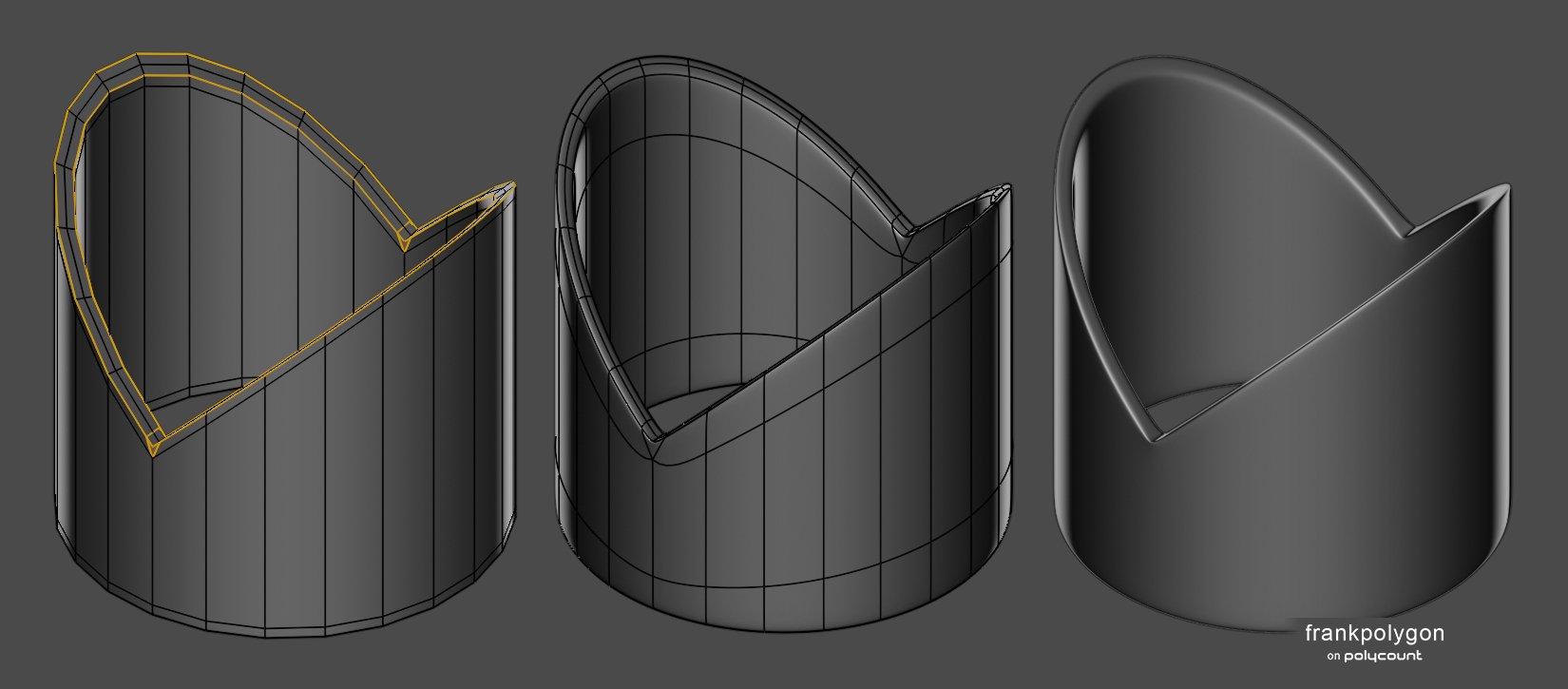 Subdivision sketch: Diagonal corners, diamond quads, and dealing with deformation. Here's a quick look at a few different topology layouts for sharpening the corners of diagonal edges on curved surfaces and a demonstration of how to manually compensate for unwanted surface deformation that's caused by inserting edges…
60 results