Search
-
Re: Sketchbook: Frank Polygon

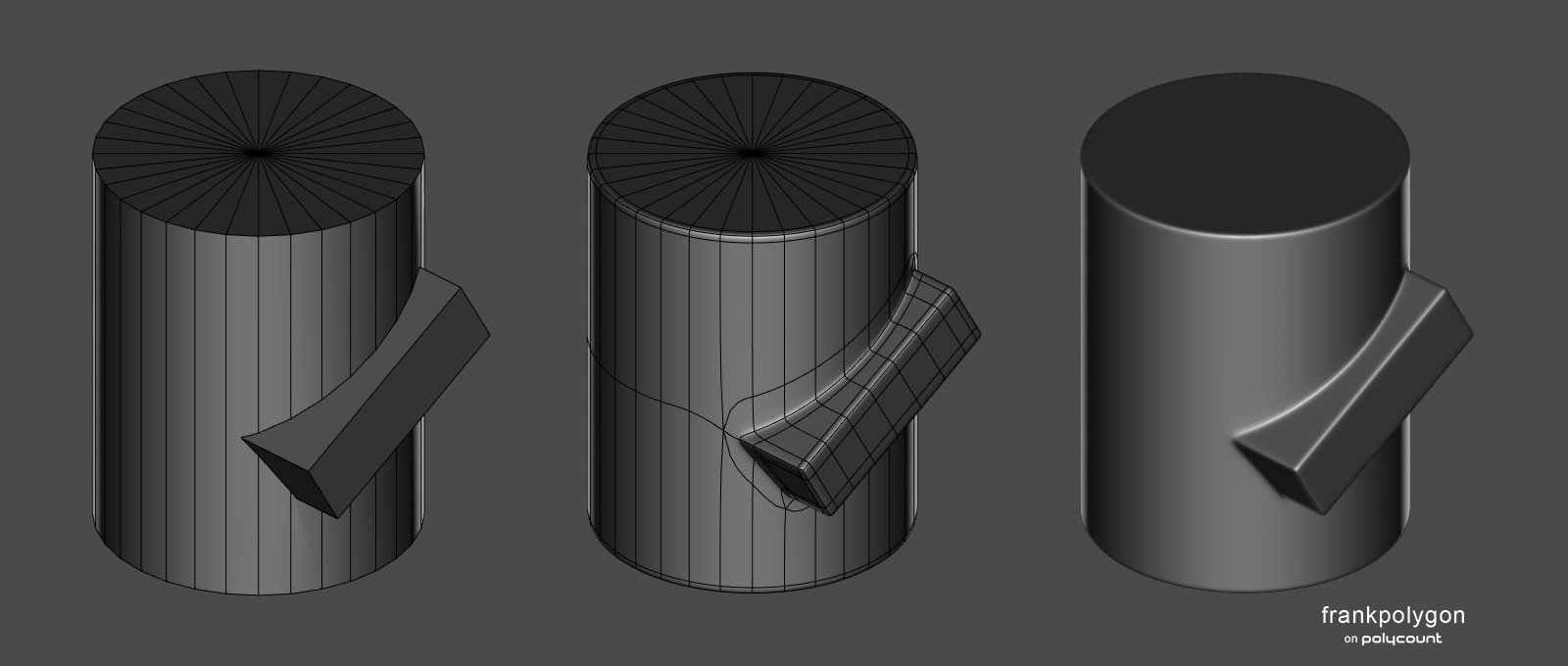 Subdivision sketch: No. Really, it's all the same. In some ways angular shape intersections are just curved intersections without curves and curved shape intersections are just angular intersections without corners. Both curved and square shapes can be joined to curved surfaces using the same basic loop routing strategies.…
 -
Re: Sketchbook: Frank Polygon
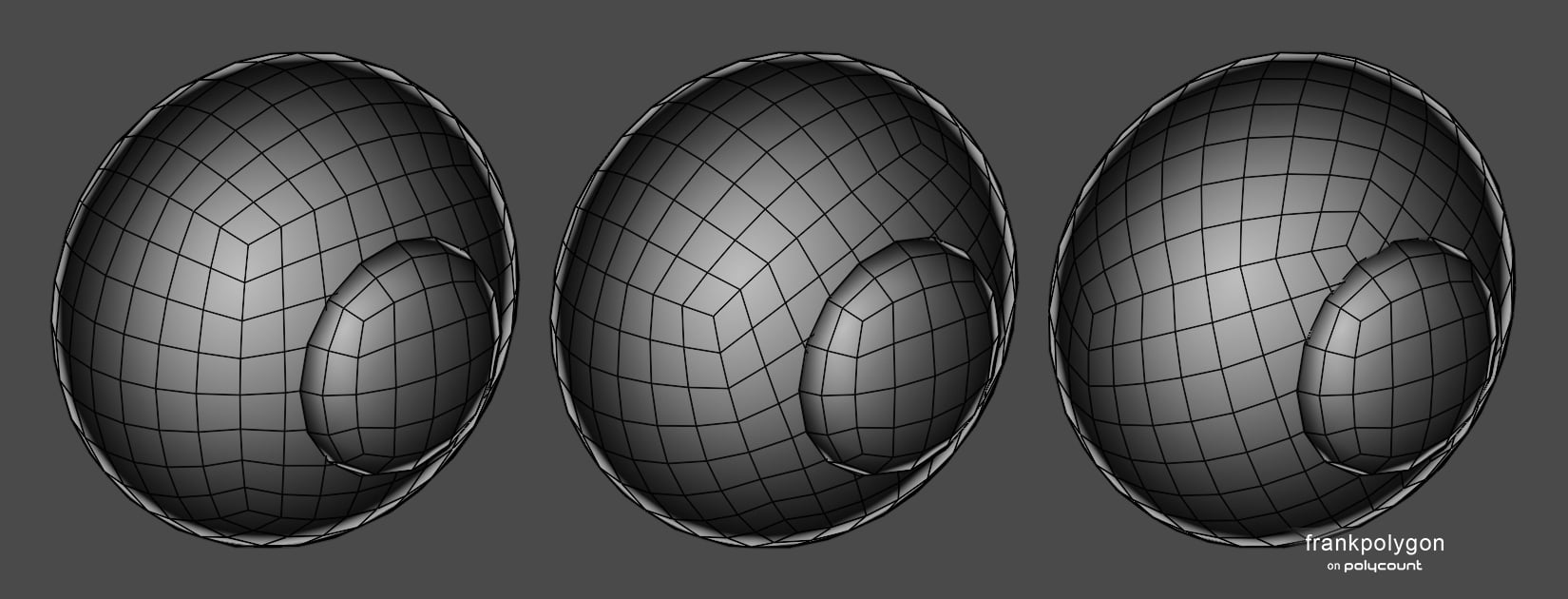 Subdivision sketch: Hemispherical helmet. This is a brief look at a few basic strategies for routing topology around cut outs and panel lines on spherical [and ellipsoid] surfaces. Note: there's several different ways to structure spherical geometry. Since this write-up is specific to basic subdivision modeling only basic…
 -
Re: Sketchbook: Frank Polygon
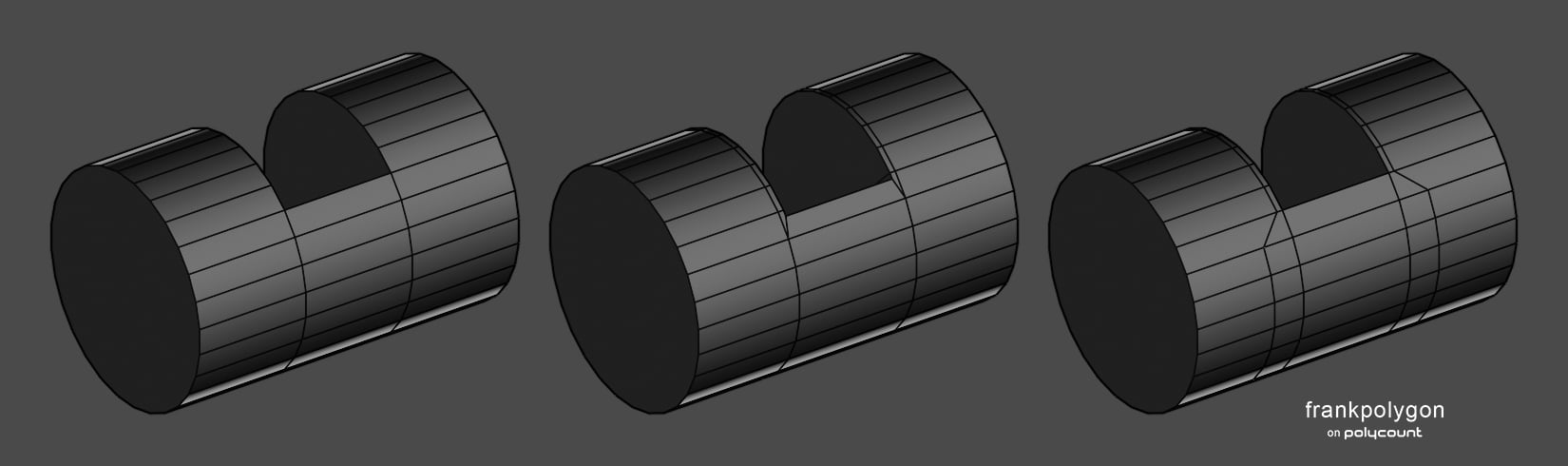 Subdivision sketch: On segments or between segments? This is a quick visual comparison of a few different ways to structure the topology around cut outs on curved surfaces. Placing a cut out on an existing edge segment and reducing the corner support loops into a triangular quad tends to spread out smoothing distortions…
 -
Re: Sketchbook: Frank Polygon
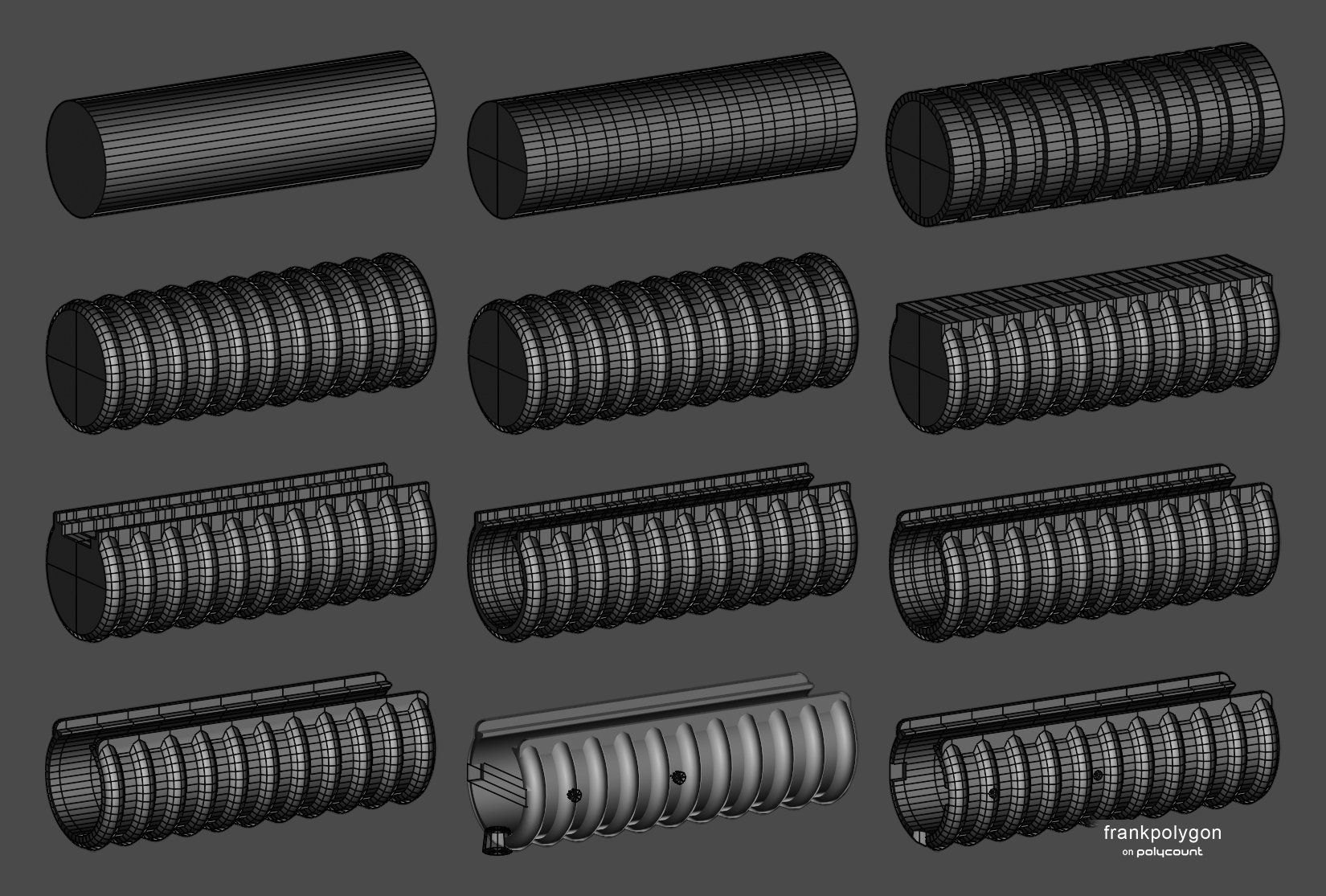 Subdivision sketch: cylindrical grip. This is a brief overview of a couple ways to streamline poly modeling and a quick visual comparison of a few high poly workflows. There's a lot of different ways to approach poly modeling but most artists usually start out with the basics: inserting primitives, cutting in edges, then…
 -
Re: Sketchbook: Frank Polygon
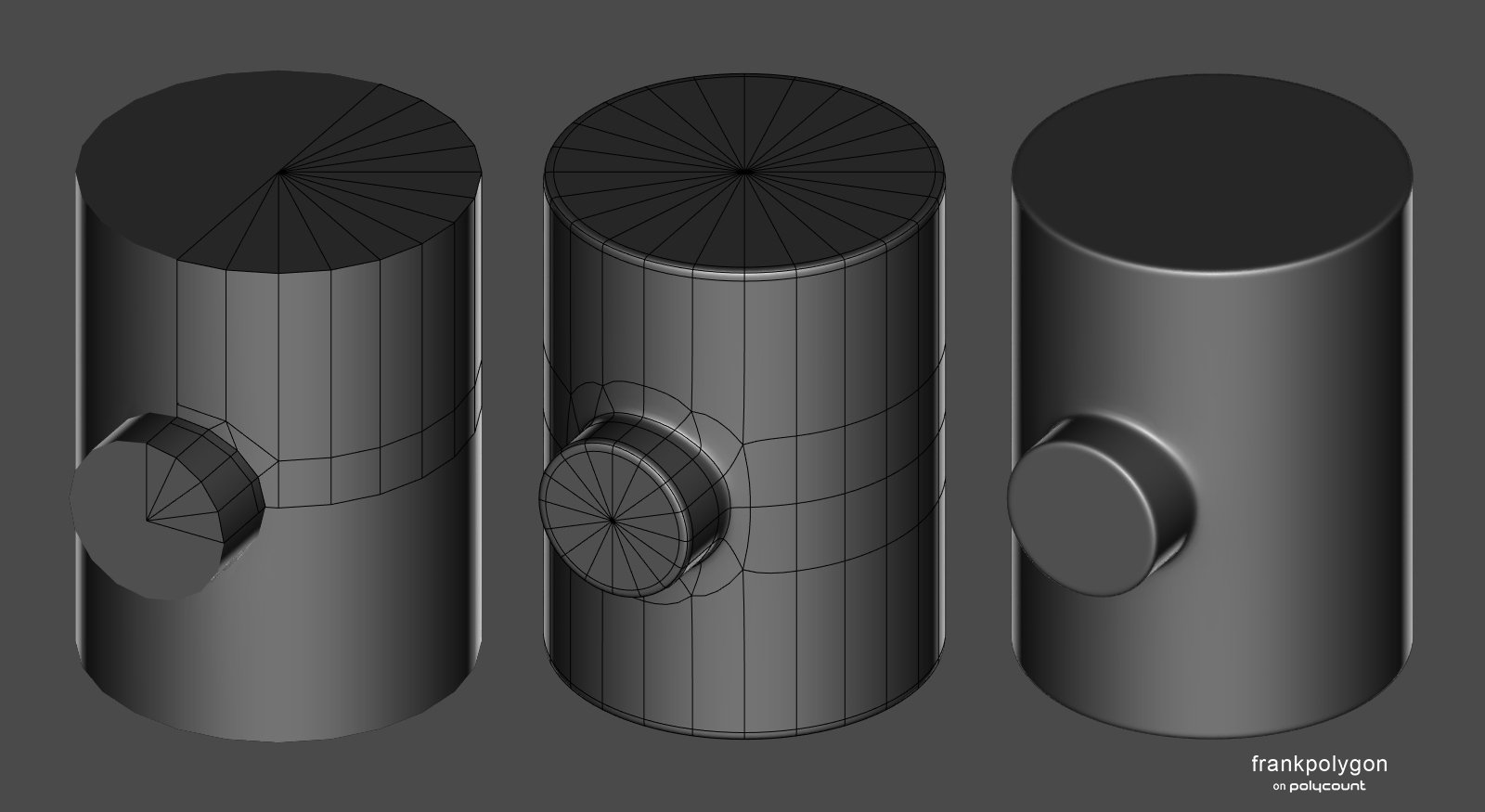 Subdivision sketch: it's not the topology. One question that's asked over and over is: "How can this shape be attached to a curved surface?" At some point, often when just learning how to model, most artists end up asking this question in one way or another. The short answer is: just match the segments when possible and…
 -
Re: Sketchbook: Frank Polygon
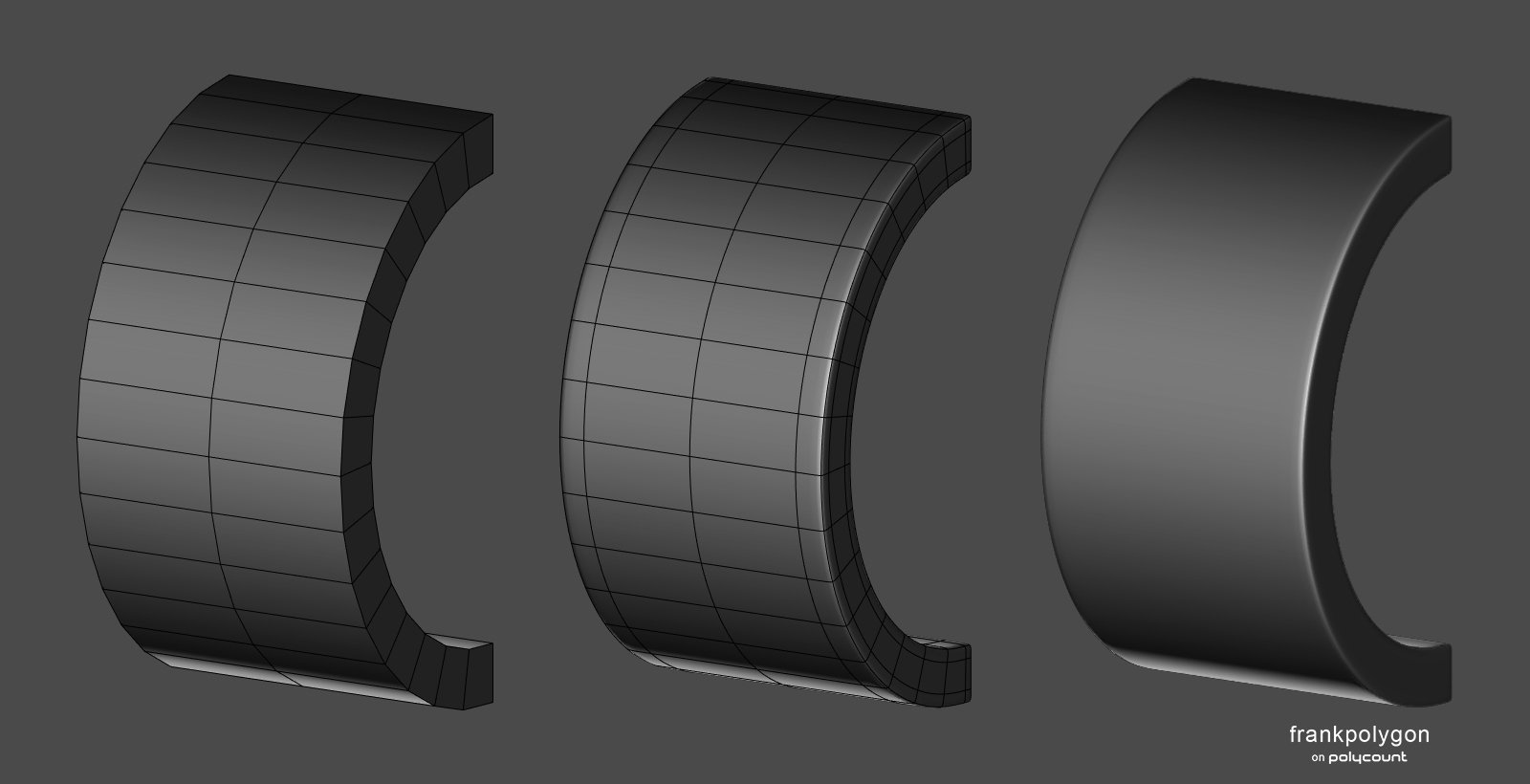 Subdivision sketch: it's all about flow. This is a really quick visual primer on curves, loop flow, and basic subdivision modeling concepts. Here's what a curved segment looks like. Notice how each of the edges that makes up the curve is evenly spaced around the central axis. That even spacing is why the mesh smooths…
 -
Re: Sketchbook: Frank Polygon
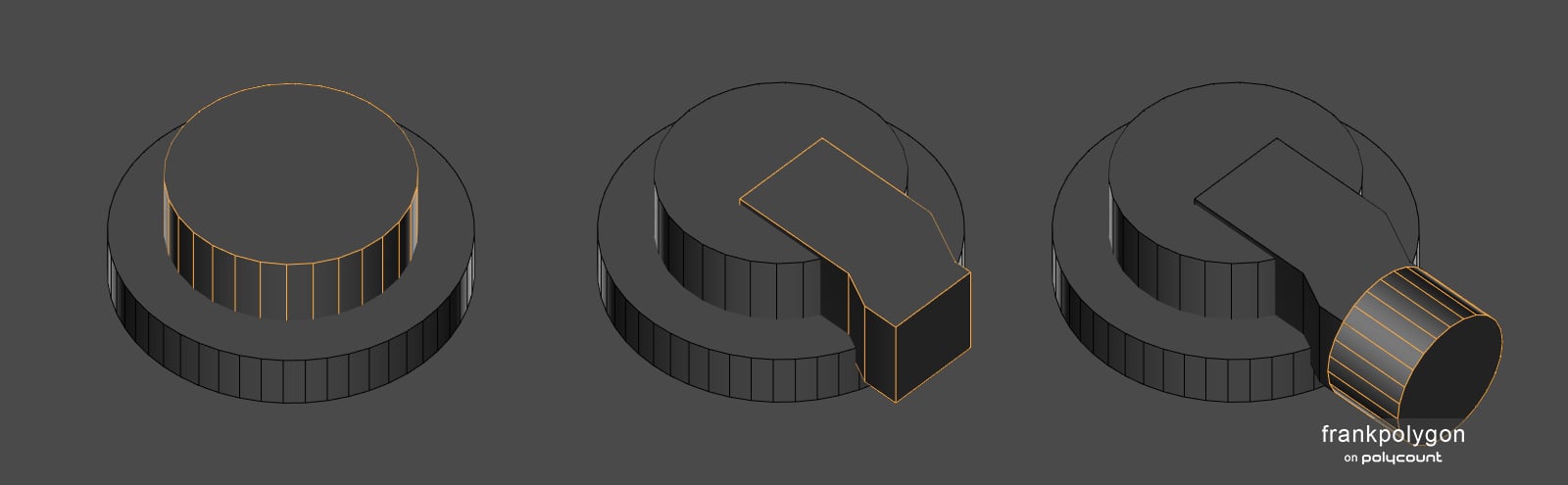 Subdivision sketch: throttle position sensor. This is a brief visual overview of an iterative block out process and streamlined subdivision modeling workflow. The write-up portion of the post also covers some questions to think about when it comes to workflow decisions and time. Simplified proportion block out. It all…
 -
Re: Sketchbook: Frank Polygon
 Subdivision sketch: truncated cones. These examples show how segment matching can be used to join truncated cones to curved surfaces. When the support loop around an intersecting shape disrupts the segment spacing of an existing shape, it tends to cause unintended deformation that can generate visible smoothing artifacts.…
 -
Re: Sketchbook: Frank Polygon
 Subdivision sketch: hand guard. This is a follow up to the previous post about shape analysis. It's just a quick look at applying the iterative block out process to larger plastic components. Which are often part of other hard surface objects. Identifying how the basic shapes are connected is a fundamental part of…
 -
Re: Sketchbook: Frank Polygon
 Subdivision sketch: slide release. This is another brief look at using an iterative block out process and modifier based subdivision workflow. Study the reference images and figure out how the shapes fit together. Establish the rough proportions then come up with an order of operations for developing each important detail.…
37 results