Search
-
Re: Problem with texturing non modular environment with repeating textures
 The brown stains leaking under the window sill are decals. The blue paint paint coming off the brick and the patches of damage around the windows on the top floor is probably a vertex blended material.
 -
Re: The Willows Whisper - Organic environment (personal project)
 good work man. just a bit on the purple light at the center. it look weird. not blend out. strong shape. and what's purpose of this light? that's my opinion, everything else really goood
 -
Re: (Finished)(UE4) Studio

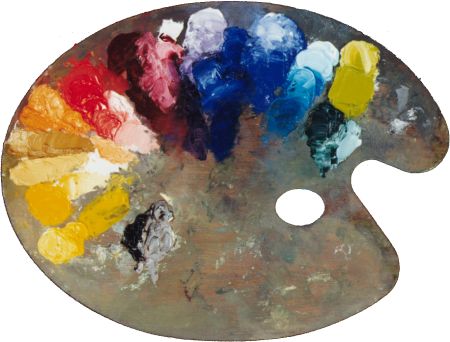 Nice work! B) The only comment I have is the painter's palette. The paint (color) distribution looks a bit random . A painter would generally mix and blend colors on a palette. Like this:
 -
Re: Sketchbook: Victor Ullmann

 Thank you guys! @snake85027 Here's a video showing the use of tiling texture and world aligned texture to break de repetition and blend materials. https://www.youtube.com/watch?v=Q80nP4GhQJQ
 -
Re: Santorini scene feedback
 The pillars of the gazebo don't merge with the walls in your piece, but they do in the photos. I also think the stone walkways could use more stones that blend in more so as to look worn.
 -
Re: Zbrush / Substance Painter Texture Seeming Issue
Hi, having the extra geometry beyond the edges of the low-poly helps with correct ambient occlusion baking - without it the baker doesn't "know" that it tiles, and you get light bleeding at the edges. -
Re: Trying to paint semi-realistic/stylized (might be a bit NSFW)
 Looks good! the black n white thumb has a pretty good read, might want to lighten/darken the BG some, or darken/lighten the hair, it looks like they are blending together.
 -
Re: 1920s Home Office [W.I.P, Portfolio Piece - Image Heavy]
 Thanks Gazu! Yeah i definitely agree, unfortunately i had to wrap it up due to timeconstraints so i settled with more of a blend between environment and archviz concerning props :)
 -
Re: Vertex painting and such
 World Position Offset would be the cheapest solution.solution. Bumb Offset as well, it's kinda like parallax mapping. Displacement blending (with tessellation) would be the more costly , but better looking way of doing it.
 -
Re: (possibly) Never eat again - Soylent shake
An interesting idea & I'm all for making a quick blend, if time is running short or if I need some extra protein.. but I could never imagine giving up food foodporn
>11468 results