Search
-
Re: [Portfolio] - Ralphie Agenar, (just want to break in)
 I think it's rare to find such a strong consensus on something that should be removed from a portfolio, but you really shouldn't feel bad about it. I agree, I think it should be taken out but I'm sure you learned from it so I don't think you should consider the time wasted. You're way ahead of most people a year from…
 -
Re: Normal Map Problem
 Basically yes , because its already a seam for a videocard and every hard edge is a split edge doubling vertexes along it. Yet not every UV seam needs to be a hard edge and you don't have to always do hard edges along beveled edges. Google and try to understand face weighted vertex/split normals or ask chat GPT? Shading of…
 -
Re: Thread of Awesomeness, Hilariousness, Off-topic, Youtube

 NOTE: Have an unadulterated disgust for ai slop and every sentient being connected with it however if this amoral effluent remains within the sewer pipe polishing turds, well itself although a particularly polished one happens to surface...who am I to judge! or indeed hit flush o_O Don't get why Greg keeps falling over...?…
 -
Re: OverDose - Shameless Self Media Pimpage [id tech 2]
 Yup, the engine can either: a) slap a cube map over the surface with no bump interaction. 2) slap a cube map over the surface with bump map interacion. d) slap a cube map over the surface with bump map interaction and use a greyscaled mask. The specular stage also allows us to control power/scale of the highlight per…
 -
Re: The Bi-Monthly Environment Art Challenge | March - April (89)
 @v13r1 Hi! Congrats on finishing the crate. Some aspects I think can be improved: - It looks to me like there are some hard edges breaking up the shading in some places (prominently along the wide beveled corners and the look mechanism). I'd keep in mind that while UVs need splitting along hard edges, edges at split UVs…
 -
Question about the reality of gloss
 So I understand that specular highlights are really just a reflection of a light source but in reality, can a surface be so glossy that it makes the specular highlight tighter and smaller than the actual reflection? Or are the glossiest surfaces really just directly reflecting everything around them? like is say, a mirror…
 -
Re: Term 1 - Development Projects Progress

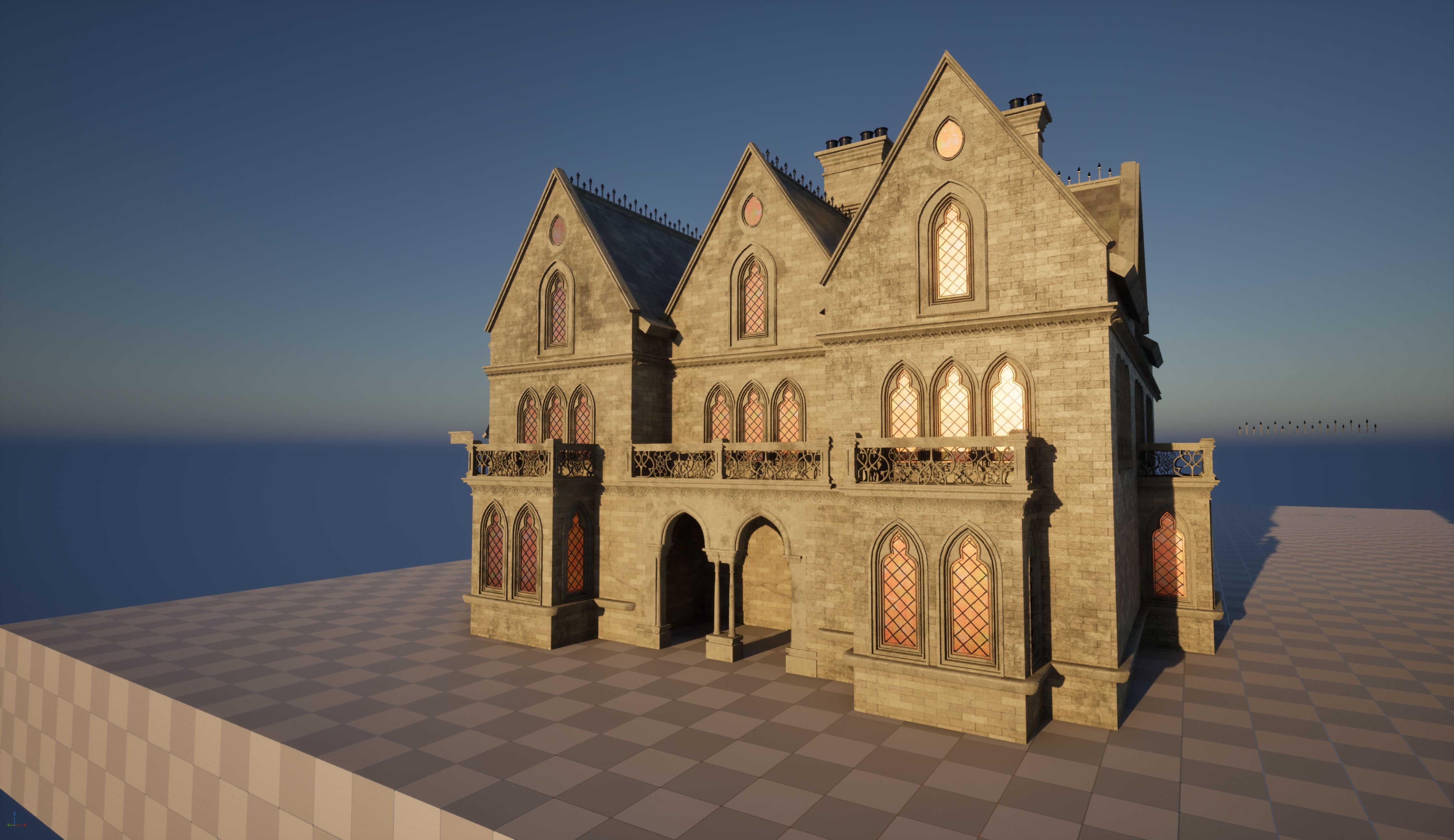 Weekly Progress Update This week, I focused mainly on locking down the main building and pushing my material workflow a bit further. At the current camera distance, I don’t feel the building needs much more surface detail. If I do decide to push it further later on, I’ll most likely rely on decals rather than increasing…
 -
Re: Need some help with roughness maps
 Generally, I like to match the roughness with a constant value to photo/video reference, and then figure out a minimum and maximum roughness and how much contrast it has in the roughness. Obviously dirtier or more varied surfaces have more contrast and variation in the roughness. Places where people might touch the surface…
 -
Re: normal problems
 You shouldn't have to retopologize if you make the details more visible in the high poly, which is where the problem lies. Your crevice walls should be diagonal instead of perpendicular to the outer surface. In regards to Neox's pictures, he didn't post any. The lines you see are visual representations of a surface cross…
 -
Re: Blender, Normal Mapping Artifacts, SuperPNG

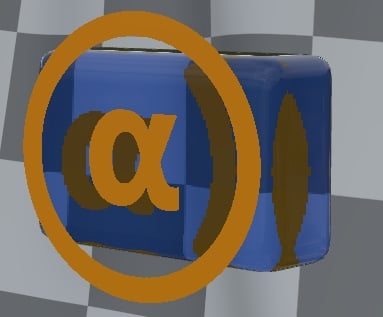 Where Tranmission tends to fail is when there are non-Transmission surfaces in front of Transmission. Then these typically get included in that offscreen buffer, which ends up looking wrong in the end. You can see that issue in action here, on the meshes in the third column.…
>18706 results